
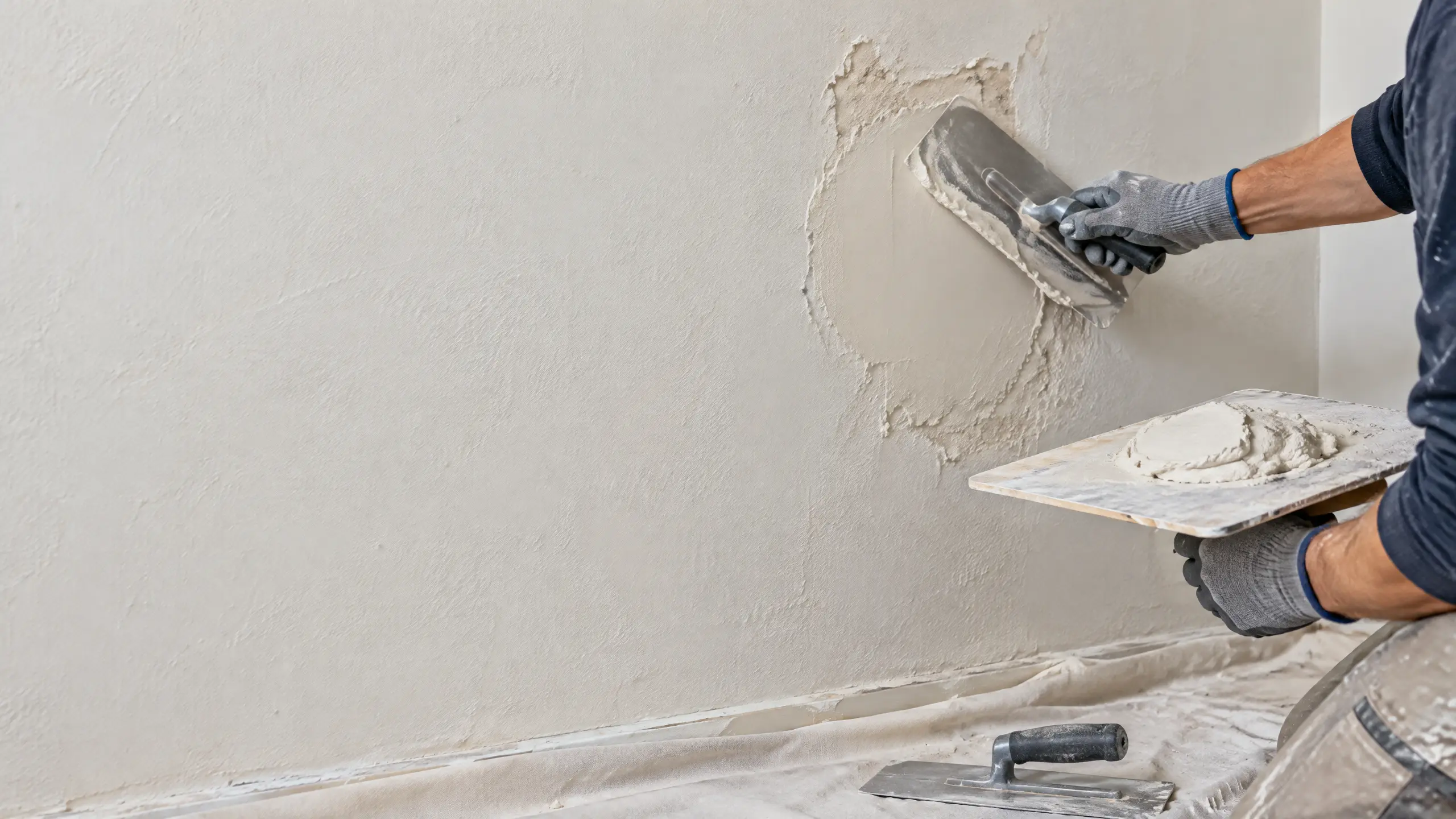
Does your older house still have its original walls? Some South Florida homes do: three-coat plaster over wood or metal lath, or plaster applied straight to block. J. Perry & Sons handles repair and plaster restoration on those original plaster walls in Broward and Palm Beach, part of our full range of services. The goal is to keep the wall. Sound plaster is thicker, quieter and harder than drywall, and matching it is what keeps an older house from looking patched. Our detailed plaster wall repair scope and pricing are on the plaster repair page. New walls are a different trade; see drywall.
Plaster repair cost in South Florida: $775–$1,500 per area
| Scope | Typical size | Installed range |
|---|---|---|
| Crack repair in plaster, mesh and setting compound, per room | 5–8 cracks | $625–$1,000 |
| Patch a hole or loose section, three-coat plaster over lath or block | up to 10 sq ft | $800–$1,500 per area |
| Re-key loose plaster to lath with adhesive and washers | per room | $1,250–$2,000 |
| Water-damaged ceiling plaster cut out and rebuilt | 10–40 sq ft | $1,750–$3,000 |
| Skim coat an entire plaster room smooth, walls only | 300–500 sq ft | $5–$7 per sq ft |
About these prices. These ranges are starting points based on typical South Florida projects. Your final price depends on the condition of the property, access, the materials or system specified and the full scope of work. We confirm every number after we review your project in person or from the drawings, and the price in your signed proposal is the one that applies.
Repair pricing covers removal of loose material, bonding, base and finish coats and sanding, with the painter doing primer. Small plaster repairs carry a minimum service call.
What plaster work we do
Crack repair. Plaster cracks at corners, over openings and along ceiling joists. Hairlines are filled with setting compound. Wider or recurring cracks are cut open, bridged with fiberglass mesh and filled in two coats so they don't telegraph back.
Re-keying loose plaster. On wood lath, the keys that hold plaster to the lath break, and the wall sounds hollow or bellies out. We drill, inject plaster adhesive and pull the plaster back to the lath with washers, then patch the holes. That saves the wall and your original surface.
Patching holes and missing sections. Done in three coats: a scratch coat into the lath or onto block with a bonding agent, a brown coat and a finish coat floated flush. Old plaster is often 3/4 to 1 inch thick, so a drywall patch sits below the surface and shows.
Water-damaged plaster. Soft, stained plaster under a roof leak or an upstairs bath. After the leak is fixed we cut to sound material, check the lath and rebuild the plaster. Rotten lath is replaced.
Skimming a plaster room smooth. Rooms that have been patched over and over can be skimmed as a whole, walls only, to a uniform surface ready for paint.
Hollow-sounding wall or a crack that keeps coming back? Call (561) 556-7509 and we'll come tap the walls and tell you what's going on.
Why repair beats replacement
Thinking about ripping out the plaster and starting over with drywall? Unless most of a wall has failed, tearing it out costs more than repairing it. Demolition is messy, it takes casings and baseboards with it, and a new wall rarely matches the old one. Re-keying loose sections and patching holes cost less and leave your original surface. We recommend drywall only when most of a wall has failed, and when that happens our drywall crews handle the new walls, including Level 5 finishes for a smooth look.
Send a photo of the damage, a rough size and the age of your house if you know it through our project form. We'll send a free range the same day.
How a plaster repair goes
- Assessment. We tap for hollow areas, check crack width and direction and find the cause of any water damage. Homes built before 1980 get a material test before anything is sanded or cut.
- Stabilize. Loose plaster is re-adhered to lath. Failed material is removed to a sound edge and undercut so the patch keys in.
- Bond. Lath is wetted, or a bonding agent is applied to block and old plaster edges.
- Base coats. Scratch and brown coats of gypsum base plaster or a setting-type compound, scored and cured between coats.
- Finish coat. A lime-gypsum finish troweled flush and floated to match the surrounding texture, smooth or sand.
- Handoff to paint. The wall is sanded and ready for primer.
Plaster in South Florida: humidity, old houses and block
Humidity. Plaster cures slowly in summer humidity, so we leave more time between coats and don't hurry the finish.
Older housing stock. The older neighborhoods of Fort Lauderdale, Hollywood, Delray Beach and West Palm Beach have real plaster. Matching it is what keeps your house from looking patched.
Block walls. Plaster applied directly to block is common from the 1950s on. Cracks there usually follow block joints and need mesh or they come back.
Permits. Cosmetic plaster repair needs no permit. Ceiling plaster removal over a certain area and anything tied to a leak repair may fall under the related permit, and we advise case by case.
What a plaster estimate includes
- Crack footage, patch areas and hollow sections by room
- Substrate: wood lath, metal lath or block
- Repair method: re-key, three-coat patch or skim
- Cause of any water damage and whether the leak is fixed
- Paint, if included
- Workmanship warranty on every job; materials carry the manufacturer's warranty. Terms are in your written contract.
Venetian and polished plaster finishes
Looking for a wall that's meant to be seen, not just repaired? Plaster isn't only for older homes. We also apply Venetian plaster, a lime-based finish with marble dust that goes on in three or four thin coats, is burnished with a steel trowel and then waxed. The result has depth and soft movement that paint can't give you, from a matte lime look to a high, marble-like polish. It works best on accent walls, entries, powder rooms and ceilings, and the color is tinted into the plaster itself. The wall behind it has to be flat and sound, so any cracks get fixed first. Finish options, the process and pricing are on our Venetian plaster page.
Related services
- Plaster repair: full scope, method and pricing.
- Venetian plaster: polished and waxed lime plaster finishes for feature walls.
- Drywall: new walls and ceilings, and when plaster has failed too far to save.
- Drywall repair: patches in drywall rooms of the same house.
- Stucco: the exterior face of the same wall.
Plaster repair by area
Plaster repair in Fort Lauderdale · Plaster repair in Hollywood · Plaster repair in Delray Beach · Plaster repair in West Palm Beach · Plaster repair in Boca Raton · Plaster repair in Miami · Plaster repair in Pompano Beach
Planning guides: Drywall Level 5 finish explained · Stucco repair cost per sq ft
Common plaster failures and how we prevent them coming back
Paid for a plaster patch once and watched it fail again? Most of the plaster we repair has failed for one of a handful of reasons. Fixing the patch without fixing the cause means paying twice, so we name the cause on every estimate.
Lost keys. On older lath walls the plaster holds on by the "keys" that pushed through the gaps in the lath. Once those snap, the plaster sags and sounds hollow when tapped. We re-attach it with plaster washers and adhesive injected behind the surface, then skim over the washers.
Water from above. A roof leak or a bathroom overflow softens the plaster and leaves a brown ring. We let the area dry, cut out what has turned to powder, seal the stain with a shellac or oil-based primer, and rebuild in coats.
Cracks at corners and openings. Diagonal cracks off the top of doors and windows usually come from settling. We open the crack into a V, set fiberglass mesh in a setting-type compound, and finish flat, so the crack doesn't show back through the paint.
Plaster over block that bubbles. Moisture moving through masonry pushes paint and the finish coat off the wall. Salt deposits behind the bubbles are the giveaway. We scrape back to sound material, treat the surface with a bonding agent, and rebuild with a breathable base coat rather than sealing the water in.
Mismatched patches. A previous repair done in drywall compound shows as a soft, flat spot next to hard plaster. We cut those back and redo them in a hard base coat with a finish that matches the original sheen and texture.
Each repair type gets its own line on your estimate, so you know which areas are cosmetic and which have a water or movement problem behind them. If the cause is a roof, a plumbing line or a window outside our trade, we say so in writing and hold the finish coat until that repair is done, so the new plaster isn't ruined by the same leak.
Want the cause found before you pay for another patch? Call (561) 556-7509 to book a free assessment visit.
Prefer to send photos or plans? Send us your project
Plaster FAQ
Should I replace old plaster with drywall? Usually not. Sound plaster is thicker, quieter and harder than drywall, and re-keying loose sections costs less than demolition and new board. We recommend drywall only when most of a wall has failed.
How much does plaster repair cost? A hole or loose section patched in three coats runs $800–$1,500 per area, and crack repair is $625–$1,000 per room. A minimum service call of $500–$700 applies to small jobs. Final pricing is confirmed after we review your project.
Why do my plaster cracks keep coming back? They were filled without mesh. Plaster moves at those lines, so the crack has to be cut open, bridged with fiberglass mesh and filled in two coats.
Is my plaster wall on lath or block? Tap it and look at an opening such as a switch box. Wood or metal lath leaves a gap behind the plaster, while block is solid. Either is repairable, and the method differs, so we check when we visit.
How do I get an exact price? Send photos of each damaged area and the year the house was built through our project form. We visit, tap the walls for hollow spots and send a written scope that names the repair method for each area.
Free estimate — call (561) 556-7509 or send us your project. Licensed Florida general contractor CGC1540699. Serving Broward, Palm Beach and Miami-Dade counties.