
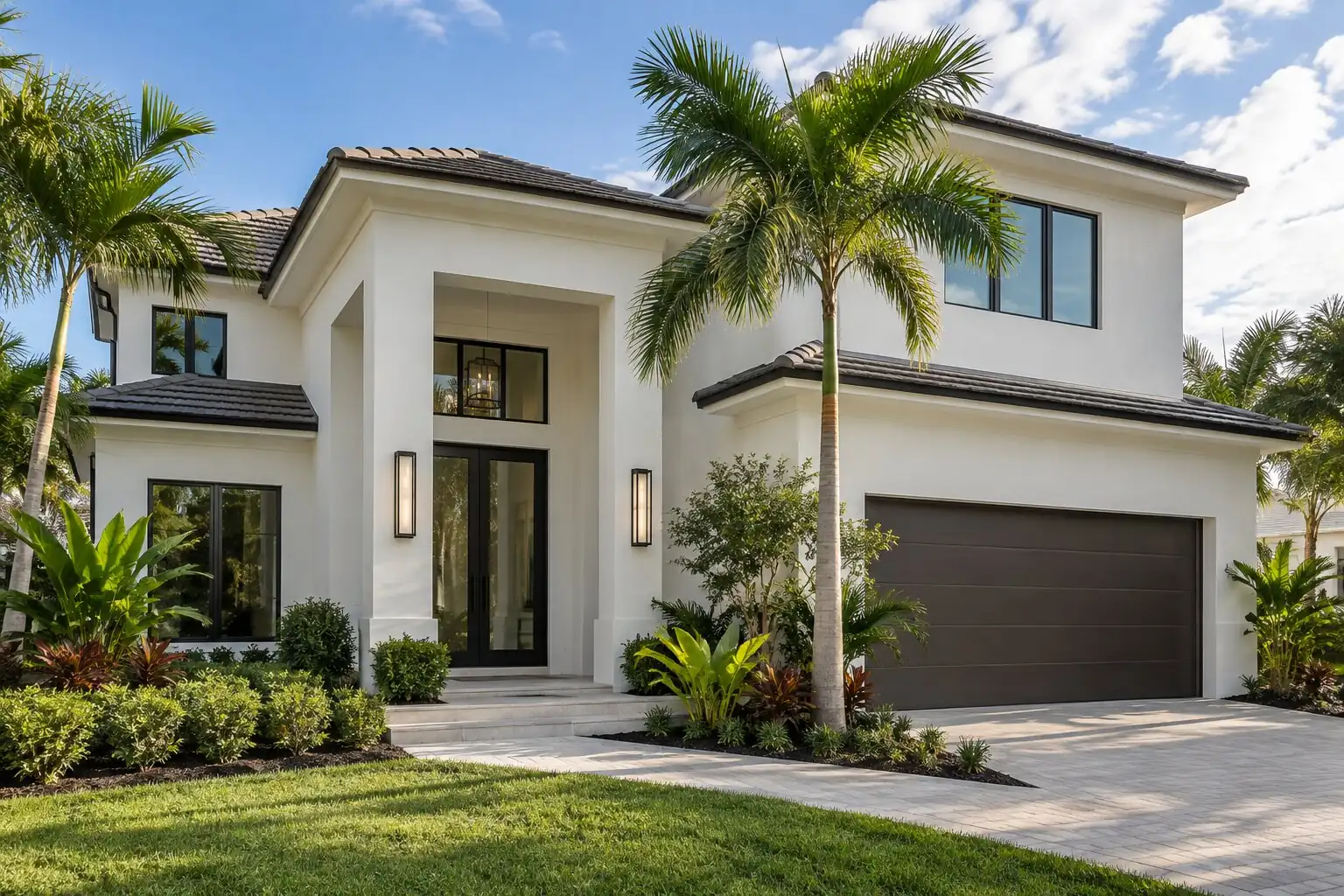
How does a stucco wall in Fort Lauderdale get fixed the right way? Three things decide it: how close the wall sits to salt water, what is underneath it, and the High-Velocity Hurricane Zone rules that cover all of Broward County. J. Perry & Sons works through all three on every job, using the systems described on our stucco services page. Homeowners will find their side of it on residential stucco in Fort Lauderdale. GCs, managers and boards should go to commercial stucco in Fort Lauderdale.
Why Fort Lauderdale stucco fails first near the water
Live on the east side? Salt is working on your walls. The city calls itself the Venice of America for a reason: canals run behind thousands of houses, and the beach, the Intracoastal and the New River put salt air over most of the east side. Salt does its damage inside the wall, not on the surface. Steel lath, corner bead, nails and the reinforcing steel in tie beams and lintels corrode, and rust takes up more room than the steel it replaces. That swelling pushes the stucco off from behind. So east-side spalls show up in straight lines along the top of a wall or over a window head, with a brown stain below.
A patch over corroding steel lasts a season. The real repair opens the wall back to clean steel, treats or replaces it, rebuilds the concrete where needed, then puts the stucco back in coats with galvanized or PVC accessories and coated fasteners. Further west, away from the salt, the same houses crack mainly from settlement and from movement around sliding glass doors, which is a simpler repair.
Seeing brown streaks under a crack? Call (561) 556-7509 and we'll come check whether the steel behind it is rusting.
What is under the stucco, building by building
- Mid-century CBS homes. The 1950s and 1960s ranches on the east side and in the older neighborhoods near downtown are concrete block with cement stucco bonded straight to it. Hard and repairable, but the oldest have had several decades of salt working on their steel.
- 1960s to 1980s houses further west. Still mostly CBS, with less salt and more cracking at openings and along stucco bands. Many are getting impact windows now, and every opening needs its stucco return rebuilt.
- New construction and rebuilds. Teardowns on the east side are often replaced with modern two- and three-story houses, sometimes with frame or metal-stud upper floors on lath. Smooth finishes and crisp reveals are the norm.
- Beach and downtown condos. Concrete frame with block infill and stucco, or high-build coatings on concrete. Stucco here is tied to balcony and concrete restoration.
- Commercial buildings. Downtown retail and offices, and office and warehouse buildings in the uptown area. Most are cement stucco on block; some offices and retail have EIFS (foam-based) cornices, bands or entire facades.
When a wall is EIFS instead of cement, we repair it with EIFS materials. Mixing the two leaves a hard patch in a flexible wall, and it cracks at its edges. Our Portland cement stucco page explains the hard-coat system we recommend for houses.
Textures you will see around the city
Wondering why your patch never seems to blend in? Older east-side ranches mostly carry sand float or dash finishes, often painted over many times, which softens the pattern and makes a repair harder to blend. The 1970s and 1980s houses lean toward knockdown and skip trowel. New construction is largely smooth, often with integral-color or elastomeric finishes. Going smooth on an older house means skimming the whole plane to the corners, not just the patches. See smooth stucco finish.
Matching dash on a sixty-year-old wall is the hardest repair here, because the pattern was thrown by hand and has been filled in by layers of paint. We test the finish on a hidden spot and let it dry before we touch the visible area.
Building in the High-Velocity Hurricane Zone
Broward County is one of two counties in the state where the High-Velocity Hurricane Zone provisions of the Florida Building Code apply. For your stucco, that means lath, fasteners and accessories need the right product approvals, fastening is checked against the drawings, and anything that touches a window or door opening is inspected with the opening. We build to those rules and keep approvals on file.
Permits through the City of Fort Lauderdale
Permits inside city limits go through the City of Fort Lauderdale's Development Services Department. Patching on the same footprint generally needs no permit; re-stucco over new lath, stucco on additions and any change to an opening do. Properties in a designated historic district may need historic preservation review before an exterior change. Houses near the water often sit in flood zones, where we keep the stucco and weep screed above grade instead of burying the base of the wall. J. Perry & Sons pulls those permits itself and follows every city and county requirement. We do not do engineering; we build to the engineer's drawings and coordinate a licensed engineer when the work needs one.
Fort Lauderdale stucco prices
Repair of cracked or hollow stucco, with the texture matched, typically starts around $13–$21 per sq ft. Re-stucco of a full wall typically starts around $14–$23 per sq ft. Spalling repair, chipped to the steel with the rebar treated and rebuilt, is shown as its own line, typically starting around $22–$34 per sq ft. A site visit locks in each one. Columns, arch work and smooth conversions on homes are priced per job after a site visit; full-building, new-construction and EIFS scopes are priced from drawings.
About these prices. These ranges are starting points based on typical South Florida projects. Your final price depends on the condition of the property, access, the materials or system specified and the full scope of work. We confirm every number after we review your project in person or from the drawings, and the price in your signed proposal is the one that applies.
Workmanship warranty on every job; materials carry the manufacturer's warranty. Terms are in your written contract.
Want to know which of these lines your wall falls under? Send a few photos through our project form and we'll book a free look.
Pick the page that fits your building
Your own house: residential stucco in Fort Lauderdale. A plaza, office, condo or new building: commercial stucco in Fort Lauderdale. For every other trade we handle in the city, see our Fort Lauderdale renovation contractor page. Crack and spall methods are on stucco repair.
Nearby: stucco in Pompano Beach · stucco in Hollywood · stucco in Davie
ZIP codes we serve in Fort Lauderdale
33301, 33304, 33305, 33306, 33308, 33309, 33311, 33312, 33315, 33316.
Prefer to send photos or plans? Send us your project
Fort Lauderdale stucco FAQ
Why does stucco keep popping off near the top of my wall? On east-side buildings it is usually rusting steel in the tie beam or lintel pushing the stucco out. The fix is to open the wall, treat or replace the steel, rebuild the concrete and then re-stucco. Patching over it only buys a season.
Does the HVHZ change how stucco is installed in Fort Lauderdale? Yes. Lath, fasteners and accessories need product approvals that meet the High-Velocity Hurricane Zone rules, and work at openings is inspected with the window or door.
How is stucco work in Fort Lauderdale priced? Patch repair typically starts around $13–$21 per sq ft and full re-stucco around $14–$23 per sq ft, with spalling repair listed separately, starting around $22–$34 per sq ft. Other residential work is priced per job after a site visit, and commercial work is priced from drawings. Final pricing is confirmed after we review your project.
Can an old dash finish be matched, or should I go smooth? It can be matched with test samples, but sixty years of paint make it harder. If your house needs many repairs, skimming the whole elevation smooth often gives a cleaner result.
Is the best time of year for exterior stucco in Fort Lauderdale the dry season? Late fall through spring is easiest, because summer afternoon storms slow the cure. We work year-round, putting coats on in the morning and covering fresh work before the rain.
Free estimate — call (561) 556-7509 or send us your project. Licensed Florida general contractor CGC1540699. Serving Broward, Palm Beach and Miami-Dade counties.