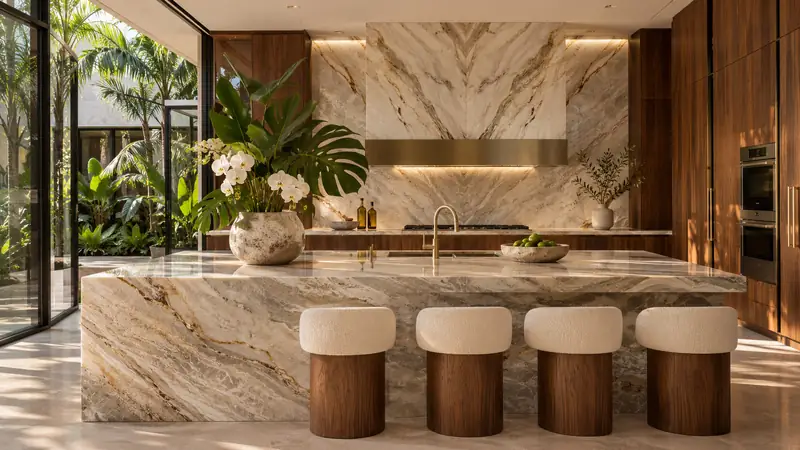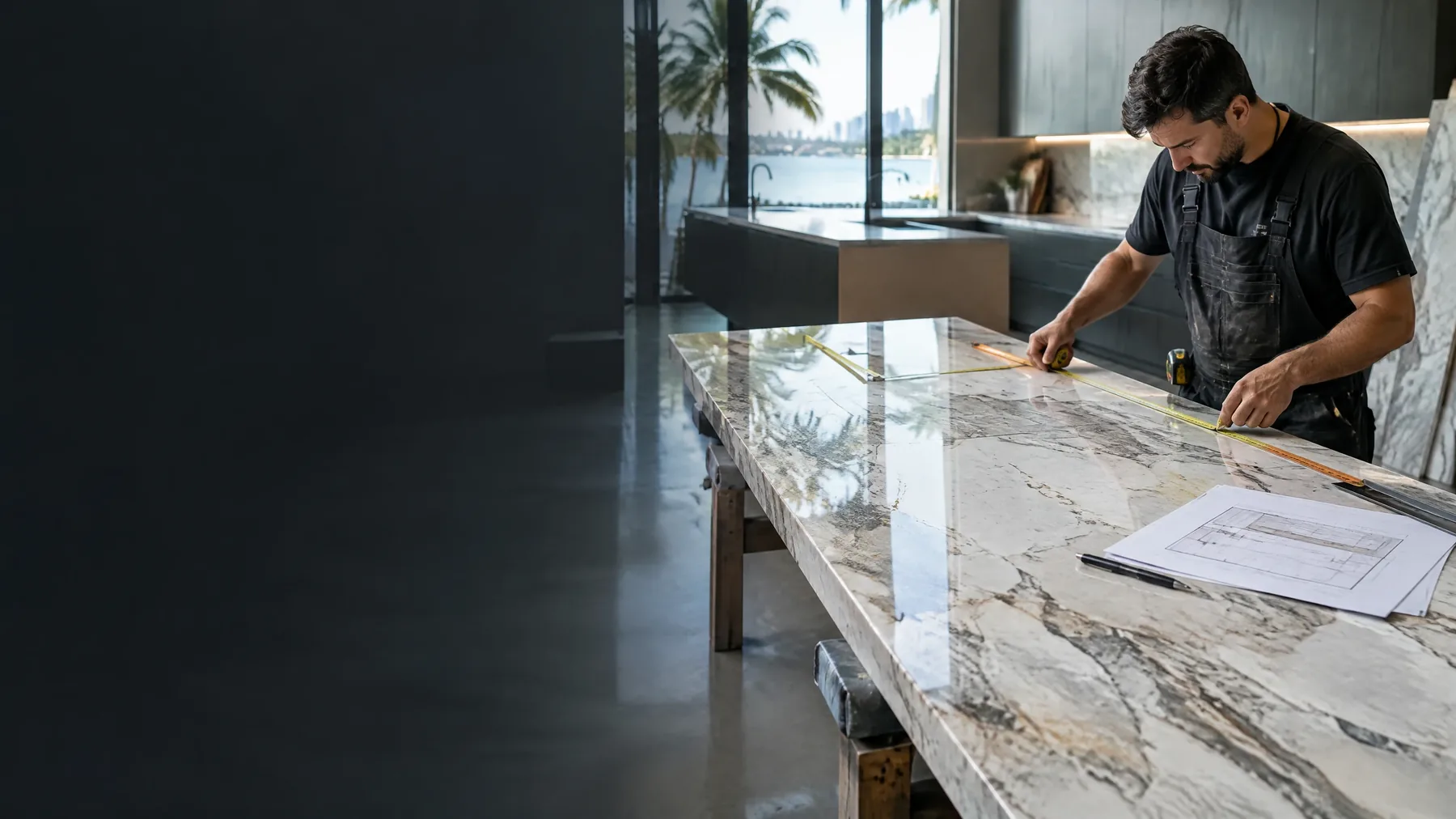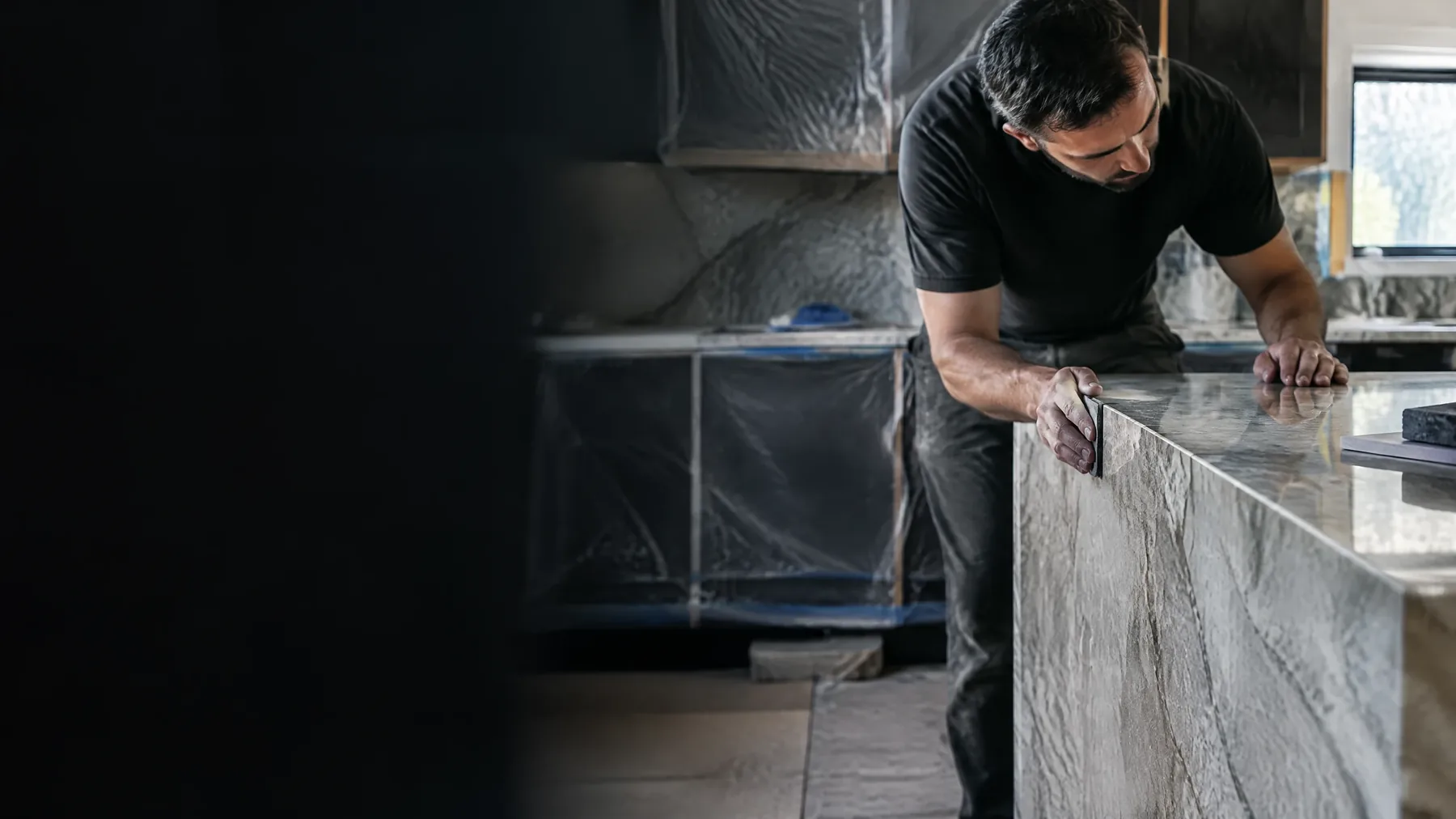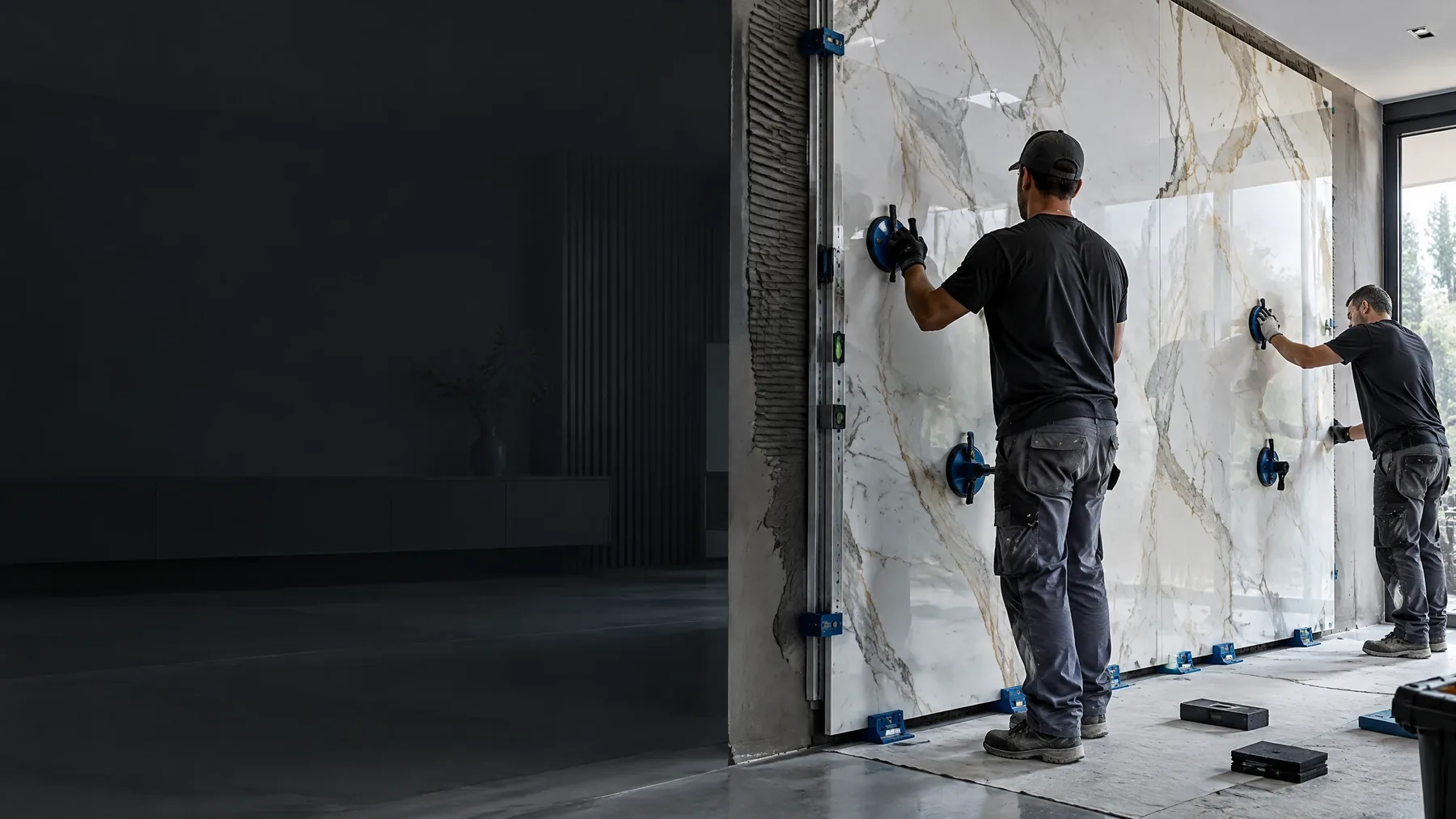
Marble tile installation is the signature of luxury renovation in South Florida. From Calacatta marble master bathrooms in Boca Raton to travertine pool decks in Palm Beach, natural stone tile is the material that defines high-end homes in this market. Here's the complete guide to marble and natural stone tile installation in South Florida.
Popular Marble and Natural Stone Types in South Florida
- Calacatta Marble: White background with bold gray and gold veining — the most prestigious marble variety. Calacatta Gold, Calacatta Borghini, and Calacatta Viola are popular in South Florida luxury bathrooms and kitchens.
- Statuario Marble: White background with dramatic gray veining — slightly more vein density than Calacatta. Popular for feature walls and shower surrounds.
- Carrara Marble: White to light gray background with subtle gray veining — the most affordable Italian marble. Popular for bathroom floors and backsplashes.
- Travertine: A sedimentary limestone with a classic, warm appearance. Ivory, Noce, and Silver travertine are staples of South Florida pool decks and outdoor areas.
- Emperador Marble: Dark brown to black marble with white veining — dramatic choice for feature walls and accent applications.
- Crema Marfil: Warm beige Spanish marble — popular for floors in traditional South Florida homes.
The Owner's Guide to Tile, Floors and Stone
How to choose the right floor, what makes it last, what to ask any contractor and how to care for it.
+ Free one-page checklist: Before You Order Your Tile
Living With Marble: Care, Etching and Restoration
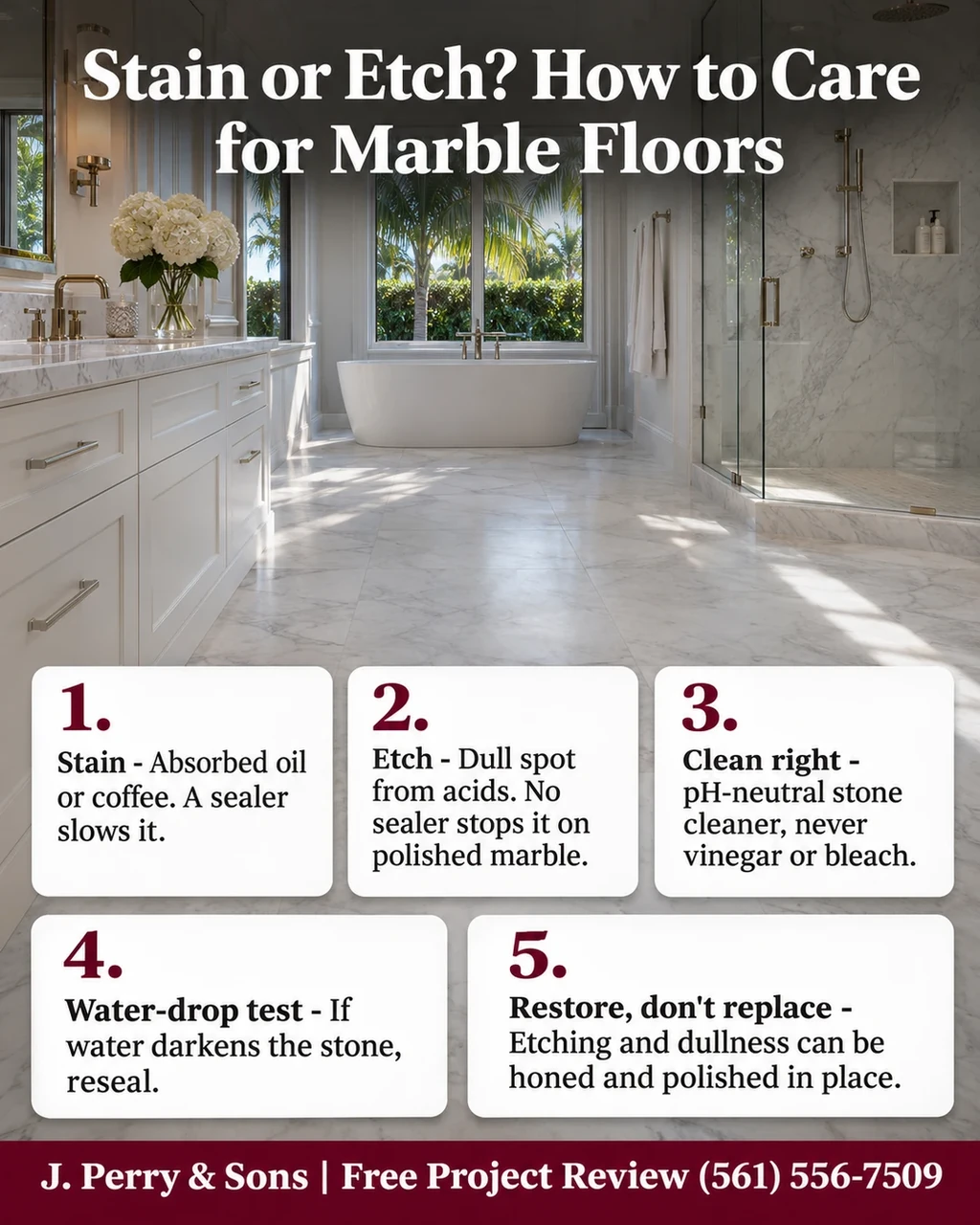
Marble is a long-term floor if it is cared for correctly. Most owners are surprised by one thing: sealing protects marble from stains, not from etching.
Staining vs. etching. A stain is something absorbed into the stone, such as oil or coffee. An impregnating sealer slows that absorption. An etch is a dull spot where an acid, such as lemon juice, wine, vinegar or the wrong cleaner, has reacted with the calcium in the marble. No sealer prevents etching on polished marble. Honed marble shows etching much less.
Daily care. Use a pH-neutral cleaner made for stone and a soft mop. Avoid vinegar, bleach and general bathroom cleaners. Put mats at exterior doors, because sand acts like sandpaper on a polished floor.
Sealing. The sealing schedule above is a guide; a simple water-drop test tells you when it is time. If water darkens the stone within a few minutes, it needs resealing. Our guide to sealing natural stone in Florida humidity explains the products.
Polishing and restoration. Etching, dullness and light scratches can be removed with in-place honing and polishing, without replacing the floor. Deeper damage, lippage and cracked pieces are restored by grinding, filling and replacing tiles from the overage. See marble polishing and honing explained and our guide to marble floor restoration cost.
Next step: if you already have a marble floor that has lost its shine, send us photos and we will tell you whether it needs polishing, restoration or replacement.
Choosing the Stone Itself: Lot, Thickness, Backing and Finish
The name of the marble is only the start. Two boxes of "Calacatta" can look and perform very differently, and the selection decisions happen before anything is installed.
See the actual lot. Natural stone varies from block to block. The tile for your floor should come from one production lot, and you should see pieces from that lot, not a showroom sample cut years ago. We order the stone with an overage for cuts, breakage and future repairs, all from the same lot, and keep the overage with the job.
Dry-lay the veining. On a floor with strong veining, such as Calacatta or Statuario, the pieces are laid out dry before setting, so heavy veins do not bunch in one corner and the pattern flows through the room. On book-matched or large tiles, this is where the look of the floor is decided.
Calibrated thickness. Good marble tile is calibrated, meaning each piece is ground to an even thickness. Uncalibrated stone varies piece to piece, which makes a flat floor harder to achieve and adds setting time.
Backing. Some marble arrives with a fiberglass mesh or resin backing to strengthen fragile stone. The setting material has to be one the mortar maker approves for that backing, because some standard mortars do not bond well to resin.
Moisture-sensitive stone. Certain green marbles and some other stones can warp or curl when set with water-based mortar. They are set with an epoxy or a rapid-setting mortar made for moisture-sensitive stone. This is checked when the stone is selected, not during installation.
Finish. Polished marble reflects light and looks the most formal, but shows scratches and etching quickly on a floor. Honed marble has a smooth matte surface that hides wear. Brushed or tumbled finishes add texture and slip resistance for baths and outdoor areas.
J. Perry & Sons supplies the stone and brings samples to your home. See renderings and samples.
Next step: tell us the stone and the finish you are considering, and we will bring pieces from the available lot for you to see in your light.
Marble Tile Installation Cost in South Florida (2026)
- Marble floor tile installation (12x12 to 18x18): Starting at $20 per sq ft for installation, with the marble supplied by J. Perry & Sons and itemized in the written proposal
- Marble floor tile installation (24x24+): Starting at $20 per sq ft installed
- After the project review, your written proposal lists the following scope and pricing: Marble shower walls (full tile): for a standard shower.
- After the project review, your written proposal lists the following scope and pricing: Travertine pool deck installation (stone included).
- After the project review, your written proposal lists the following scope and pricing: Marble feature wall panels: installed.
- After the project review, your written proposal lists the following scope and pricing: Marble countertop installation: installed.
What Drives the Price of a Marble Floor
The starting prices above are based on a standard installation. These are the items that move the number on your project.
The stone. Calacatta and Statuario sit at the top of the range, and Carrara and Crema Marfil below. Within each name, the grade and lot change the price. The stone is supplied by J. Perry & Sons and itemized separately in the written proposal, so you see what the material costs and what the installation costs.
Tile size. Larger formats need more careful handling, large-format mortar and a flatter slab. Very large or slab-format pieces may need additional crew and equipment.
Pattern. Straight lay is the base. Diagonal, herringbone, borders, inlays and waterjet medallions add cuts and layout.
Removing the old floor. Old tile or marble set in a thick mortar bed takes more removal and slab cleanup than a thin-set floor.
Slab condition. Leveling, crack isolation and moisture issues are priced after we see the slab.
Finish work. In-place grinding and polishing after installation, and sealing before and after grout, are part of a high-end marble floor.
Stairs and thresholds. Marble stair treads, risers and thresholds are fabricated pieces. See our marble stairs and stair tile page.
Next step: send us the rooms you are planning in marble and the stone you like, and we will tell you which of these items apply.
Marble Installation: What Makes It Different
- White mortar is mandatory: Gray mortar telegraphs through translucent marble, creating a grayish appearance. We use white polymer-modified thin-set on all marble installations.
- Lippage control: Marble tiles have natural variation in thickness. Leveling clip systems are required on all marble floor installations to prevent lippage.
- Sealing before grouting: Marble must be sealed before grouting to prevent grout from staining the stone surface.
- Epoxy grout for wet areas: Unsanded epoxy grout is recommended for marble shower installations — it's non-porous and won't stain or mold.
- Diagonal vs. straight layout: Diagonal layout (45°) is the traditional choice for marble floors — it hides subfloor imperfections and creates a classic look.
- Honing vs. polishing: Honed (matte) marble is more practical for floors; polished marble is stunning but shows scratches more readily.
The Floor Under the Marble: Stiffness, Flatness and Movement Joints
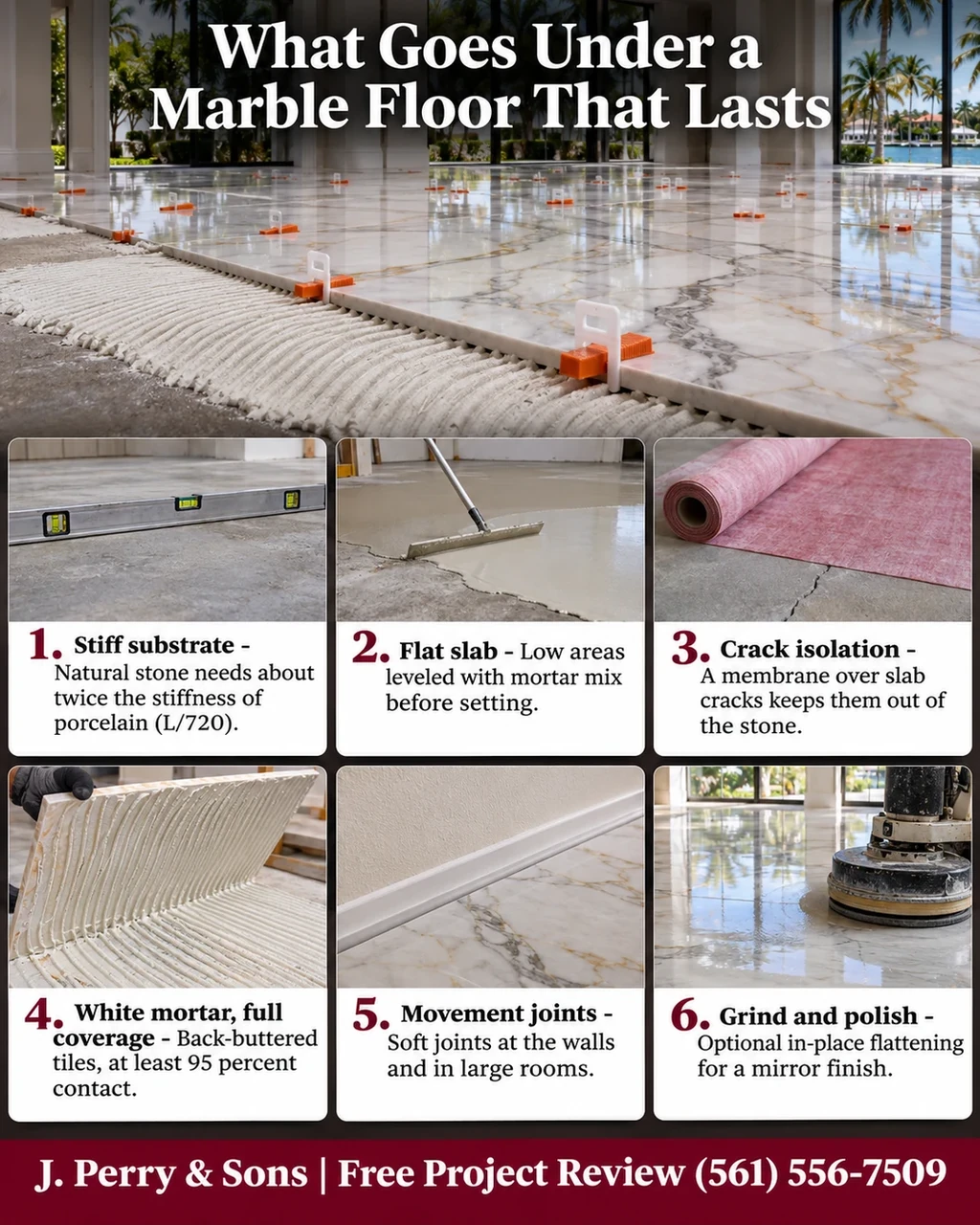
Marble is less forgiving than porcelain. A floor that would be fine for ceramic tile can crack marble, so the substrate gets more attention.
Stiffness. Industry guidelines for natural stone call for a floor about twice as stiff as for ceramic and porcelain tile: a deflection limit of L/720 for stone, compared with L/360. On a concrete slab on grade, which is what most South Florida homes have, that is rarely a problem. On upper floors framed in wood, the framing and subfloor are reviewed before stone is planned, and changes to the structure come from the engineer.
Flatness. Larger marble tile needs a flat substrate to avoid lippage. Low areas of the slab are leveled with mortar mix before the stone is set. The flatter the slab, the flatter the finished floor, and the less grinding is needed afterward.
Crack isolation. Shrinkage cracks in a slab will eventually show through stone set directly over them. A crack-isolation membrane goes down over cracks first.
Full coverage. Natural stone needs at least 95 percent mortar contact under each piece. That means a large-format mortar, the right trowel and back-buttering every tile. Voids under marble are where cracks and hollow sounds come from.
Movement joints. Stone floors need soft joints at the perimeter, at changes of plane and in large rooms, at the spacing the TCNA movement-joint guideline (EJ171) sets. Grout tight against the wall is how floors tent in the heat.
Leveling for a mirror finish. On formal polished floors, the stone can be ground flat and re-polished in place after installation, which removes small height differences between tiles and gives a continuous surface. This is planned into the scope from the start.
Our floor leveling service covers slab prep before stone.
Next step: if your project is on an upper floor or over an old slab with cracks, send us photos so we can review the substrate before you choose the stone.
FAQ
Is marble a good floor for a South Florida home?
Yes, when it is installed over a stiff, flat substrate and cared for correctly. Honed marble is the most practical choice for living areas and baths. Polished marble is best in formal spaces with less sand and traffic. Porcelain is the alternative where you want the look with less care.
Why must marble be set with white mortar?
Light marble is slightly translucent. Gray mortar can show through and make the stone look dull or shadowed. White mortar keeps the true color of the stone.
What is the difference between honed and polished marble?
Polished marble has a glossy, reflective surface. Honed marble is ground to a smooth matte surface. Honed marble hides scratches and etching better and is less slippery when wet, so it is often chosen for floors and showers.
Can an existing marble floor be polished instead of replaced?
Often, yes. Dull floors, etching and light scratches can be honed and polished in place. A floor with many cracked or hollow tiles, or a stone you no longer like, is usually a replacement.
Do you supply the marble?
Yes. J. Perry & Sons supplies the stone, from one lot with an overage for repairs, and itemizes it in the written proposal.
Quartzite, marble and porcelain slabs, templated and installed with care.
Free project review · (561) 556-7509