
A steam shower is a small room that has to hold steam, not just water
You have seen it in a hotel spa: glass from floor to ceiling, a stone bench and a room full of warm steam. A steam shower fits in most well-planned luxury bathrooms, but it is built very differently from a regular shower.
A normal shower only has to keep liquid water off the walls and floor. A steam shower has to hold hot vapor inside a closed room, and vapor moves through materials that stop water. If the enclosure is not built for steam, moisture ends up inside the wall and the ceiling. In a humid South Florida home, that is how mold and stained ceilings start.
This guide covers what goes into a steam shower that works. J. Perry & Sons builds steam showers as part of full bathroom remodels in homes and condos across Broward and Palm Beach, and these are the decisions we walk through with every client.
Planning a primary bath with steam? Send us your project with the floor plan and a few photos, and we will tell you what the space needs.
What makes a shower a steam shower
Every steam shower has the same four parts:
- A sealed enclosure. Walls, floor and ceiling fully tiled or stone-clad, with a glass door and panels that close the room to the ceiling.
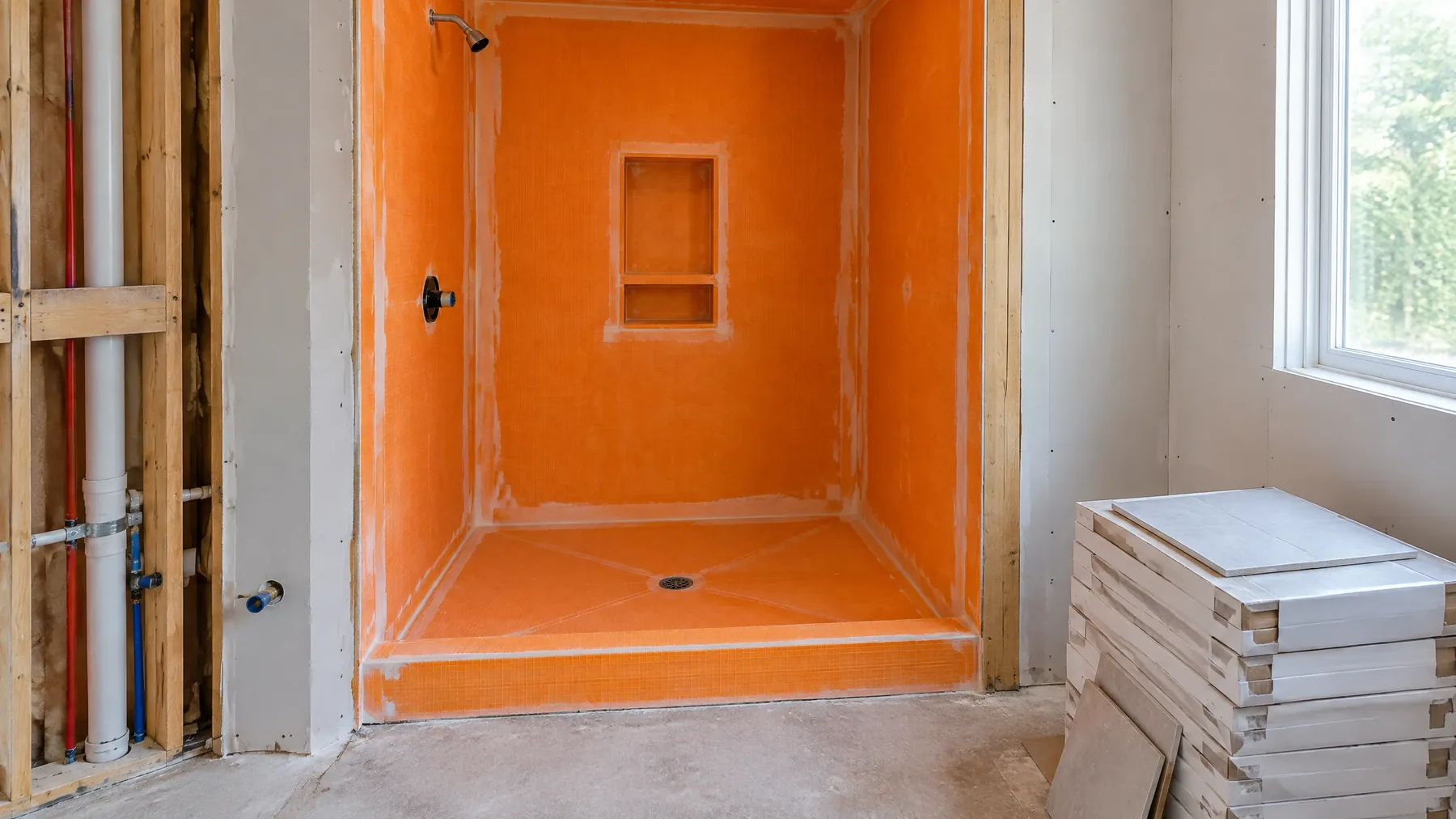
- A vapor-proof waterproofing system. A membrane rated for steam, behind the tile on every surface, including the ceiling.
- A steam generator. A small unit outside the shower that heats water and sends steam through a line to a steam head inside.
- Controls. A panel inside the shower, often with a second control outside, to start the steam and set temperature and run time.
Everything else is built around those four parts. When one of them is missed or done with the wrong product, the shower may look perfect when new and fail behind the tile later.
The sealed enclosure: glass to the ceiling
A regular shower can stop the glass a foot or more below the ceiling. A steam shower cannot. Steam rises, so the enclosure has to run all the way up.
Steam shower glass door and panels. The glass runs from the floor or curb to the ceiling, with seals at the door edges and a sweep at the bottom. Heavy tempered glass is the standard look in luxury bathrooms, and it is fitted after the tile so it closes tight against finished surfaces. The door should swing out, never into the shower.
Transom. Many steam enclosures include a small operable transom at the top of the glass, opened after a session so the room dries. A wet enclosure that never dries is where grout stains and mildew begin.
Ceiling height. More volume means a larger generator. Many steam showers drop the ceiling inside the enclosure, which also lets us build the slope covered below.
Vapor-proof waterproofing: the part you never see
This is where most steam shower problems come from, and where we spend the most care.
A standard shower membrane is designed to stop water. A steam shower needs a membrane with a very low vapor permeance, rated by its manufacturer for continuous steam use. The industry tile standards treat steam showers as their own installation type for this reason. Not every shower membrane qualifies, so we confirm the steam rating on the product before it goes on the wall.
The vapor-proof layer has to be continuous:
- On all walls, floor to ceiling, with every seam and corner overlapped or banded as the manufacturer requires.
- On the ceiling, which is the surface under the most steam pressure and the one most often skipped in regular showers.
- Down into the pan, tied into the drain so water and condensation have only one path out.
- Around every penetration, including the steam head, valve, controls and any recessed light.
We flood test the pan before tile goes on and check the rest of the waterproofing as it is installed, because once the stone is on, there is no second look.
We use one waterproofing system from wall to ceiling to drain, so there is no weak joint where two products meet.
The sloped ceiling: so it does not rain on you
Steam condenses when it touches a cooler surface. On a flat ceiling, those drops gather and fall straight down, usually as cold drips on your back. In a steam shower, the ceiling is built with a slope so the condensation runs to the walls and down to the drain instead.
The slope is framed in before the waterproofing goes on, as a single slope toward one wall or a slight vault. Industry guidance commonly calls for about one to two inches of fall per foot, and we plan the joints so the slope reads as intentional.
Tile overhead fights gravity and constant heat, so we use setting materials rated for steam and full coverage on every piece.
Where the steam generator goes
The steam generator is a compact unit that needs to sit outside the shower, in a dry space with access for service. The steam travels through an insulated line to the steam head inside the enclosure.
Common locations in South Florida homes:
| Location | Works well when | Watch for |
|---|---|---|
| Vanity cabinet | Vanity is next to or near the shower | Cabinet space for the unit and a drain pan |
| Linen or walk-in closet | Closet shares a wall or is close | Service access door, ventilation |
| Conditioned attic space | Single-story home with attic over the bath | Heat in Florida attics, access, line length |
| Mechanical or laundry room | Close to the bath | Line run length and insulation |
| Below in a condo | Rarely possible | Usually a vanity or closet location instead |
What the generator location needs, wherever it is:
- Distance. Every generator maker sets a maximum length for the steam line. We keep the unit within that run and insulate the line.
- Water and power. A cold water supply with a shut-off, and a dedicated electrical circuit sized for the unit.
- Drain and pan. A safety drain or pan under the unit, because generators flush and can drip.
- Service access. A removable panel or door. A generator buried behind finished drywall becomes a demolition job the first time it needs service.
Sizing the generator. The unit is sized to the cubic volume of the enclosure. Stone and porcelain walls absorb heat, so an all-stone shower calls for more capacity than the volume alone suggests, and so does a high ceiling or a large glass area. We size the generator to the finished room, not to the rough measurement.
In condos, the building also has a say. Many associations need to approve plumbing and electrical changes, and some have rules about added circuits. We pull every permit the work requires and follow each city, county and association requirement.
Stone or porcelain: choosing the finish
A steam shower is a natural place for the materials our clients love most. Each one behaves a little differently in steam.
Large-format porcelain and porcelain slabs. Our first choice for most steam showers. Porcelain absorbs almost no water, does not need sealing, and handles heat well. Slab walls and large panels mean very few grout lines, which is less to clean and fewer joints exposed to steam. See our guide to porcelain slab shower walls.
Marble. Beautiful and classic, and it can work in steam with the right planning. Marble is porous and sensitive to acidic cleaners, so it needs sealing and the right care. We help clients choose stones that hold up, and our marble tile installation guide covers this in detail.
Travertine and other natural stone. Works with filled, honed stone and regular sealing. Unfilled travertine is not a good match for a steam enclosure. Our article on sealing natural stone in Florida humidity explains why.
Grout. In steam we prefer high-performance grouts that resist staining and water, with joints as narrow as the tile allows.
Floor. The shower floor needs a slip-resistant finish, even when the walls are polished. A curbless design with a linear drain works well in a steam shower, but it needs a recessed floor and a sealed glass threshold to keep the steam in.
We bring samples to your home so you can choose in the bathroom's real light.
The bench and the comfort details
A steam shower is meant for sitting, so the bench gets more thought than in a regular shower.
- Built-in bench. Framed or built as a solid bench, wrapped in the same waterproofing and finished in stone or porcelain. The seat is sloped slightly toward the drain so water does not sit on it.
- Placement. Away from the steam head, which releases very hot steam.
- Niches. Recessed niches for products, placed out of the direct steam path and waterproofed like the walls.
The steam head. Usually placed low on the wall, often several inches above the floor or bench, and away from where you sit. Many have an option for aromatherapy oil.
Controls, lighting and sound
The standard setup is a control panel inside the shower and often a second panel outside, so you can start the steam before you step in. Some systems also connect to a phone or home automation.
Other options our clients add:
- Lighting. Sealed, steam-rated lights in the ceiling or wall, sometimes with color settings.
- Auto-flush. Many generators clear the tank after each use, helpful with South Florida water.
- Exhaust fan outside the enclosure. The bathroom still needs strong ventilation to clear the steam when you open the door. The fan goes in the bathroom, not inside the steam enclosure.
We place controls on the tile layout so they line up with the joints.
Steam shower cost: starting prices
A steam shower is priced as a complete shower, plus the steam package. Our published starting prices for showers, installed:
| Service | Starting price |
|---|---|
| Large or curbless shower with linear drain (4x6 and up) | Starting at $23,500 |
| Steam package: vapor-proof waterproofing, sloped ceiling, generator, controls, glass to ceiling | Priced in your written proposal after the project review |
The final price is based on the size of the enclosure, the stone or porcelain you choose, the generator location, the glass, and the plumbing and electrical work in your home or building. It is set after the project review, in an itemized written proposal. See our shower replacement page for how we price showers.
For the full room, see our guide to luxury bathroom renovation in South Florida.
Why homeowners and designers work with us
- We build the full shower ourselves, from demolition to waterproofing to stone, and we supply all materials.
- We plan the generator location, the slope and the glass before anything is ordered.
- We install large-format porcelain, porcelain slabs, marble and natural stone, which is where we are strongest.
- Once the proposal is signed, we provide a simple rendering. More detailed design is handled by our in-house designer as a separate service.
- We pull all permits the work requires and follow every city and county requirement.
- J. Perry & Sons is a licensed Florida General Contractor (CGC1540699), licensed and insured, with more than 150 projects completed and a workmanship warranty.
Next step Call (561) 556-7509 or send us your project. Share the bathroom plan, photos and the finishes you like, and we will call you back personally to set up your Free Project Review.
Steam shower FAQ
Can any shower be turned into a steam shower?
Not as-is. A steam shower needs glass to the ceiling, a steam-rated vapor-proof membrane on every surface, a sloped ceiling and a generator location nearby. In most remodels the shower is taken down to the studs and rebuilt for steam.
Where does the steam generator go?
Outside the shower, in a dry, accessible space within the maker's maximum line length: often a vanity cabinet, a closet or a conditioned attic. It needs water, a dedicated circuit, a drain pan and a service access panel.
Why does a steam shower need a sloped ceiling?
Steam condenses on the ceiling. A slope sends those drops to the walls and down to the drain, instead of dripping on you.
What is the best tile for a steam shower?
Large-format porcelain or porcelain slabs are the most forgiving: almost no absorption, no sealing and few grout lines. Marble and filled travertine can work with sealing and care.
Does a steam shower glass door need to go to the ceiling?
Yes. The glass closes the enclosure all the way up, with seals on the door. Many include a small operable transom to let the steam clear after use.
Is a steam shower a problem in a condo?
It can be done in many condos, but the association usually needs to approve the plumbing and electrical work. We review the building rules and pull the permits.
How much does a steam shower cost?
Our showers start at $13,500 for a complete 3x5 replacement and $23,500 for large or curbless showers. After the project review, your written proposal lists the following scope and pricing: The steam package.
Guide
Request the guide: The Luxury Bathroom Planning Guide: Marble, Slab Walls and Steam Showers
Call (561) 556-7509 or send us your project for a Free Project Review.