By John Perry, J. Perry & Sons — Florida CGC1540699
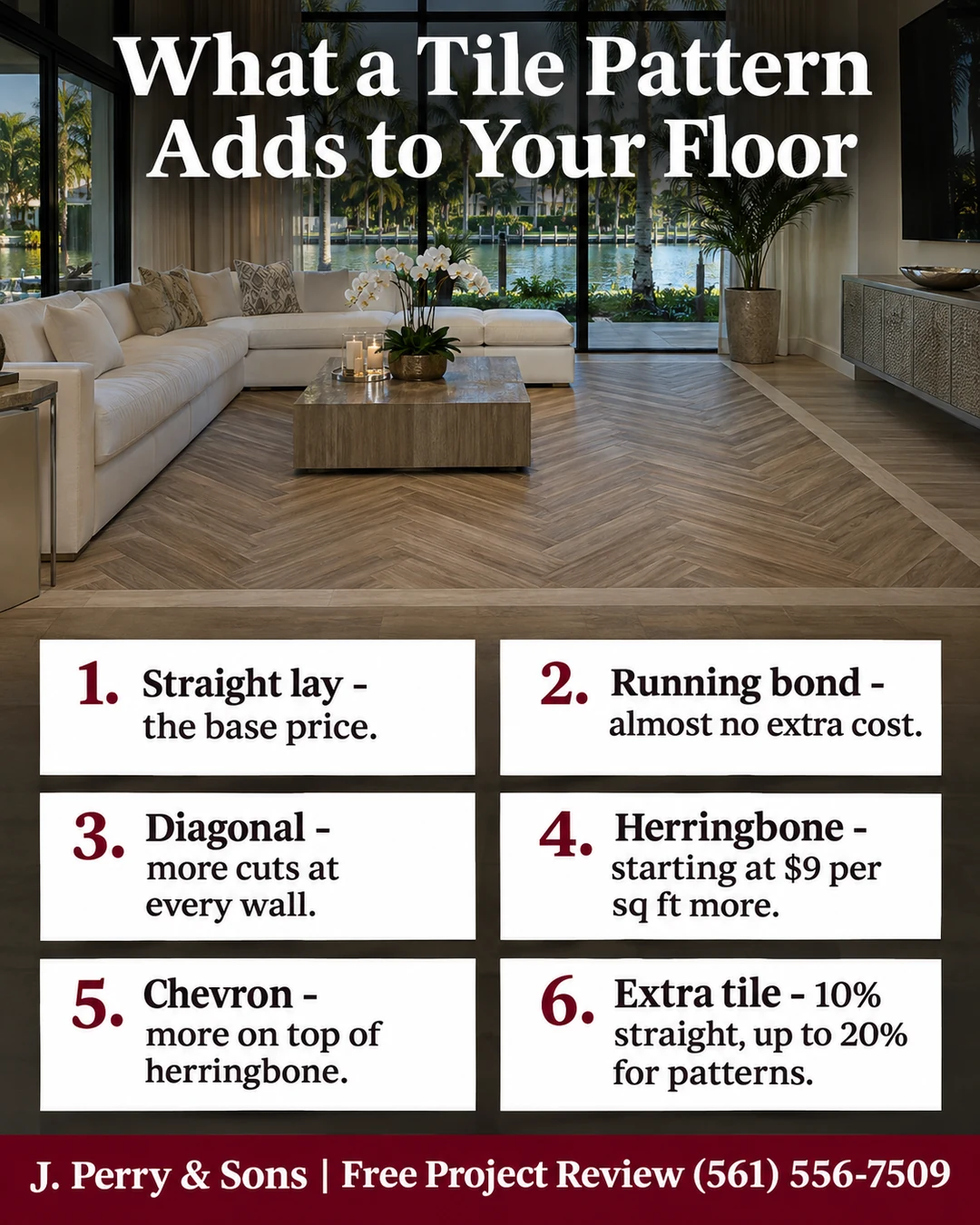
Tile pattern cost is mostly labor and waste. Against a straight lay starting at $20 per sq ft for standard porcelain in South Florida, a 1/3 offset adds little, a diagonal adds starting at $20 per sq ft, herringbone adds starting at $20 based on tile size, and chevron or double herringbone with mitered ends adds another starting at $20 on top of herringbone. Overage climbs from 10% to as much as 20%. Here is how J. Perry & Sons tile installation prices each layout.
Tile pattern cost by layout (labor + setting materials)
| Pattern | Installed per sq ft (standard porcelain) | Added over straight lay | Tile overage to order |
|---|---|---|---|
| Diagonal (45°) | Starting at $20 | Starting at $20 | 15% |
| Herringbone, 6x24 or 8x32 wood-look plank | Starting at $20 | Starting at $20 over plank straight lay | 15–20% |
Wood-look plank straight lay starts higher than standard tile, at about starting at $20 per sq ft, because long planks need flatter floors and a 1/3 offset to control lippage. Demo and leveling are priced separately.
Why a pattern costs more than the same tile laid straight
More cuts. A straight lay is cut only at the walls. A diagonal cuts every tile along every wall at 45°. Herringbone cuts at the walls on both ends of each plank, plus at every doorway and cabinet run.
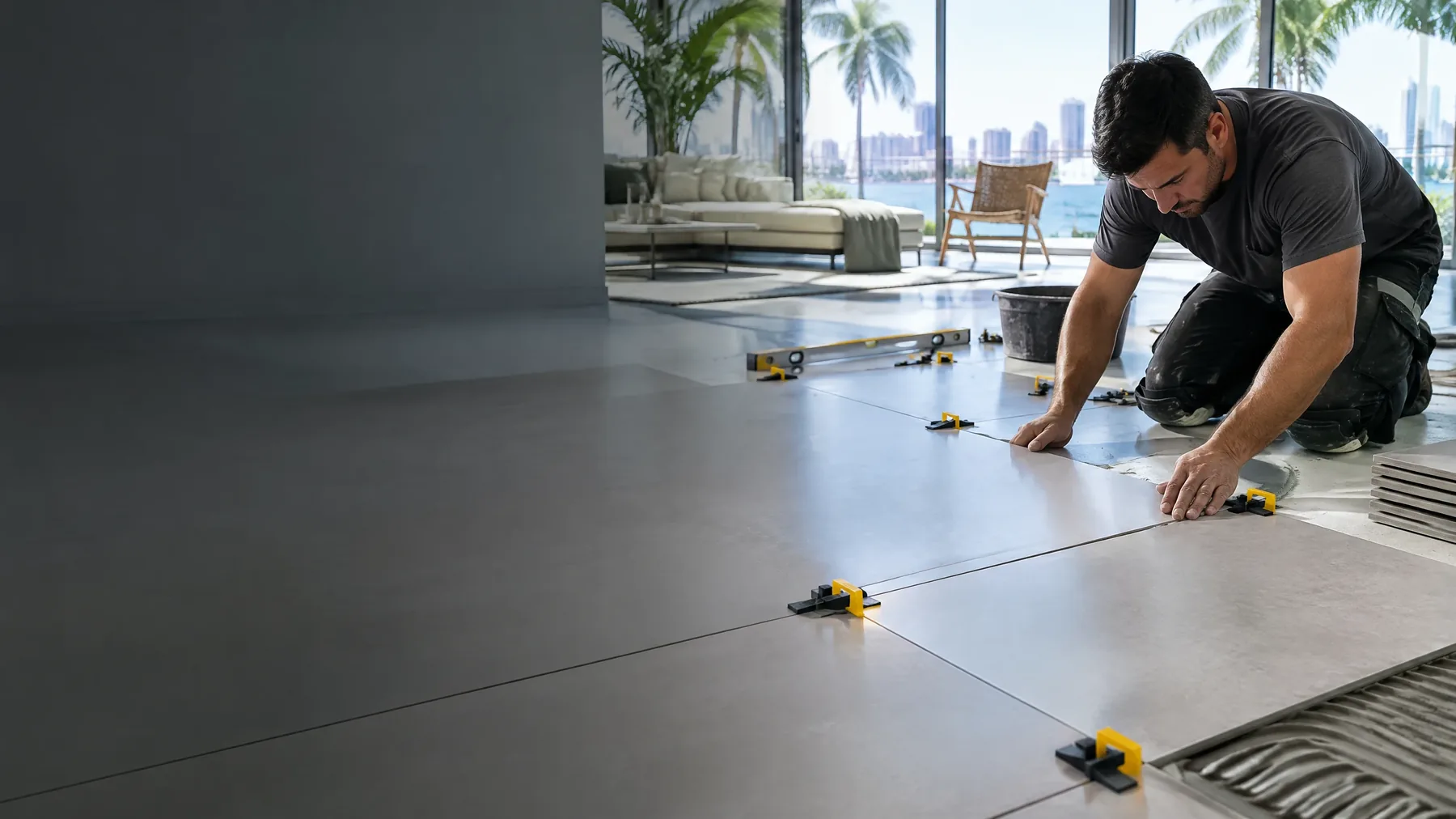
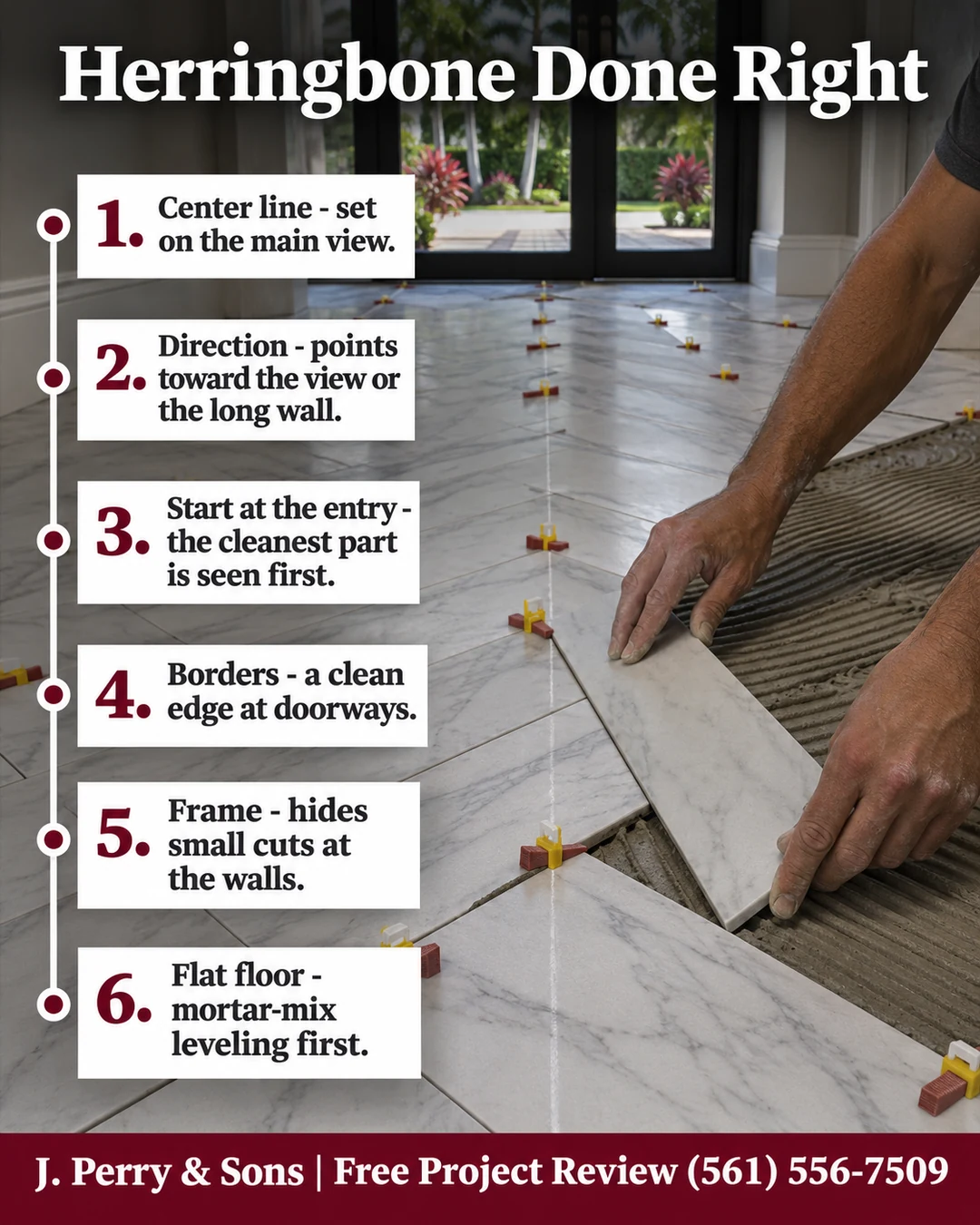
Layout time. Patterns need a reference line that holds across the whole floor. Herringbone runs off a centerline that has to be dead straight for 20 or 30 feet; drift of 1/8" shows by the far wall. Chevron is based on the angle of each piece matching the next.
Slower setting. Each piece is placed individually against two neighbors in a pattern, rather than in rows.
Waste. Every cut along a wall produces a piece too small to reuse. That is why the overage goes from 10% to 15–20%. Order it in one lot so the shade matches.
Free Project Review — call (561) 556-7509 or send us your project. Send a photo of the room and the tile and pattern you are considering, and we'll give you a starting price.
Call (561) 556-7509 or send us your project with photos, the city, approximate dimensions, and material selections.
Pattern by pattern: where each one fits
Running bond (offset). The default for rectangular tile. A 1/3 offset is used on long planks and large rectangles because many tiles have a slight bow in the middle, and a 1/2 offset puts the high point of one tile next to the low point of the next.
Diagonal. Makes a small room feel wider and hides walls that are out of square. It suits square tile, not long planks.
Versailles. A repeating set of four sizes, usually in travertine or porcelain that imitates it. It looks irregular but follows a strict module, and it needs the full set of sizes in the right proportions.
Herringbone. The most requested pattern in bathrooms and living areas right now, in wood-look plank, marble-look porcelain and small format. See the full herringbone tile cost guide for room-by-room numbers.
Chevron. Looks like herringbone but the ends meet in a straight line along the centerline. Either buy tile manufactured as chevron, with angled ends, or cut rectangles at an angle on site, which adds labor and waste.
Basketweave and pinwheel. Common in small bathrooms and entries with marble or porcelain mosaics and dots.
Large-format tile and patterns
Large-format porcelain, 24x48 and up, is usually laid straight or in a 1/3 offset. Patterns with large tiles produce enormous waste and very few full pieces. If you want a pattern with a big tile, a large herringbone in 12x48 plank is possible but needs a very flat floor and leveling clips at every joint.
South Florida conditions
Most floors here are on concrete slabs that move and are not perfectly flat. Patterns hide some of this better than a grid: a diagonal or herringbone does not have a long continuous grout line to show where the floor dips. They also need the slab to be prepped: a pattern laid over a hump will show lippage on every piece that crosses it. We grind and level before any pattern goes down. Movement joints at the perimeter and every 20–25 ft in large open floors still apply, and on a pattern we plan them at a natural break.
Planning and timeline
Decide the pattern before ordering tile, because the overage changes. A herringbone floor takes noticeably longer to set than the same floor in a straight lay, because every piece is cut and aligned.
Tile pattern installation by city
- Tile installation in Fort Lauderdale
- Tile installation in Boca Raton
- Tile installation in Palm Beach Gardens
- Tile installation in Miami Beach
- Tile installation in Southwest Ranches
- Tile installation in Pompano Beach
Tile pattern cost — FAQ
How much more does herringbone tile cost? About starting at $20 per sq ft more than the same tile laid straight, plus 15–20% overage. Small tiles sit at the top of that range.
Is chevron more expensive than herringbone? After the project review, your written proposal lists the following scope and pricing: Yes, by roughly, because the ends are angled and the alignment is less forgiving.
Does a diagonal tile pattern cost more? After the project review, your written proposal lists the following scope and pricing: Yes, more than straight, with 15% overage instead of 10%.
How much extra tile should I buy for a pattern? 10% for a straight lay, 15% for diagonal, 15–20% for herringbone and chevron, in one dye lot.
How do I get an exact price? Call (561) 556-7509 or send photos and rough dimensions through our project form. We review every project personally and follow up with you directly.
Free Project Review — call (561) 556-7509 or send us your project. Licensed Florida general contractor CGC1540699. Serving Broward, Palm Beach and Miami-Dade counties.
Call (561) 556-7509 or send us your project with photos, the city, approximate dimensions, and material selections.
Explore our owner's guides before you choose your materials and finishes.
Free project review · (561) 556-7509
Share your vision for your South Florida home.
Free project review · (561) 556-7509