Grout is the unsung hero of tile installation — and the most common source of tile problems in South Florida homes. Cracked grout, stained grout, moldy shower grout, and crumbling grout joints are all signs that it's time for professional grout repair or replacement. Here's the complete guide.
Types of Grout We Use
- Sanded grout: Used for joints 1/8 inch and wider. The sand aggregate prevents shrinkage cracking. Standard choice for floor tile with normal joint widths.
- Unsanded grout: Used for joints narrower than 1/8 inch and for polished stone and glass tile (sand scratches polished surfaces). Required for rectified large-format tile with tight joints.
- Epoxy grout: Two-component grout with superior stain resistance, chemical resistance, and durability. Recommended for shower floors, kitchen backsplashes, and commercial applications. Doesn't require sealing.
- Urethane grout (Fusion Pro, Permacolor Select): Single-component, pre-mixed grout that's stain-resistant and doesn't require sealing. Excellent for residential applications where epoxy is overkill.
- Polymer-modified grout: Standard sanded or unsanded grout with polymer additives for improved flexibility and stain resistance. Our default choice for most residential tile installations.
The Owner's Guide to Tile, Floors and Stone
How to choose the right floor, what makes it last, what to ask any contractor and how to care for it.
+ Free one-page checklist: Before You Order Your Tile
Choosing Grout Color and Joint Width for New Tile
If you are installing new tile, the grout is part of the design, and two decisions shape the finished look.
Joint width. The joint width is not a style choice alone. The tile standard sets the minimum joint at three times the tile's actual size variation, and never less than 1/16 inch. Rectified tile, ground to precise edges, can take the narrowest joints. Handmade tile and natural stone with uneven edges need wider ones. Setting tile tighter than it allows causes lippage and uneven lines.
Matching grout. A grout close to the tile color makes the floor or wall read as one surface and makes large-format tile look almost seamless. It also hides small variations in the joint.
Contrasting grout. A darker or lighter grout outlines every tile. It suits subway tile, patterns and handmade tile, where you want the shape to show. It also shows every uneven joint, so it needs precise installation.
Light grout on floors. White and very light grout on a floor shows dirt. On kitchen and entry floors, a mid tone or an epoxy grout that resists staining keeps its color longest.
Color consistency. Cement grout can dry in slightly different shades from joint to joint. Epoxy and urethane grouts dry more evenly and hold their color better over time. Our guide to grout types compares them.
Next step: when you choose your tile, ask us for grout samples next to it so you can see both options before the tile is set.
Why Grout Fails in South Florida Homes
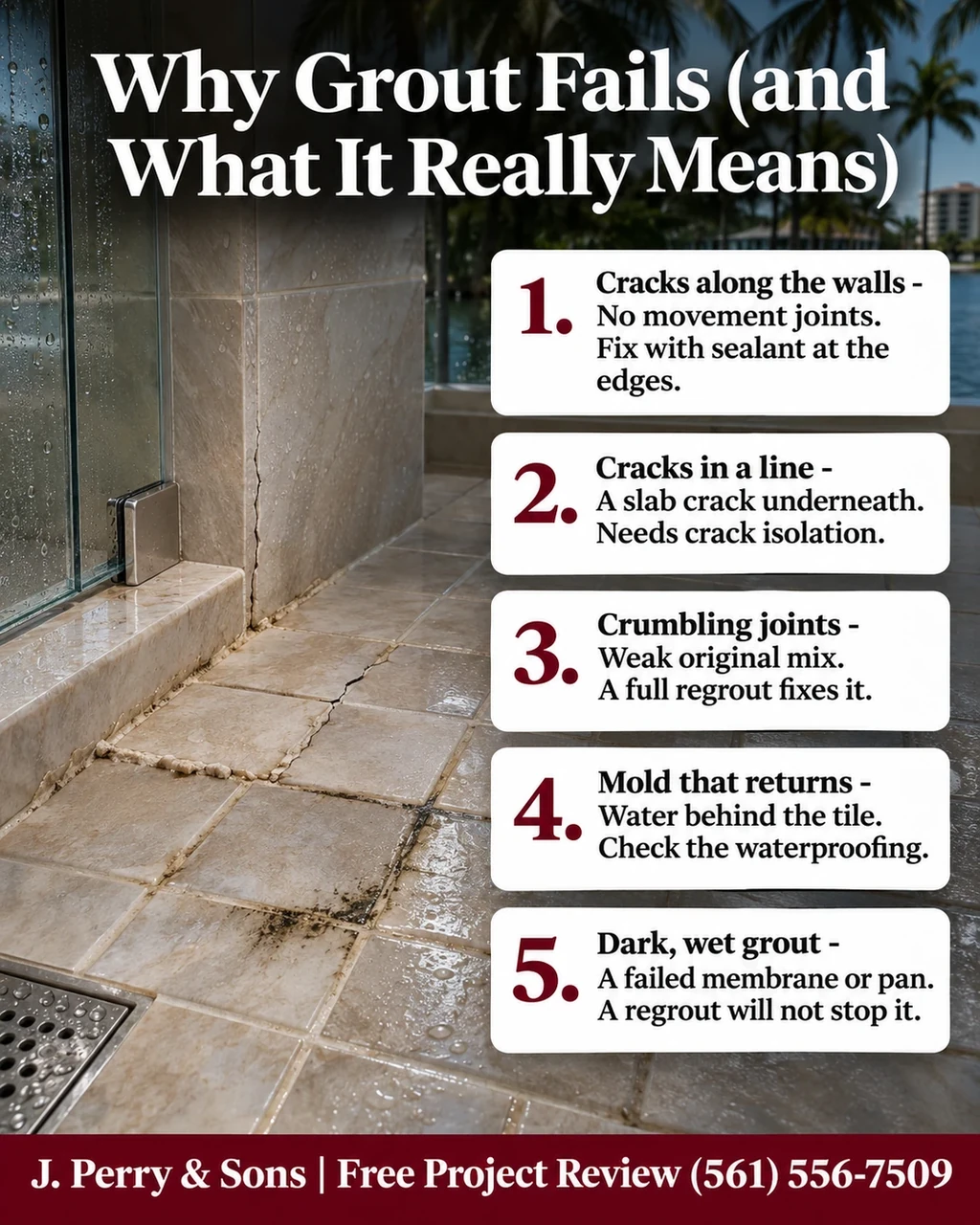
Grout is usually blamed for problems it did not cause. Before choosing between a regrout and a bigger repair, it helps to know why the grout failed, because the cause decides the fix.
No movement joints. Tile and concrete expand and contract with heat and humidity. Floors grouted tight against the walls, with no soft joints at the perimeter or in large rooms, crack along the grout lines and can eventually tent. Changes of plane, such as where a shower wall meets the floor or the tub, need a flexible sealant, not grout. Grout in a corner will always crack.
A floor that moves. Cracked grout in a line across a room often follows a crack in the slab underneath. Hollow tiles that flex under foot break the grout around them. Regrouting over either problem only lasts until the next movement.
Wrong mixing and cleaning. Grout mixed with too much water, or washed too hard before it set, ends up weak, powdery and blotchy. This is common in quick installations and shows up as crumbling joints.
Harsh cleaners. Acidic and bleach-based cleaners eat away at cement grout and strip any sealer. The joints wear down, open up and stain faster.
Constant moisture. Showers that never dry out grow mold on the surface of the grout. Surface mold can be cleaned; mold that keeps coming back from inside the joints usually means water is getting behind the tile.
A leak behind the tile. Grout is not waterproof. The waterproofing is the membrane or pan behind and under the tile. When that fails, the grout darkens, stays wet, cracks and grows mold, no matter how many times it is replaced.
Next step: take close-up photos of the worst grout joints and any cracked or hollow tiles, and send them to us with a photo of the whole room. We will tell you what is likely causing it.
When to Regrout vs. Repair
- Regrout (full replacement): When grout is crumbling, cracked throughout, severely stained, or moldy beyond cleaning. Full regrout involves grinding out the old grout and installing new.
- Spot repair: When only a few joints are cracked or missing. Spot repair is appropriate when the rest of the grout is in good condition.
- Grout sealing: When grout is in good condition but staining easily. Sealing every 1–2 years prevents staining and makes cleaning easier.
- Grout color change: When you want to update the look of existing tile without replacing it. We can regrout with a different color to dramatically change the appearance.
How a Proper Regrout Is Done
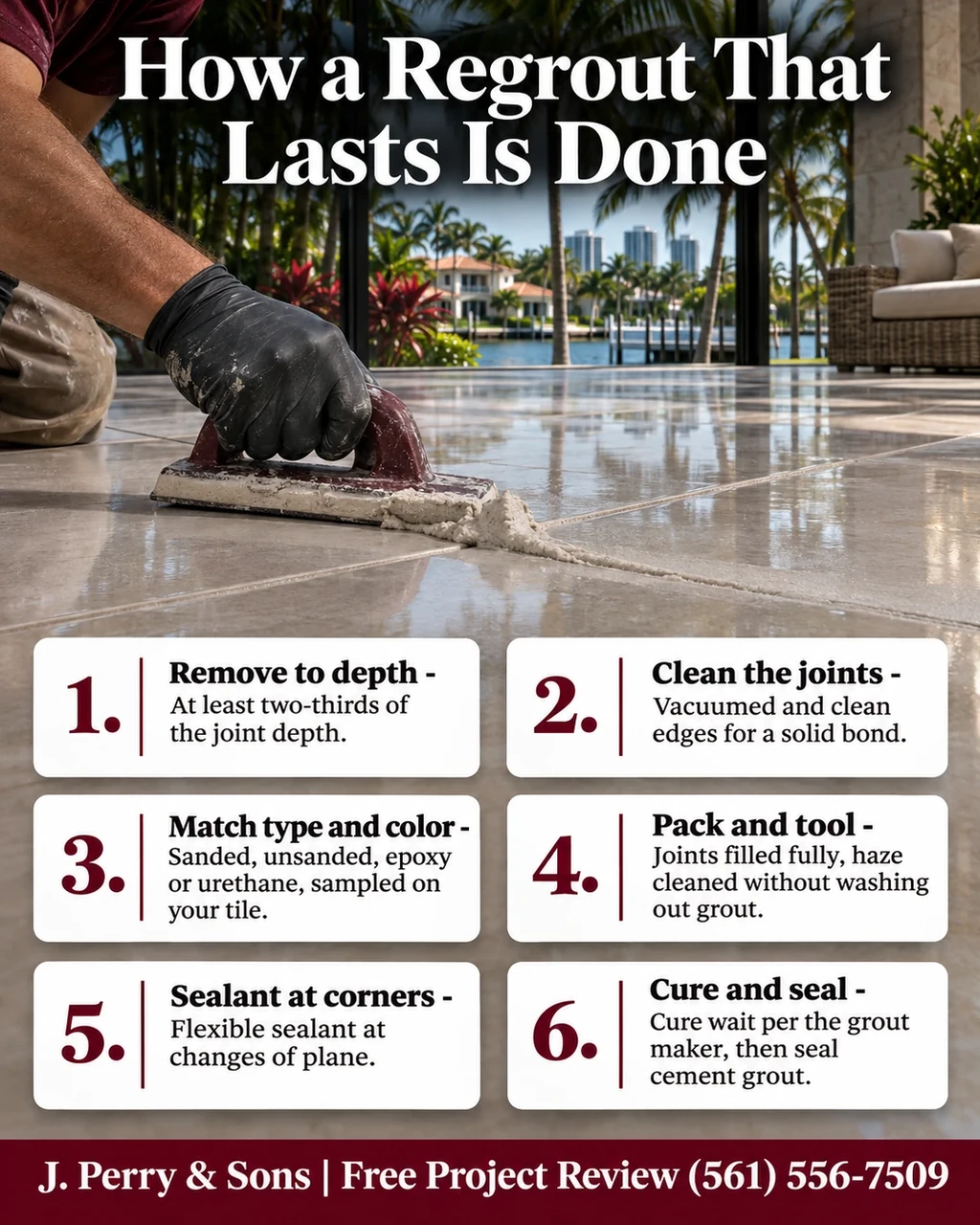
A regrout that lasts follows a careful sequence. The difference between a good regrout and a bad one is mostly in the removal and the cleanup.
Remove the old grout to depth. The old grout is cut out to at least two-thirds of the joint depth, which is what grout makers recommend so the new grout has enough body to bond and stay. Shallow removal, just scraping the surface, is why many regrouts crack within a short time. The removal is done with oscillating and grinding tools with the right blades, working carefully at the tile edges so the glaze and the stone are not chipped.
Clean the joints. Dust and loose material are vacuumed out and the joints are cleaned so the new grout bonds to clean edges.
Choose the grout and the color. The grout type is matched to the joint width and the tile: sanded for wider joints, unsanded for tight joints and polished stone, epoxy or urethane where stain resistance matters most. We sample the color against your tile before mixing.
Pack and tool the joints. The grout is mixed to the maker's ratio, pressed fully into the joints and tooled to a consistent profile. Haze is cleaned off at the right time, without washing the grout out of the joints.
Sealant, not grout, at the corners. Inside corners, changes of plane and the joint where tile meets a tub or a window get a color-matched flexible sealant, as the industry movement-joint guideline calls for. See our guide to recaulking a shower.
Cure and seal. The shower or floor stays out of use for the cure wait the grout maker requires. Cement-based grout is then sealed. Epoxy and most urethane grouts do not need sealing.
For a side-by-side look at the cost of each path in a shower, see our guide to shower regrout vs. replace cost.
Next step: if your grout is crumbling or stained throughout, send us photos and we will tell you whether a regrout will hold or whether the tile needs more than that.
Grout Repair and Regrouting Cost in South Florida (2026)
- After the project review, your written proposal lists the following scope and pricing: Spot grout repair (per joint).
- Full regrout — bathroom floor (80–120 sq ft): Starting at $825
- After the project review, your written proposal lists the following scope and pricing: Full regrout — shower (standard).
- After the project review, your written proposal lists the following scope and pricing: Full regrout — kitchen floor (150–250 sq ft).
- After the project review, your written proposal lists the following scope and pricing: Epoxy grout upgrade (shower): over standard grout pricing.
- After the project review, your written proposal lists the following scope and pricing: Grout sealing (per room).
When Regrouting Is Not Enough: Leaks, Hollow Tile and Failing Showers
Regrouting is the right repair when the tile is sound and the grout itself is the problem. These are the signs that the problem is deeper, and new grout would only hide it for a while.
Water stains outside the shower. Stains on the baseboard, swollen door casings or soft drywall on the other side of a shower wall point to a leak behind the tile. The waterproofing has failed, and the shower usually needs to be opened. Our guide to shower leak tile repair explains how the source is found.
Hollow or loose tiles. Tap the tiles with a coin or a screwdriver handle. A hollow sound means the tile has lost its bond with the mortar. A few hollow tiles can be removed and reset. Many hollow tiles across a floor mean the original installation lacked coverage or movement joints. See our guide to loose and hollow tile repair.
Cracked tiles. One cracked tile from a dropped object is a repair, if matching tile is available. Cracks that run in a line across several tiles follow a crack in the slab, and the fix includes a crack-isolation membrane under new tile. Read cracked tile: repair or replace.
A soft or moving shower floor. A shower pan that flexes or holds water has failed. That is a shower rebuild, not a regrout.
Old tile you no longer like. If you are regrouting a dated bathroom you plan to change anyway, the money is better spent on replacing the bathroom tile. When the scope becomes a new shower, we handle it through our shower replacement service.
Next step: if you see any of these signs, send us photos before you book a regrout, and we will tell you which repair your tile actually needs.
FAQ
Can you regrout over old grout?
Not properly. New grout spread over old grout is too thin to bond and flakes off. The old grout has to be removed to at least two-thirds of the joint depth before new grout goes in.
Is epoxy grout worth it in a shower?
For most showers, yes. Epoxy grout resists stains and mold, does not need sealing and holds its color. It costs more and takes more skill to install, which is why it is priced as an upgrade.
Why does the grout in my shower corners keep cracking?
Inside corners and changes of plane move. They should be filled with a color-matched flexible sealant, not grout. Grout in those joints will crack again no matter how often it is replaced.
Will regrouting stop a shower leak?
Usually not. Grout is not waterproof; the waterproofing is the membrane or pan behind and under the tile. If water is reaching walls or floors outside the shower, the leak source has to be found and the waterproofing repaired.
Should I regrout or retile my bathroom?
Regrout when the tile is sound, well bonded and you still like it. Retile when there are hollow or cracked tiles, signs of a leak, or a dated look you plan to change soon. Replacing the bathroom tile also lets the waterproofing and the floor be corrected underneath.
From large-format porcelain to natural stone, set right from the slab up.
Free project review · (561) 556-7509