
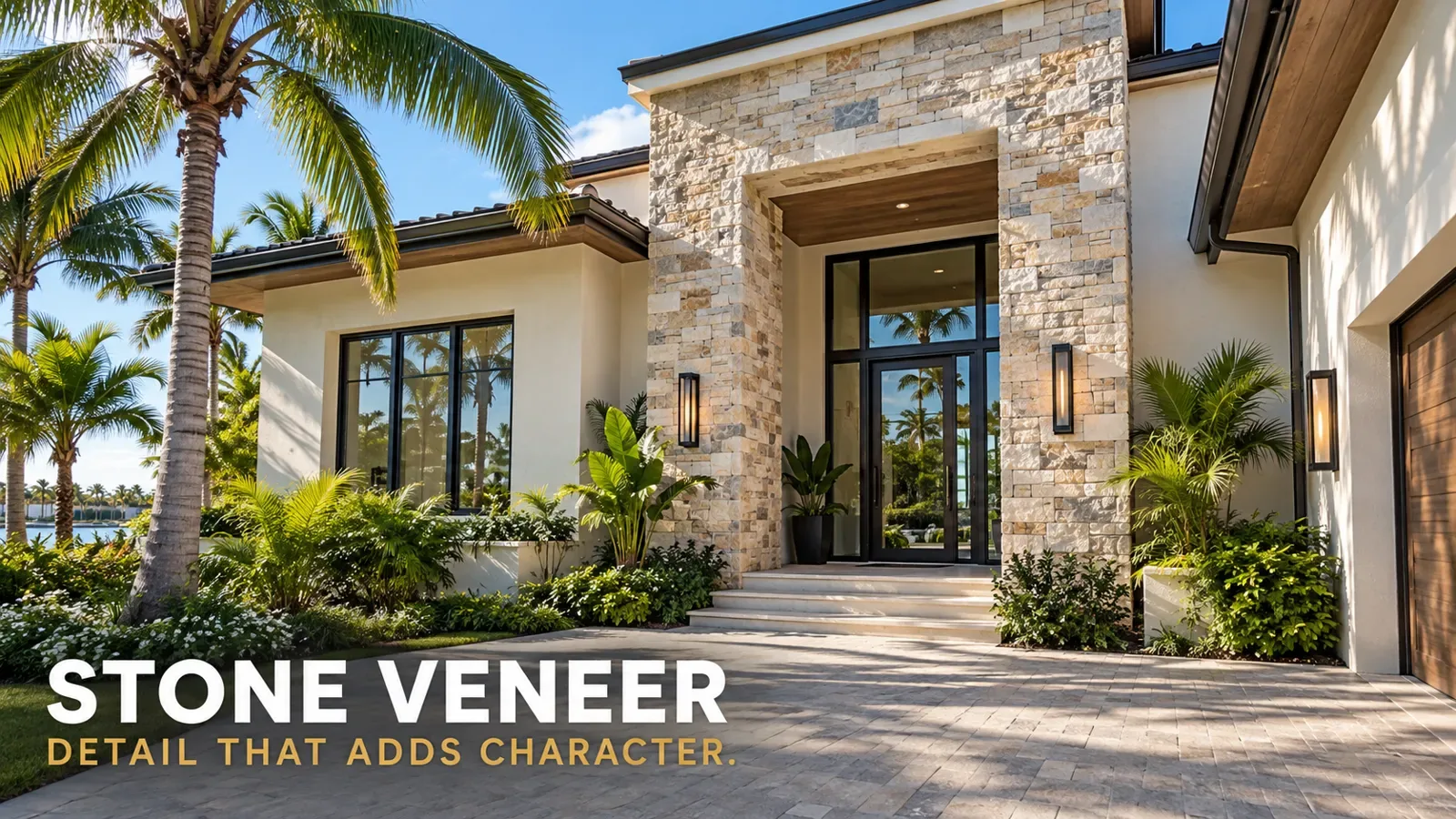
Thinking about adding stone veneer to your home? This page covers the choices you make first: where it goes, which stone, what the wall underneath needs and how long your HOA takes. It sits under our main stone veneer page, which covers stone types in general. If you manage a plaza, an office building or a community entrance, our commercial stone veneer page is written for you. On a house, stone veneer is priced per square foot installed, with the stone included; see the cost table below.
What stone veneer costs on a house
| Where it goes | Typical size | Installed range |
|---|---|---|
| Manufactured stone, any wall | per sq ft | $27–$37 |
| Natural thin veneer, ledgestone or stacked | per sq ft | $38–$50 |
| Coral stone or keystone | per sq ft | $48–$65 |
| Front accent: garage wall, entry tower, water table | 200–400 sq ft | $13,000–$23,000 |
| Pair of entrance columns, 6–8 ft | per pair | $4,250–$7,000 |
| Full front facade | about 1,000 sq ft | $38,000–$63,000 |
| Outside corners, any stone | per linear ft | add $14–$23 |
About these prices. These ranges are starting points based on typical South Florida projects. Your final price depends on the condition of the property, access, the materials or system specified and the full scope of work. We confirm every number after we review your project in person or from the drawings, and the price in your signed proposal is the one that applies.
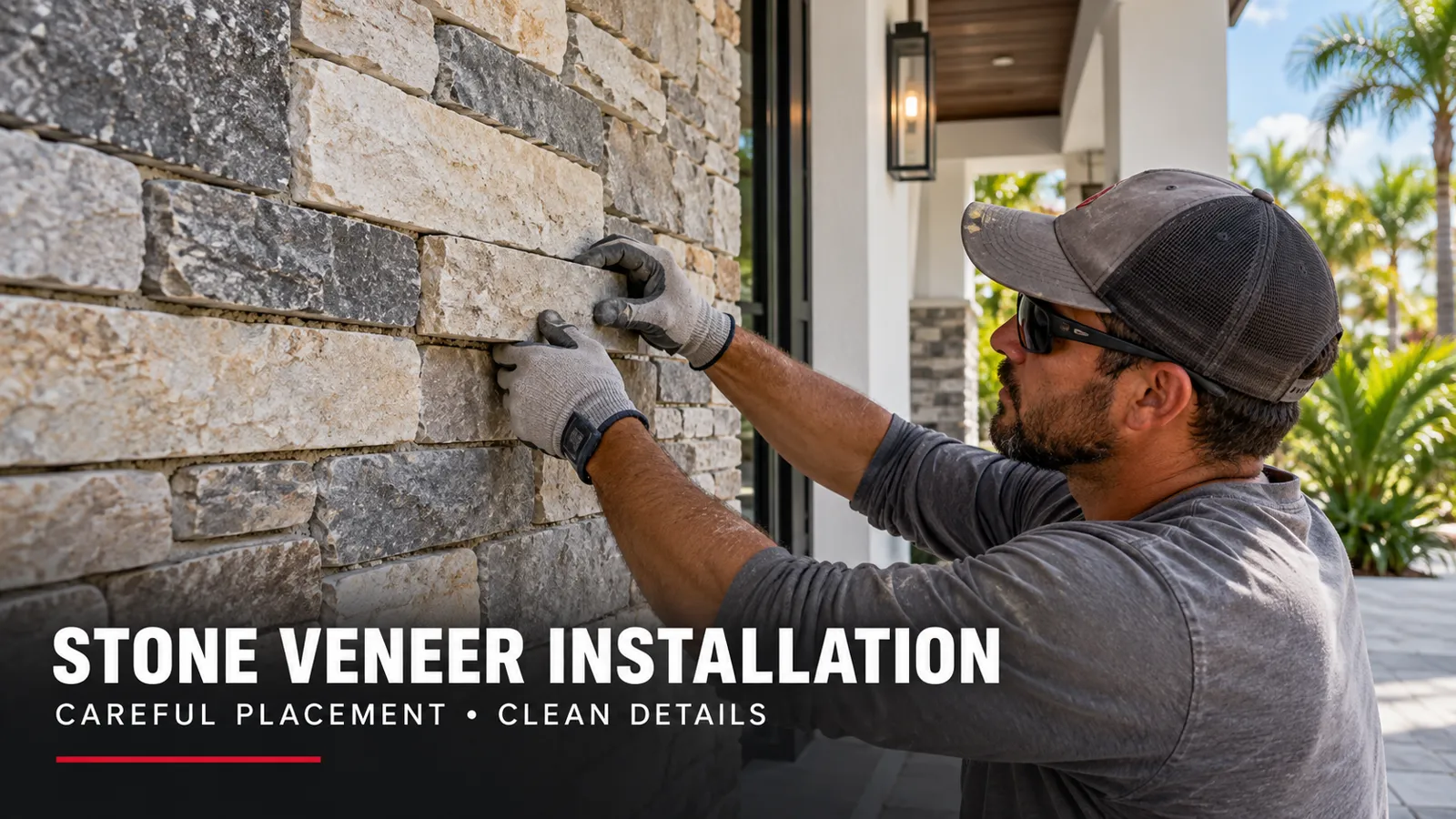
Why such a spread inside each line? It comes from your wall, not the stone. Sound stucco on block is the easiest case. Painted or elastomeric stucco (a thick, rubbery coating) needs metal lath and a scratch coat first, which adds to the price per foot. Walls taller than 8 ft need scaffold, which also adds cost. Natural stone gets a breathable sealer. When your city requires a permit, the fee is listed at cost on your estimate.
Where homeowners put stone
The front of the house. A water table under the windows, the garage wall, the entry tower or a single gable. These accents change how your house looks from the street for a fraction of a full facade. Method, lath and drainage are covered on the exterior house stone veneer page.
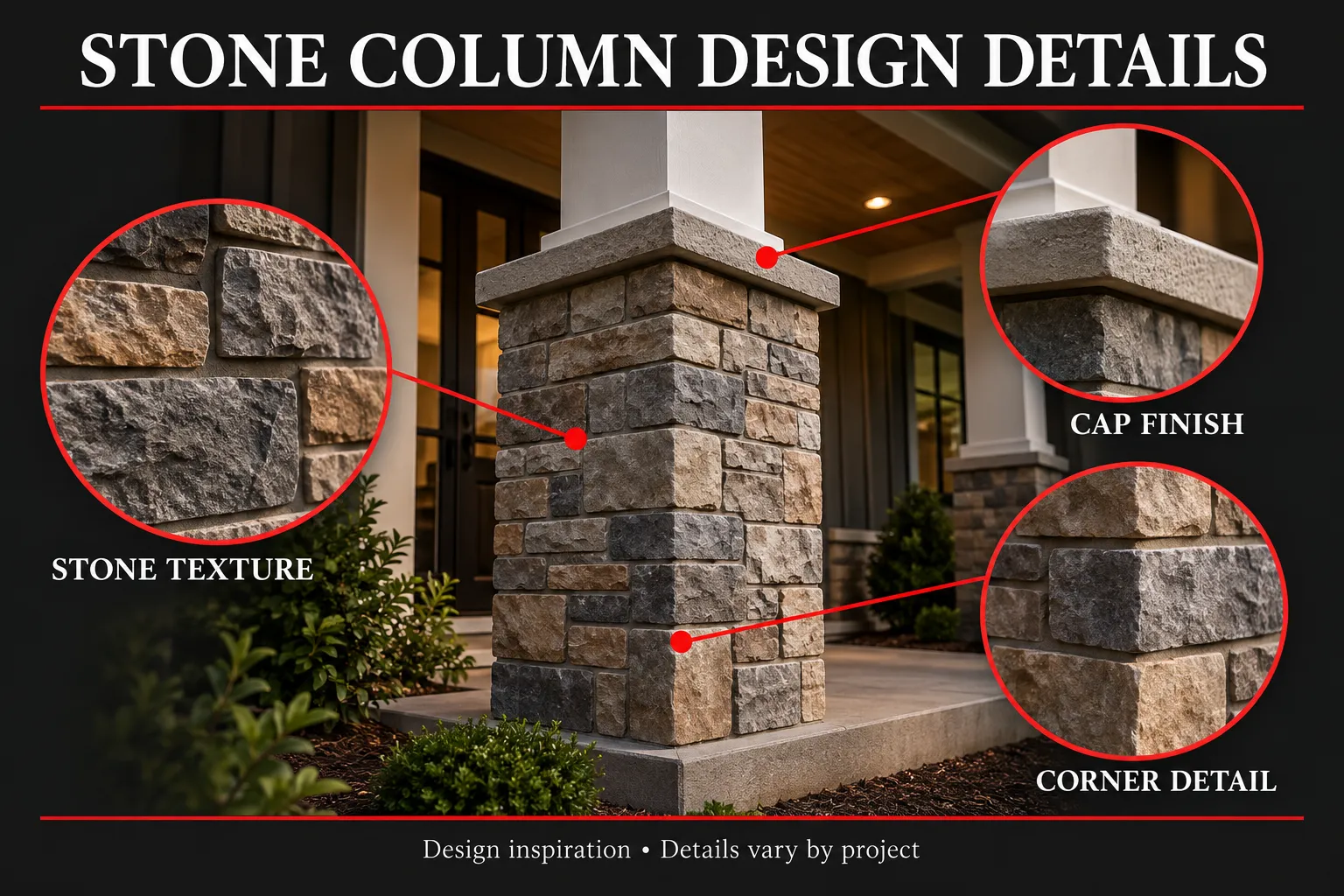
Columns. Stone columns on a porch, driveway pillars and gate posts are mostly corner pieces, and that is why they cost more per foot than a flat wall. Sizes and prices are on the entrance columns page.
Fireplaces. A stone veneer fireplace is stacked stone over your existing firebox, floor to ceiling, with a mantel or a TV niche. Fireplace work has its own page at fireplace installation, so we don't repeat it here.
One wall inside. A stone accent wall in the living room, dining room, entry or bedroom. The weight, the wall behind it and your lighting decide which product works. See interior accent walls.
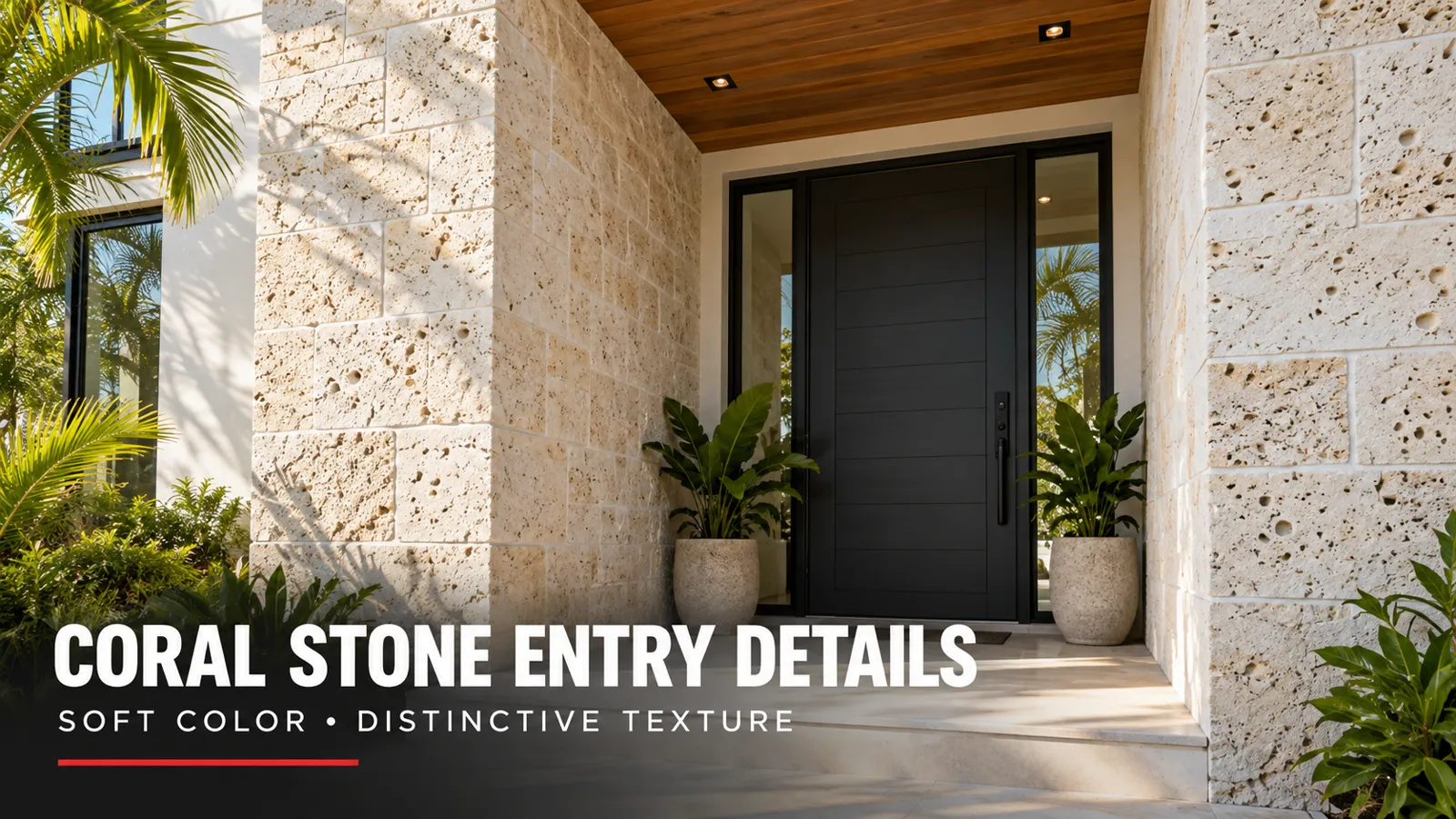
The backyard. An island faced in the same stone as your front, a seat wall or a raised planter. See outdoor kitchens and retaining walls. For the local Florida look, coral stone has its own page.
Not sure where stone would look best on your house? Send one straight-on photo with the rough width and height through our project form, or call (561) 556-7509, and we'll send you a range the same day.
Choosing the stone for your house
- Manufactured stone. Often called cultured stone. Lightweight concrete, cast and colored to look like ledgestone or fieldstone. Consistent box to box, lowest cost per foot and easy on HOA reviewers.
- Natural thin veneer. Real quartzite, slate or limestone cut about an inch thick. It holds its color in full sun and every piece is different. It is heavier and slower to set.
- Coral stone and keystone. The South Florida classic on Mediterranean and Key West style homes. It is porous, so we always seal it, and it always goes over lath and a scratch coat.
- Grouted or dry-stack. Grouted joints suit fieldstone and coral. Dry-stack, where pieces fit tight with no visible mortar, suits ledger panels and modern houses.
Check a sample against your stucco in daylight. A warm stone on a north wall reads gray, and a cool stone on a cream house can look dirty.
Want to compare samples on your own wall? Call (561) 556-7509 and we'll bring a few to the house.
Real stone veneer or faux stone panels?
Seen faux stone panels at a big-box store for a fraction of the price and wondering why anyone pays for veneer? It is a fair question, and the answer depends on where the stone goes.
Faux stone panels are molded polyurethane or resin sheets, usually 2 by 4 ft, printed and textured to look like stacked stone. They are light, screw to the wall and go up fast. Up close, the pattern repeats every few panels, the seams between sheets need careful hiding, and the face is hollow, so it dents and sounds like plastic when you knock on it. On an outside wall in full Florida sun, the color can fade and the panels move with heat.
Real stone veneer is manufactured or natural stone set piece by piece in mortar over block, stucco or lath, with a weep screed to drain water. Every piece sits in its own spot, so there is no repeat, and it holds up to sun, rain and a bumped lawn mower. That is the only kind we install on a house.
Faux panels can make sense on a low-traffic interior wall on a tight budget. For a house front, columns or anything an HOA reviews, real veneer is the one that lasts. More detail is in our guide to faux panels vs real stone.
Weighing panels against veneer for a specific wall? Call (561) 556-7509 and we'll give you a plain answer on which one fits it.
Over stucco or over block: what your wall needs
Most homes here are CBS block (concrete block) with stucco over it. That is a good base for stone, but only if the stucco is still bonded to the block. We tap every wall before we quote.
- Bare, clean block. Stone bonds directly with a polymer-modified veneer mortar. No lath.
- Sound, unpainted stucco. We pressure wash it, then scarify it or prime it with a bonding agent, and bond the stone directly.
- Painted or elastomeric stucco. Otherwise the stone would be stuck to paint. We fasten metal lath through the stucco into the block and apply a scratch coat.
- Hollow or cracked stucco. We remove that area down to the block first. Large areas of failed stucco are a stucco repair job before they are a stone job.
Whatever your wall is, the base gets a weep screed (a metal strip that lets water drain out), the top of any band gets a cap with a drip edge, and the stone stays above soil and mulch.
Products we install on houses
These are the lines we install most and what each one suits. Any of them can be swapped for an approved equal your HOA or designer names.
| Product | What it is | Where it fits on a house |
|---|---|---|
| Eldorado Stone | Manufactured stone in ledge, fieldstone and limestone profiles | Front accents and columns where the HOA wants a predictable color |
| Coronado Stone | Manufactured stone in ledge, fieldstone and coastal profiles | Mediterranean and coastal style fronts |
| ProVia | Manufactured stone with sills, caps and trim pieces in the same family | Water tables and window sills that should match the stone |
| Natural thin veneer | Quarried stone sawn about an inch thick | Fireplaces and fronts where every piece should differ |
| Coral stone or keystone | Florida quarried, porous, always sealed | Columns, entries and garden walls |
What holds the stone to your wall matters as much as the stone itself. We set with a polymer-modified stone veneer mortar from Mapei or Laticrete, mixed in small batches and used within its working time. Where the wall needs a scratch coat, it is a Type S mix over galvanized or stainless metal lath. On framed walls, a water-resistive barrier goes behind the lath. The weep screed at the bottom lets any water that gets behind the stone drain out instead of soaking the base of the wall.
On grouted stone, the joint is a mortar grout tooled to the depth and color you approve on a sample board. Ask for that board before work starts so the joint color holds no surprises.
HOA approval and permits
Does your HOA have to sign off? Almost certainly. Nearly every HOA in Broward and Palm Beach reviews stone on the front elevation, and approval takes 2–6 weeks depending on when the board meets. Boards want a sample, a photo with the stone area outlined, the share of the facade the stone covers, and the contractor's license and insurance. Many cap accent stone at 20–40% of the front. We prepare that package with you the day the contract is signed. The stone veneer HOA approval guide lists what gets applications sent back.
Cities often treat exterior veneer as a change to the building envelope (the outer shell that keeps water out), so we check with your city and pull the permit under our license when one is required. Details are on our permits and compliance page.
Have an HOA meeting coming up? Call (561) 556-7509 or send us your project and we'll help you put the stone package together in time.
Living at home during the work
Worried about living through the job? Exterior stone is outside work; indoors you only hear the saw. We protect your windows, doors, walkway and landscaping, and we close up each section at the end of the day. The scratch coat needs 24 hours without rain, so in summer we start early and tarp by noon. Scaffold comes down when a tropical storm watch is posted. An interior wall takes two to four working days for a typical room, with the floor covered and dust kept to that room.
Typical install times: a pair of entrance columns in 2–3 days, a water table in 3–5 days, a garage and entry surround in 5–10 days, and a full front with gables in 10–15 days.
What your written estimate lists
- Stone product, color and who supplies it
- Square footage by wall, corners by linear foot, caps and sills by linear foot
- Wall prep method: direct bond, or lath and scratch coat
- Weep screed, flashing and sealer
- Scaffold, permit and HOA package
- Workmanship warranty on every job; materials carry the manufacturer's warranty. Terms are in your written contract.
We do not do engineering. We build to the engineer's drawings and bring in a licensed engineer when the work needs one, such as new columns carrying a porch beam.
Residential stone veneer by city
Parkland · Fort Lauderdale · Delray Beach · Palm Beach Gardens · Pembroke Pines · Coral Gables · Boynton Beach · Hollywood
Back to the stone veneer overview, or see commercial stone veneer if the property is a business or a community. Planning guides: exterior stone veneer siding cost · faux panels vs real stone · stone veneer maintenance
Prefer to send photos or plans? Send us your project
Residential stone veneer FAQ
How much stone do I need on the front to make a difference? Usually 200–400 sq ft placed at the entry, the garage wall or under the windows. That is also the coverage most HOAs approve without a fight, and the front accent line in the cost table above shows the range for it. Final pricing is confirmed after we review your project.
Can stone go over the stucco I already have? Yes, if it is bonded. We tap-test it first. Sound, unpainted stucco takes stone directly, painted stucco gets lath and a scratch coat, and hollow areas are removed down to the block.
Is manufactured stone a step down from natural? It is a different product, not a lesser install. Manufactured stone is lighter and uniform in color. Natural stone varies piece to piece and holds its color longer in full sun. Both last when the wall behind them drains.
Do I have to be home while you work? No. For exterior work we only need access to water and power outlets. For an interior wall we need the room cleared and someone to let the crew in.
What does it take to get a firm number for my house? A photo gets you a same-day range. For the written price we visit, tap the walls, measure corners and caps, and confirm the stone with you. Call (561) 556-7509 or send us your project.
Free estimate: call (561) 556-7509 or send us your project. Licensed Florida general contractor CGC1540699. Serving Broward, Palm Beach and Miami-Dade counties.