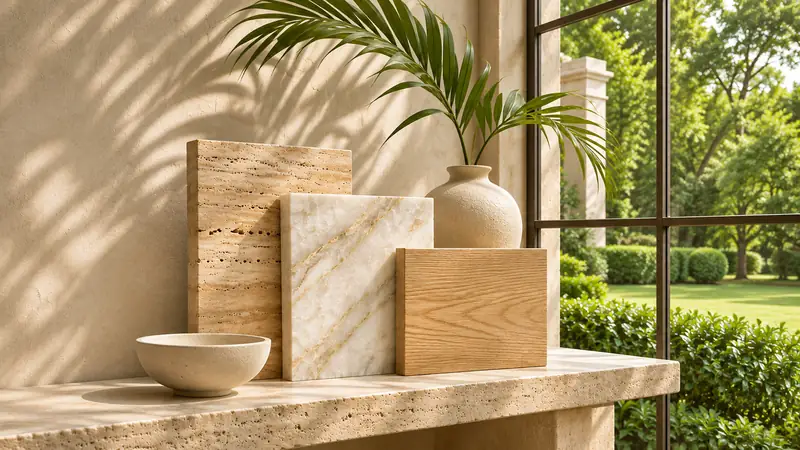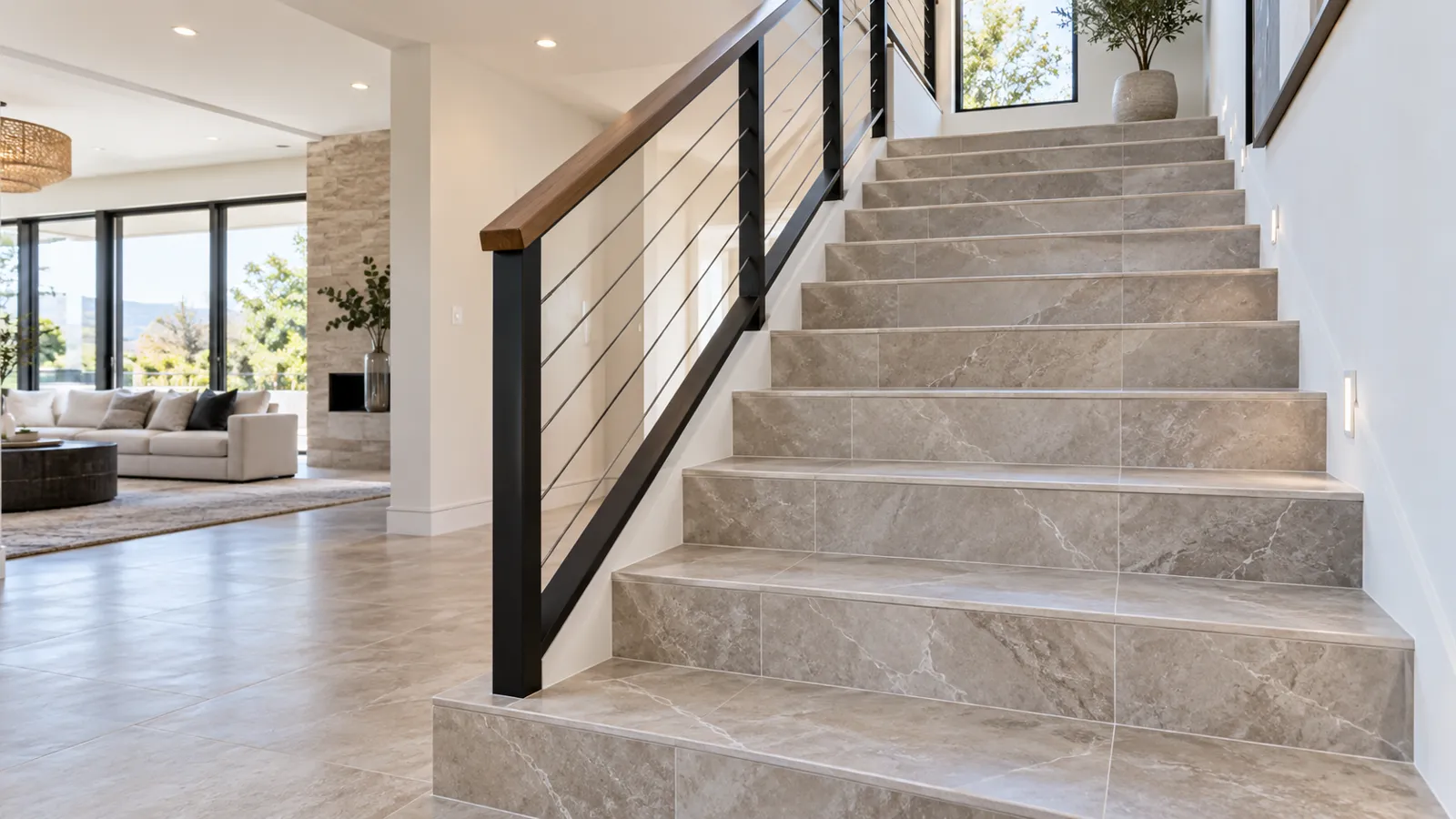
After the project review, your written proposal lists the following scope and pricing: The carpet stairs to wood cost in South Florida for prefinished wood tread and riser caps, with porcelain and marble, installed, with treads supplied by J. Perry & Sons from preferred brands we work with. After the project review, your written proposal lists the following scope and pricing: A typical 14-step flight with carpet removal, floating the concrete and a landing in wood, in porcelain and in marble with slab nosing. J. Perry & Sons stair tile and marble stairs handles all three.
Carpet stairs to wood cost vs tile and stone
| Finish | Per step installed | 14-step flight with demo and landing |
|---|---|---|
| Landing or top-of-stair floor in tile | per sq ft | Starting at $30 |
Prices assume a poured concrete stair, the norm in two-story CBS homes in Broward, Palm Beach and Miami-Dade. Wood-framed stairs need a different prep. Glass, cable and metal railings are installed by our own crew and priced separately.
What Drives the Cost to Replace Carpet on Stairs
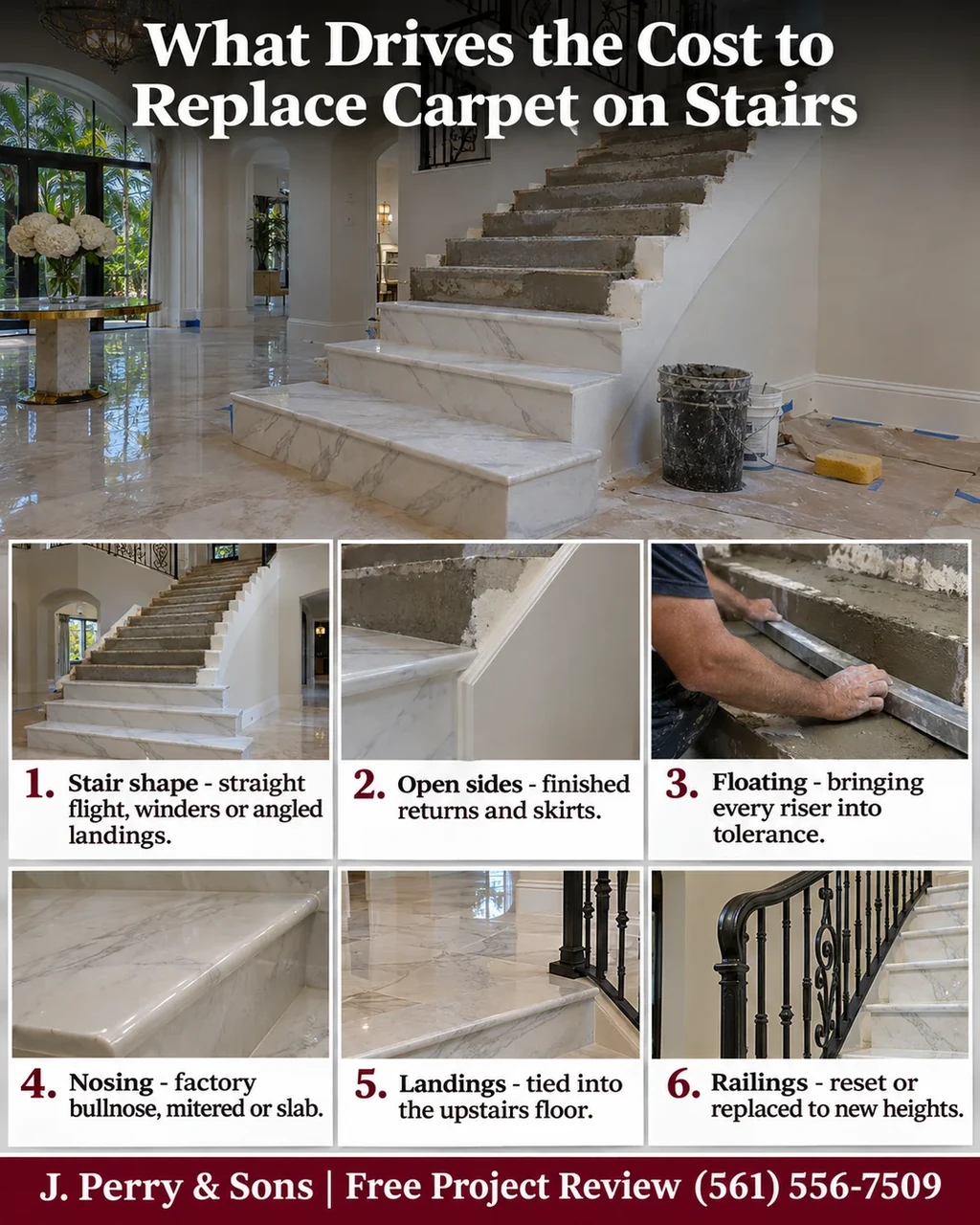
The per-step prices above are starting points. The final cost to replace carpet on stairs is based on the shape of the staircase, what we find under the carpet and the finish you choose.
Straight flight or turns. A straight flight with equal steps is the simplest. Winders, pie-shaped steps at a turn and landings with angles are cut and fitted one by one.
Open or closed sides. A stair closed between two walls needs treads and risers. An open side shows the tread end and the stringer, which needs a finished return or a skirt in tile, stone or wood.
How far off the steps are. The more the risers differ in height, the more floating it takes to bring every step into tolerance. Some stairs need a tread or two rebuilt.
Width. Wider stairs need longer treads. Natural stone treads longer than the standard sizes are cut from slab, which adds fabrication.
Nosing. A factory bullnose tread is the simplest. A mitered nosing that wraps the riser, or a thick slab nosing, takes more cutting and setting.
Landings and the top floor. The landing and the top step usually tie into the upstairs floor. If that floor changes too, it is priced as its own line.
Railings. If the balusters anchor into the old treads, they come out and are reset or replaced. Glass, cable and metal railings are installed by our own crew and priced separately. See our railings page.
Lighting. Step lights in the risers or the wall are planned before the treads go on. Electrical work is done by licensed electricians, coordinated and permitted by J. Perry & Sons.
Next step: send us a photo of the staircase from the bottom and the top, the number of steps and the width, and we will tell you which of these items apply.
What is under the carpet decides the price
Carpet hides a lot. On a concrete stair, the builder poured the steps knowing carpet and pad would cover them, so the risers are rarely equal, the nosings are rough and the treads are often out of level side to side. Under the pad you also find tack strip nailed into the concrete, glue, and sometimes old patches.
Once the carpet is up, we measure every rise and run. Building code allows no more than 3/8" difference between the tallest and shortest riser in a flight. Carpet hid the error; a hard surface will not. Floating the treads and risers with patching mortar to bring every step into tolerance is the bulk of the labor and the reason a stair costs more per square foot than a floor.
Free Project Review — call (561) 556-7509 or send us your project. Send a photo of the staircase from the bottom, the number of steps and the width, and we'll tell you what we see and the starting price.
Wood, tile or stone: how each one lives
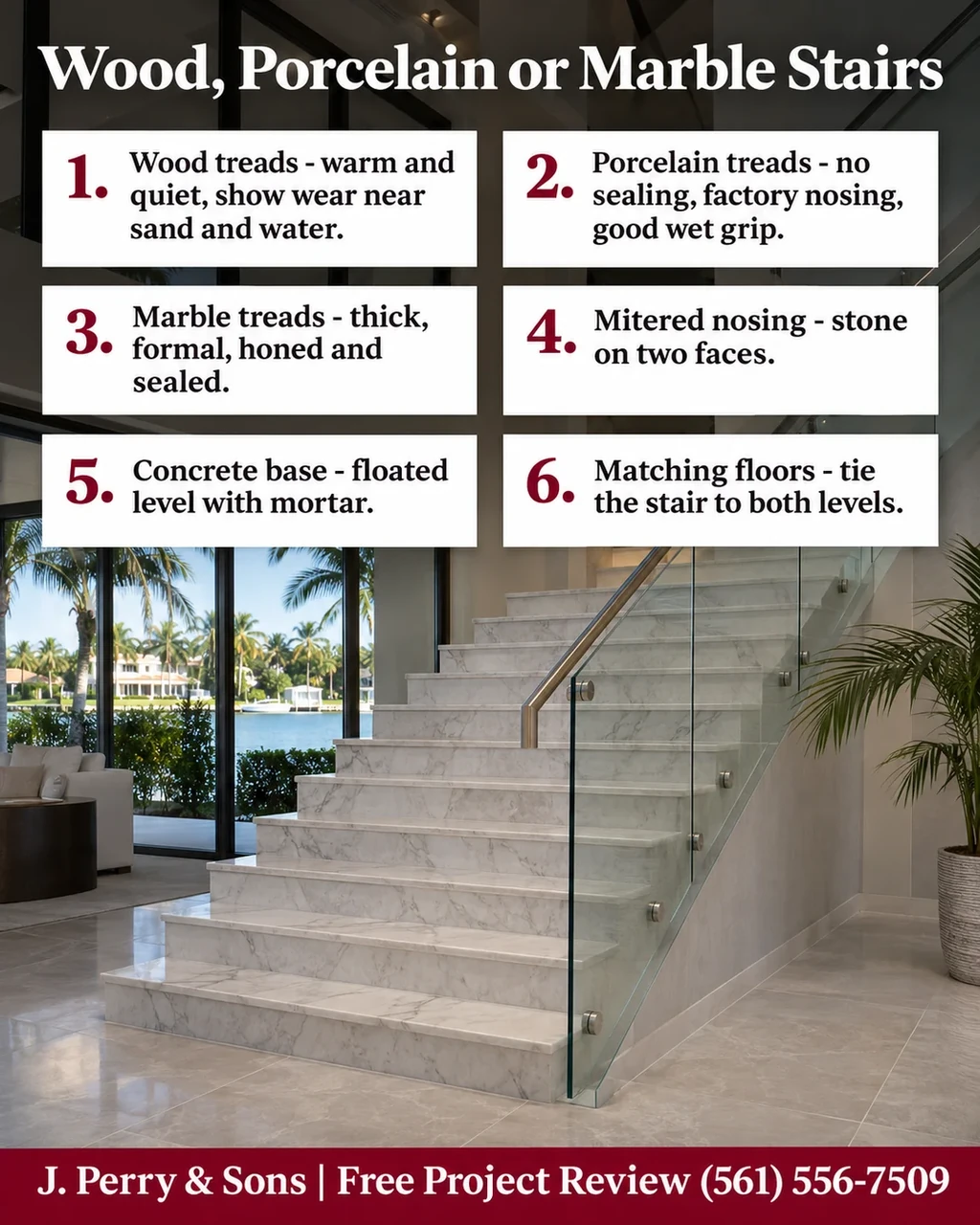
Wood treads. Warm, quiet and the closest match if the upstairs is wood or LVP. Prefinished oak or engineered treads are glued to the floated concrete with a construction adhesive and the risers are painted or wrapped in matching wood. Wood dents and scratches, and in a stairwell next to a pool door or a sliding door, humidity and sand wear the finish faster.
LVP caps.
Porcelain. No sealing, no scratches, a large choice of looks including wood-look and marble-look. Many lines sell a matching step tread with a finished front edge, which is what makes a porcelain stair look built rather than tiled. The porcelain stair treads guide explains the options.
Marble. Heaviest, most formal and the most work: thicker treads, a bullnose or mitered nosing and sealing. Honed finish only on treads; polished marble is slippery with socks or wet feet. See the marble stairs installation guide.
Marble Stair Treads Cost and What You Get for It
Marble stair treads cost more than porcelain or wood, and they are also the finish owners ask about most for a formal entry or a curved staircase. This is where the money goes.
Thicker material. Marble treads are thicker than tile, so they carry foot traffic and have a solid edge at the nosing. Many are cut from slab to fit the width of the stair.
The nosing. A bullnose, a half-bullnose or a mitered nosing gives the tread its finished front. Mitered nosings show the stone on two faces and read like a solid block.
Book-matched risers. Some owners want the veining to run from tread to riser or from step to step. That takes careful layout and sometimes extra slabs.
A honed finish. Polished marble on treads is slippery with socks or wet feet. We recommend honed treads, sometimes with a polished riser for contrast.
Sealing. Marble is sealed after installation with a penetrating sealer, and resealed as part of normal care. Our guide to sealing natural stone in Florida humidity explains when.
The base. A poured concrete stair is the best base for marble. The steps are floated level with mortar and the treads are set in full-coverage mortar.
Porcelain as an option. Marble-look porcelain treads with a factory nosing give a similar look with no sealing. After the project review, your written proposal lists the following scope and pricing: Porcelain stair treads. Our porcelain stair treads guide covers the options.
Our stair tile and marble stairs page explains how we install both.
Next step: tell us which stone you like, and we will bring samples of marble and marble-look porcelain to compare on your stairs.
How we convert a carpeted staircase
- Remove carpet and hardware. Carpet, pad, tack strip, staples and glue come off, and the concrete is ground clean.
- Measure each step. Rise and run at every step, recorded, with the plan to correct the differences.
- Float. Treads and risers are built up with patching mortar so every finished step lands within tolerance of the others.
- Riser first. Risers are set or installed so the tread overlaps them at the nosing.
- Treads. Wood glued, tile or stone set in full-coverage mortar, every tread checked for level.
- Nosing. Bullnose, factory edge, mitered slab or wood nosing set with the tread.
- Finish. Grout and silicone for tile and stone; touch-up and a finish coat for wood. Our railing crew measures after treads are in.
Replace Carpet on Stairs to Match the Rest of the Home
The stair connects two floors, so the finish you choose has to work with both. These are the combinations we install most often in South Florida homes.
Porcelain floors downstairs, carpet upstairs. The most common starting point. Many owners match the stair to the downstairs porcelain and run the same tile onto the landing.
Engineered wood upstairs. After the project review, your written proposal lists the following scope and pricing: When the bedrooms get engineered wood, wood treads and risers on the stair, make the whole upper floor read as one. After the project review, your written proposal lists the following scope and pricing: Engineered wood flooring. See our engineered wood flooring page.
Marble or porcelain downstairs, wood upstairs. A stone or porcelain stair with a wood landing at the top marks the change between floors.
White oak treads. On a wood or open stair, white oak treads with a clear or natural finish suit a modern home. Our white oak stairs page covers that work.
A full stair rebuild. Some owners use the change from carpet as the time to rebuild the stair as a floating stair with metal stringers. We design, supply and install the metal stringers and treads. See our floating stairs service.
Carpet removal elsewhere. If carpet is coming out of the bedrooms too, the whole upstairs can be done in the same project so the stair, landing and rooms are finished together.
Samples can be brought to you before the proposal. Once you sign the proposal, a simple rendering is included; detailed design by our in-house designer is billed separately.
Next step: send us photos of the floors at the top and the bottom of the stair, and we will suggest the finish that ties them together.
Safety and code on Florida stairs
The finish is the surface your family walks on at night and with laundry baskets. We aim for slip-resistant treads, an even nosing projection and consistent riser heights. Interior tile treads should carry a wet DCOF of 0.42 or higher. Railings must be returned or replaced to the new tread heights, which is why the railing is reset after the treads. If the existing balusters are anchored into the carpeted treads, they come out during demo and are reinstalled or replaced by our railing crew.
Replacing stair finishes alone usually does not need a permit; changing the railing can. Condos with interior stairs in townhome units follow the association's work rules.
Living in the Home While the Stairs Are Converted
In most two-story homes the stair is the only way between floors, so planning the work around the family matters as much as the finish.
Working in stages. Where the design allows, we set alternate steps or one side of a wide stair first, so the stair can still be used with care. When it cannot be used, we plan the work so the upstairs is reachable at the end of the work period whenever possible.
Dust control. Removing tack strip and grinding the concrete makes dust. We seal off the stairwell and protect the floors at the top and bottom.
Children and pets. A stair under construction has open edges, wet mortar and tools. We use barriers at both ends of the stair.
Fresh mortar and grout. New treads need time before they take full foot traffic. We mark the stair and tell you when it can be used.
The railing. The railing comes off for the work and is reset or replaced after the treads are in. A temporary rail or barrier is used when needed.
Second homes. For owners who are away, the work can be done while the home is empty. We manage access and send you photo updates as the work goes.
Next step: tell us how your family uses the stair, and we will plan the work around it in your proposal.
Timeline
A stair conversion follows a set order. The carpet, pad, tack strip and staples come off and the concrete is ground clean. Every rise and run is measured, and the treads and risers are floated so each step lands within tolerance. Then the risers and treads are set, the nosing is finished and the stair is grouted, sealed or finished. Marble treads are cut to size before setting. The railing is reset or replaced last. In a two-story home, we plan the work so the upstairs is reachable whenever possible. Your schedule is set out in the written proposal after the site review.
Stair tile and flooring by city
Free Project Review — call (561) 556-7509 or send us your project. Licensed Florida general contractor CGC1540699. Serving Broward, Palm Beach and Miami-Dade counties.
Carpet stairs to wood or tile — FAQ
How much does it cost to replace carpet on stairs with wood?
After the project review, your written proposal lists the following scope and pricing: In South Florida, for wood treads and risers, and for a 14-step flight with carpet removal, floating and a landing.
Is tile or wood better on stairs in Florida?
Porcelain is more durable and handles humidity and sand without wear; wood is warmer and quieter. Many homes match the stair to the upstairs floor.
Why do my stairs need floating if they look fine?
Carpet and pad hide uneven risers and rough nosings. A hard finish needs every step within code tolerance, which usually means building up some steps.
Can you install marble treads over concrete stairs?
Yes. Concrete is the best base for stone. The steps are floated level, and the marble is set in full-coverage mortar with a honed finish and a finished nosing.
How do I get an exact price?
Call (561) 556-7509 or send photos and rough dimensions through our project form. After the site review and scope confirmation, you receive an itemized written proposal.
Can you install tile over a wood-framed staircase?
Yes, with the right prep. The stair is stiffened and covered with a backer suited to tile, so the treads do not flex. Many wood-framed stairs suit wood treads better.
Do you supply the stair treads?
Yes. We design, supply and install everything, using preferred brands we work with, including wood, porcelain and natural stone treads.
What is the best stair finish for a home with a pool?
Porcelain with good wet grip. It handles wet feet, sand and humidity without wear, and it needs no sealing.
Can the stair match my porcelain floor exactly?
Often, yes. Many porcelain lines sell matching step treads with a finished nosing. If your floor tile has no matching tread, we cut and finish the nosing on site or choose a coordinating tread.
Do you replace the railing too?
Yes. Glass, cable and metal railings are installed by our own crew. The railing is measured after the new treads are in, so it is set to the finished heights.