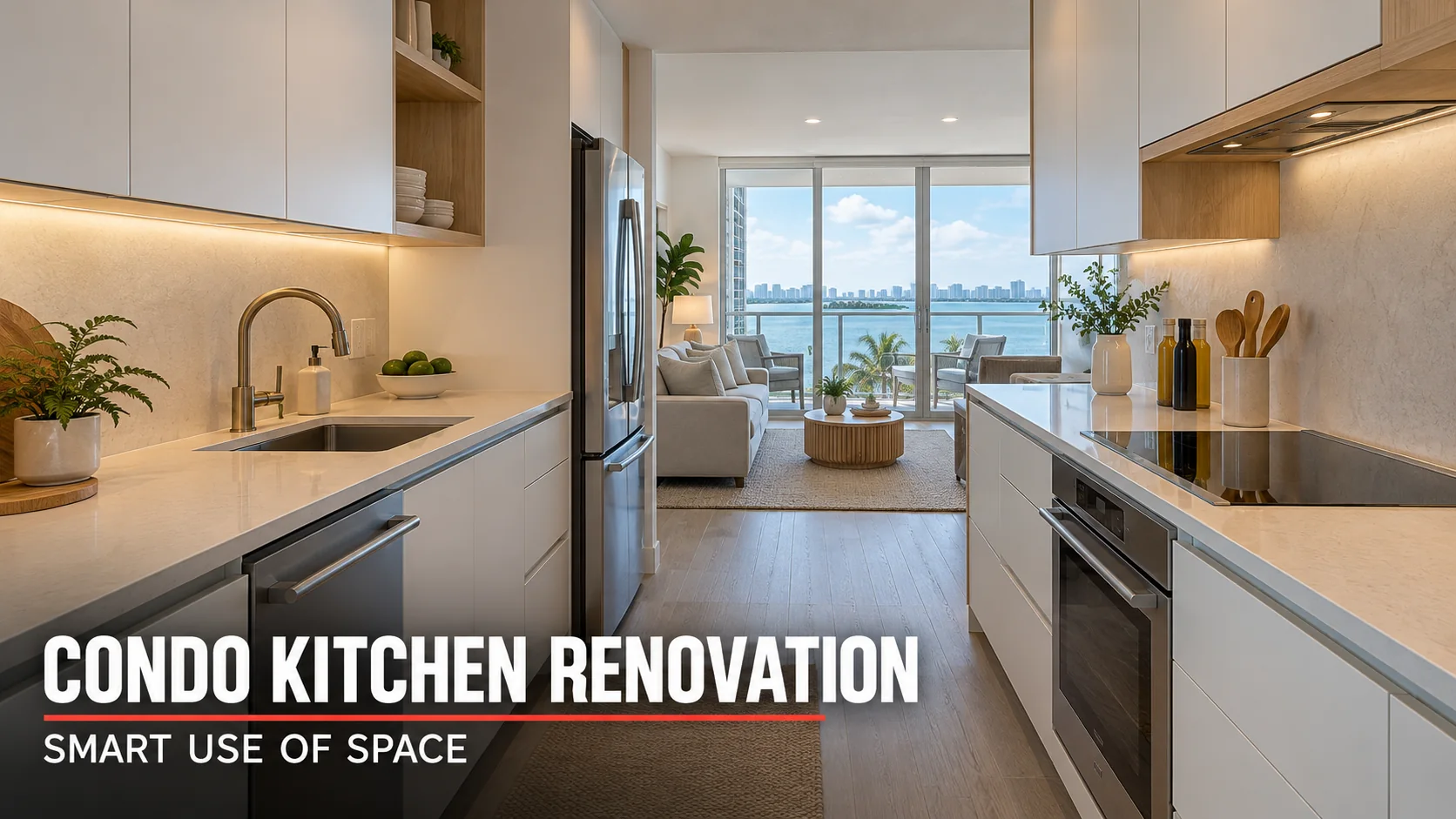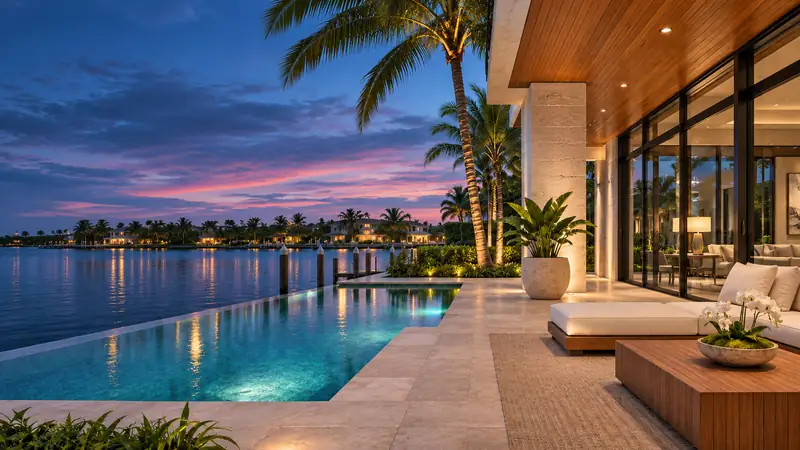
Miami Beach, Sunny Isles Beach, and Bal Harbour are home to some of the finest oceanfront residences in South Florida. J. Perry & Sons has the experience, licensing, and craftsmanship to renovate residences in these buildings to the standard their residents expect.
Miami Beach Condo Buildings We Serve
J. Perry & Sons renovates oceanfront and bayfront high-rise residences across Miami Beach, Sunny Isles Beach and Bal Harbour, from newer towers where owners finish or replace the developer's finishes to older buildings that need a full renovation. Each city has its own building department, and all three are in Miami-Dade County and the High-Velocity Hurricane Zone. In every building, we work within the association's application, insurance, elevator and work-hour rules, and plumbing and electrical work is done by licensed electricians and licensed plumbers, coordinated and permitted by J. Perry & Sons, with the project staying under J. Perry & Sons. For the county overview, see our Miami-Dade County page.
The Owner's Guide to Renovating a Condo
What your association will ask for, the rules that change your floors and how to plan around them.
+ Free one-page checklist: Your Condo Renovation Approval Checklist
Condo Renovation in Miami Beach: Finishing a New Residence or Renovating an Older One
On this coastline, two kinds of oceanfront condo projects come to us, and they are planned very differently.
Finishing a newer residence. In some newer towers, a residence is delivered with limited finishes, or with developer finishes the owner plans to replace before moving in. The walls, slab and mechanical systems are new, so the work is about design and finish: stone floors, slab walls, custom closets, lighting and millwork. The building's turnover rules still apply. The association and the developer's team often review the plans, and there may be rules on which walls can be opened and where new lines can run.
Renovating an older residence. Older oceanfront towers bring a different list: worn plumbing inside the unit, older electrical, tile laid over tile and slabs that are not flat. Here the plan starts with what is behind the finishes, and the design follows.
Three cities, three building departments. Miami Beach, Sunny Isles Beach and Bal Harbour are each their own city, with their own building department and their own rules on construction hours and noise, all inside Miami-Dade County. We file the permit with the city your building is in. Our Miami-Dade renovation permits guide covers the county side.
What both have in common. The association approves first. Expect to provide the scope, our license and a certificate of insurance naming the association and management. J. Perry & Sons prepares the package and pulls every permit.
Next step: tell us whether your residence is new or being renovated, and send the building's renovation rules. We will tell you where your plan starts.
Renovation Services for Miami Beach & Sunny Isles Condos
- Tile installation — Italian porcelain, marble, travertine, and large-format slabs
- Bathroom spa renovation — steam showers, soaking tubs, heated floors, and custom tile
- Kitchen renovation — waterfall countertops, custom cabinetry, and backsplash
- Flooring — porcelain, natural stone and engineered hardwood
- Stone veneer and feature walls
- Custom closet systems
- Interior painting and wallcovering
- Electric fireplace installation
Large-Format Stone and Slabs in an Oceanfront Tower
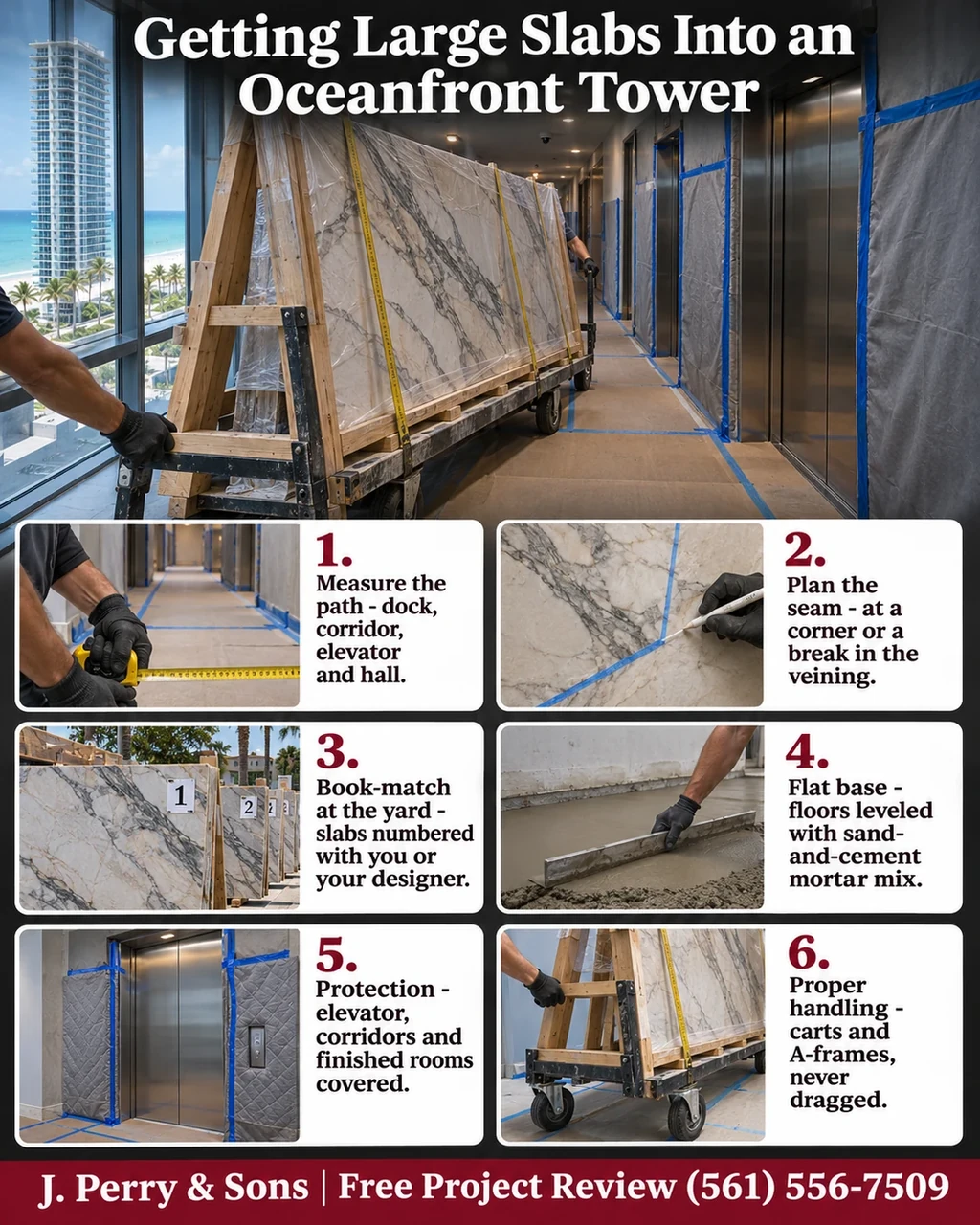
The residences on this coastline call for book-matched marble, porcelain slab walls and stone floors that run without a break. Getting those materials into a tower and onto the walls takes planning before anything is ordered.
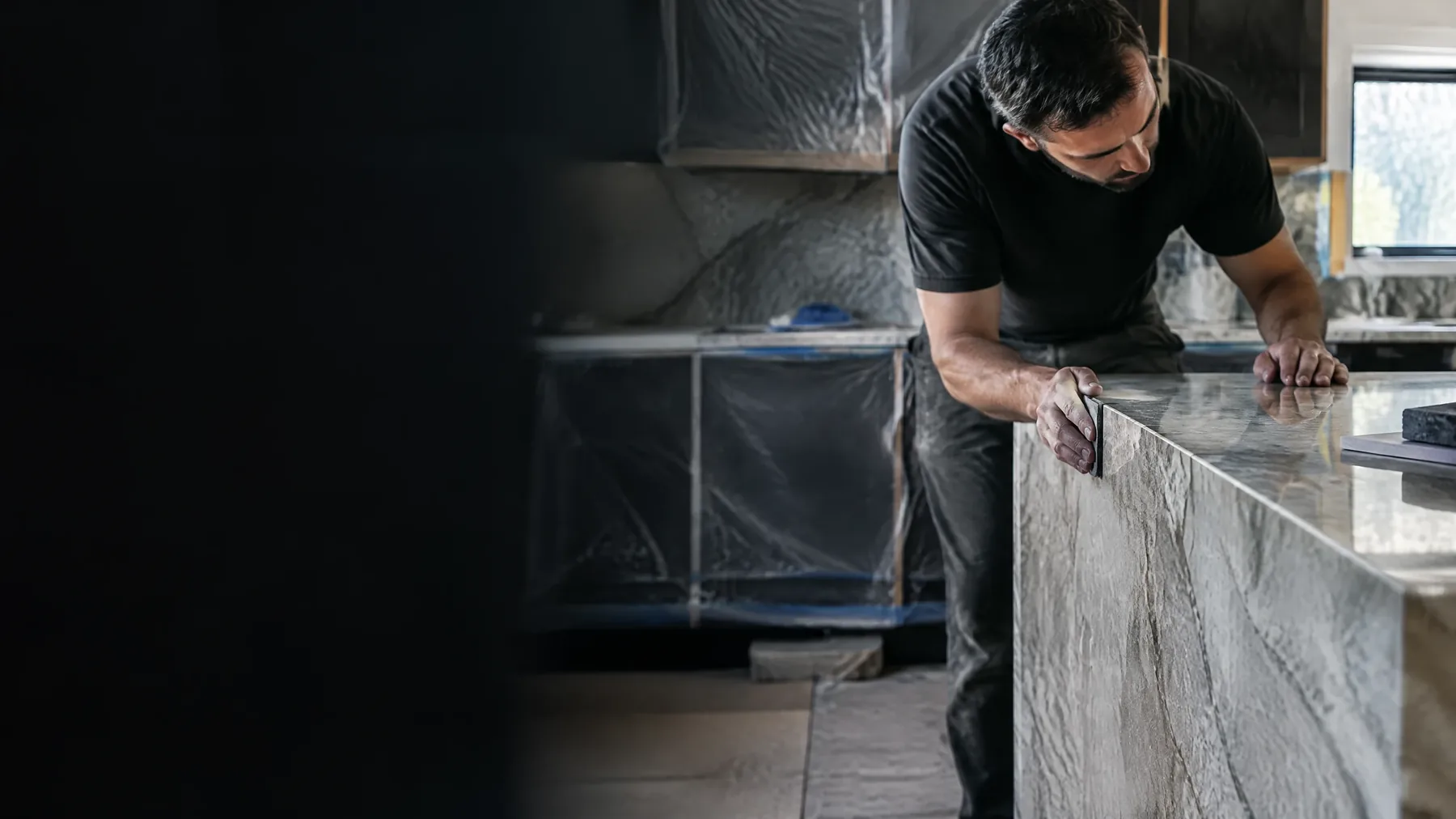
Measure the path first. Every slab has to travel from the loading dock through the service corridor, into the service elevator and down the hall to your door. We measure each step, including the elevator cab's diagonal, before fabrication. If a full slab will not fit, the seam is planned where it reads cleanest, often at a corner or a natural break in the veining.
Book-matching. For a matched wall or an island, the slabs are laid out and numbered at the stone yard with you or your designer, so the veining flows the way you approved.
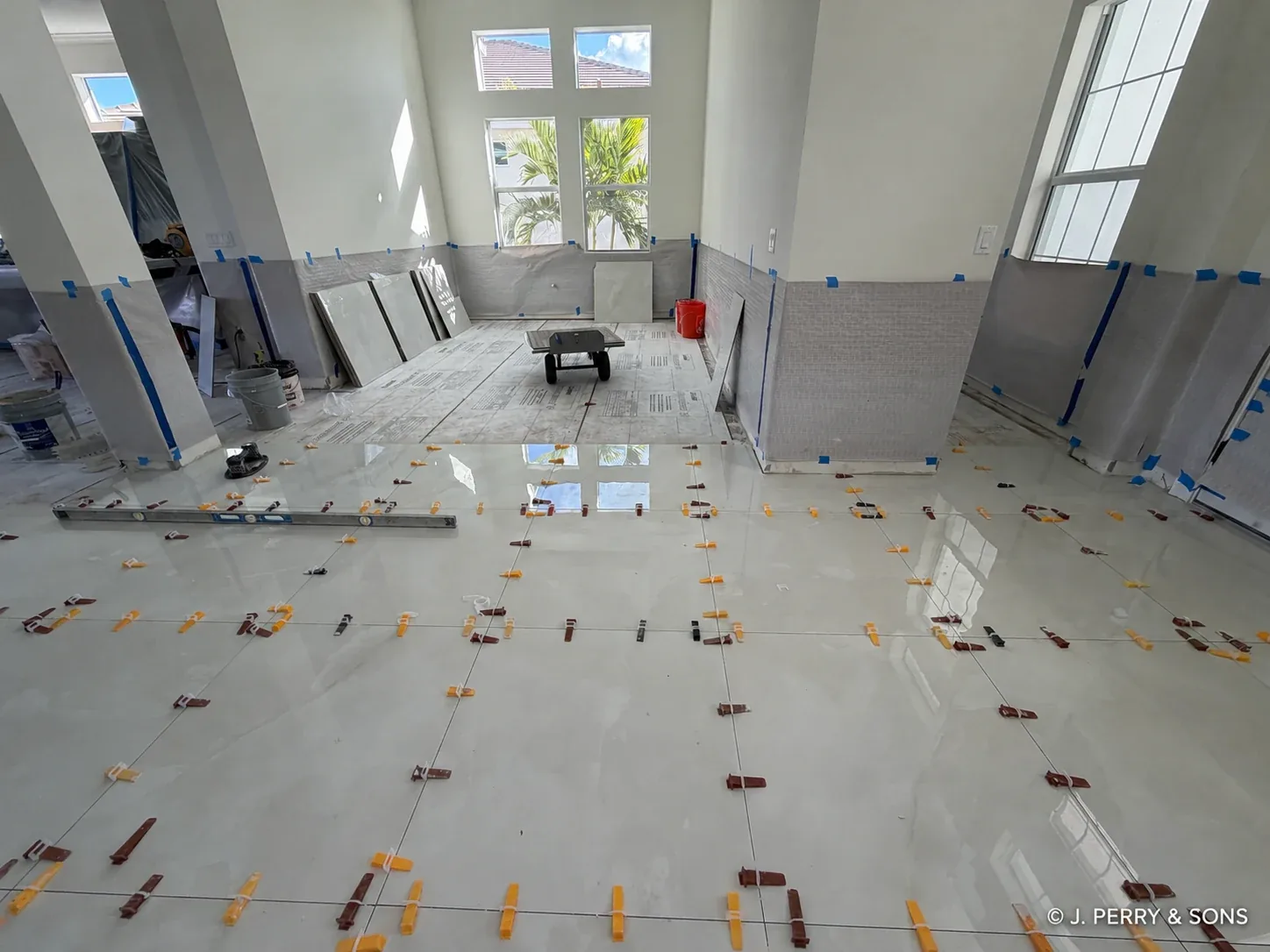
A flat base. Large-format tile and slab walls need flat substrates. Floors are leveled with a sand-and-cement mortar mix, and walls are checked and corrected before setting.
Protection. Elevator cabs, corridors and the unit's finished areas are protected for the whole job. Stone is moved on proper carts and A-frames, never dragged.
Where it goes. Kitchens with waterfall islands, primary bathrooms with slab shower walls, media walls and entry floors are the most common. Our residential countertops and slabs page covers the slab options, and our guide to marble tile installation explains how marble floors are set. After the project review, your written proposal lists the following scope and pricing: For a full kitchen in your residence, see our kitchen renovation page; kitchens.
Next step: send us the building's elevator dimensions and your slab or tile selection, and we will confirm the material fits before you commit.
Salt Air and Oceanfront Exposure: Condo Remodeling Materials That Last
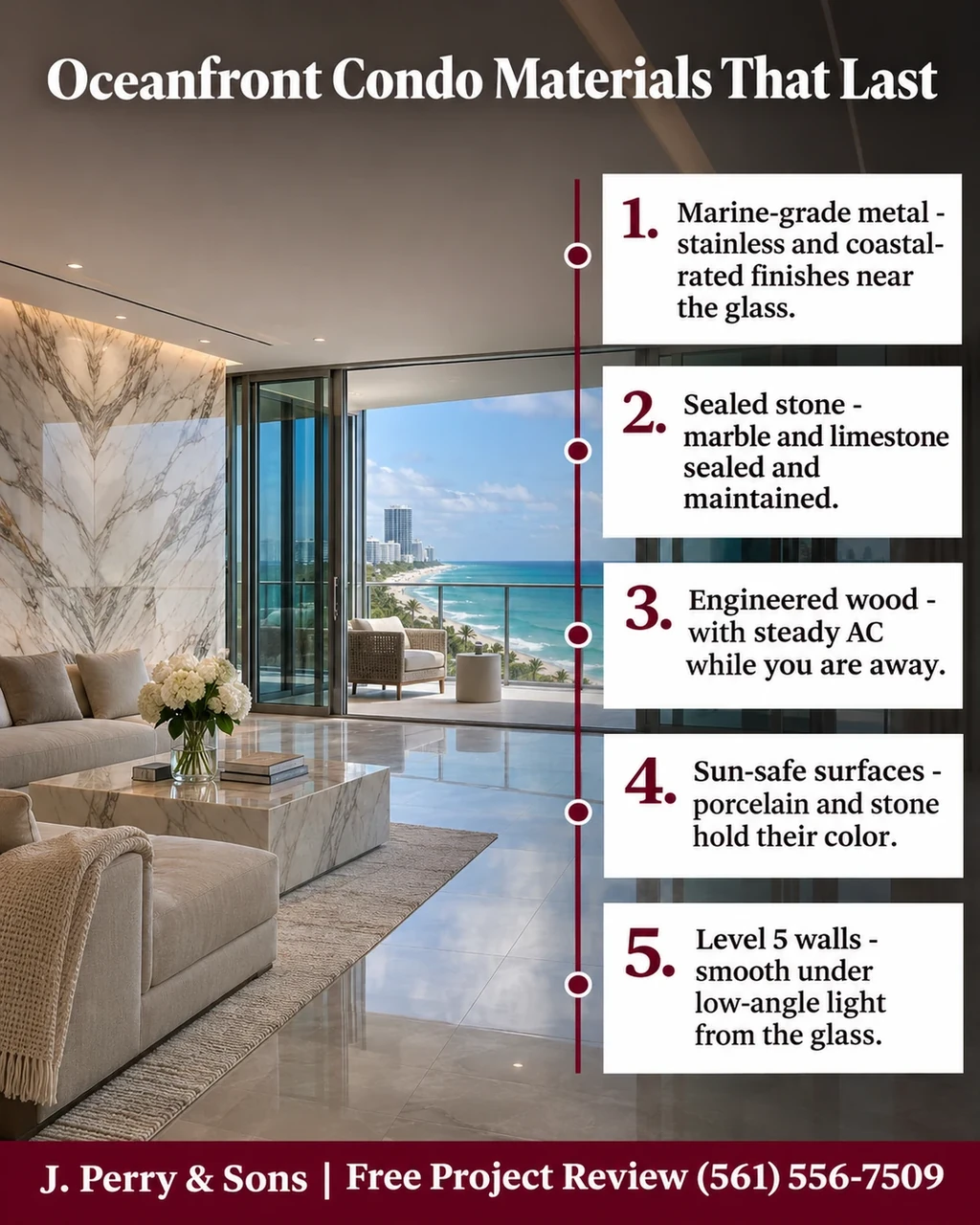
An oceanfront residence lives in salt air, strong sun and high humidity, and the materials have to be chosen for it. A finish that holds up inland can pit, fade or move here.
Metal finishes. Door hardware, shower fittings, balcony door handles and railings near an open slider see salt every day. We specify marine-grade stainless and coastal-rated finishes where the air reaches them. Lower-grade metal shows rust spots and pitting quickly on the ocean side.
Natural stone. Marble and limestone are beautiful in an oceanfront home, but they are porous. They are sealed after installation and on a regular schedule after that. Our guide to sealing natural stone in Florida humidity explains how.
Wood floors. Many owners here are away part of the year. If the air conditioning is set too high or turned off while you are gone, humidity rises and wood floors cup. Engineered wood handles humidity better than solid wood, and the AC settings matter as much as the floor. Our guide to engineered hardwood and Florida humidity covers the details.
Sun on surfaces. Floor-to-ceiling glass sends direct sun across the floor and counters. Quartz can fade where the sun hits it, and some fabrics and wood finishes do too. Porcelain and natural stone hold their color.
Walls. Long glass walls throw low-angle light across the drywall and show every ripple. We finish walls that face the glass to a Level 5 drywall finish, so they read smooth in any light.
Next step: send us photos of your residence with the ocean side showing, and we will suggest materials that hold up to your exposure.
Balcony Sliders, Building Concrete Work and the HVHZ
On the ocean side of a tower, your remodel meets the building's own work. Three things to plan for:
Replacing balcony sliders. Miami-Dade is in the High-Velocity Hurricane Zone. Any slider or window you replace must carry a product approval rated for the HVHZ, most often a Miami-Dade NOA, and it is installed exactly to that approval. On the upper floors of an oceanfront tower, the design pressures are high, so the approved unit must match the rating your floor needs. Most associations also require the frame color and profile to match the building. See our impact sliding glass doors page.
Milestone inspections and concrete restoration. Florida's milestone inspection rules mean many coastal towers have structural inspections and concrete repair programs on the balconies and the facade. If your building is planning that work, balcony tile and sometimes the slider may have to come out. Ask the board before you put new tile on the balcony. Our guide to the milestone inspection for condo boards explains the process.
When the building hires the work. For boards and property managers, J. Perry & Sons also does balcony concrete repair to the engineer's sealed drawings, followed by waterproofing and new tile. We build to the engineer's design; the engineering is by a licensed engineer.
Balcony tile over waterproofing. When it is time to tile, the old tile and setting bed come off, the slope to the drain is checked and a waterproofing membrane goes down before the new tile.
Next step: ask your board whether balcony or facade work is planned, then send us what they tell you. We will plan your remodel around it.
FAQ
Do Miami Beach, Sunny Isles Beach and Bal Harbour have different permit rules?
Each is its own city with its own building department and its own rules on construction hours and noise, all inside Miami-Dade County. We file the permit with the city your building is in.
Can I replace my balcony slider during my condo remodel?
Yes, with the association's approval. The new unit must carry an HVHZ-rated product approval, meet the design pressure for your floor and usually match the building's frame color and profile.
Should I retile my balcony if the building has concrete work planned?
Ask the board first. Milestone inspections and concrete restoration programs can require balcony tile to come up. Tiling after the building's work is done saves you from paying twice.
What materials hold up best in an oceanfront condo?
Porcelain, sealed natural stone, engineered wood with steady air conditioning and marine-grade stainless hardware hold up best. Quartz and some wood finishes can fade in direct sun through floor-to-ceiling glass.
Can you get a full-size marble slab into my tower?
We measure the loading dock, the service elevator and the corridor before fabrication. If a full slab will not fit, we plan the seam where it reads cleanest.
We prepare the contractor documents and follow your building's rules.
Free project review · (561) 556-7509
Related services