"We have a plain concrete patio off the family room and we want porcelain on it, ideally the same look as the floor inside. Can it go straight on the slab, and which porcelain should we use?"
Short answer: yes, porcelain can go directly on a concrete patio when the slab is sound, clean, unsealed and sloped away from the house. There are two ways to do it. Thin outdoor porcelain tile (around 9–10 mm) is bonded to the slab in exterior thinset and suits covered lanais and screened patios with a good slab. 2 cm porcelain pavers are twice as thick, handle open sun and rain better, and can correct small slope problems and bridge hairline cracks. 2 cm porcelain pavers over concrete starts at $38 per sq ft installed. Thin-tile pricing is based on the tile size, the slab condition and the prep, and it is given in the itemized written proposal. This guide from J. Perry & Sons tile installation explains which method fits your patio and what has to happen to the slab first.
Thin tile vs. 2 cm pavers on the same slab
Thin porcelain tile is bonded directly to the concrete. It looks like an interior floor carried outside, joints can be tight, and it suits covered lanais and screened patios where the slab is in good shape. The slab's flaws telegraph through: a crack in the concrete becomes a crack in the tile unless it is treated with a crack-isolation membrane. Large-format thin tile (24x48 and up) needs a flatter slab and two-person handling.
A 2 cm porcelain paver works more like a paver. Over concrete we set it on a thin bed or bonded in exterior mortar, which lets us correct small slope problems and bridge hairline cracks. It handles open, sun-exposed patios and pool surrounds better, and it stands up to furniture being dragged across it. When the patio ties into a driveway or walkway overlay, our pavers over existing concrete crews handle both in one mobilization. The full system is on our porcelain pavers page.
| Thin outdoor porcelain | 2 cm porcelain paver | |
|---|---|---|
| Best for | Covered lanais, screened patios | Open patios, pool surrounds |
| Slab needed | Sound, flat, sloped | Sound; small slope and flatness issues can be corrected |
| Cracks | Need a crack-isolation membrane | Bridges hairline cracks |
| Look | Matches an interior floor closely | Matches many interior collections in a 2 cm version |
| Price | In the itemized written proposal | Starting at $38 per sq ft |
Next step: tell us whether the patio is covered, screened or open, and send one photo standing at the slider looking out.
What the slab has to be
Porcelain is rigid. It does not hide a bad slab, it shows it. Before we order anything we check:
- Soundness. A tap test across the slab. Hollow areas and crumbling edges are repaired first; see concrete restoration.
- Cracks. We map them. Hairline shrinkage cracks get a crack-isolation membrane. Cracks with one side higher than the other mean movement, and that has to be dealt with before tile.
- Slope. Water has to run away from the house at roughly 1/8 to 1/4 inch per foot. Many patios are poured with a dip at the slider or a ridge at the column line. If the slab is flat or pitched toward the house, we correct it before tile.
- Sealers and paint. Thinset will not bond to a sealed or painted slab. They are ground off.
- Height at the door. Tile, thinset and any leveling add height. We check the threshold at every slider so the finished floor does not block the door track or send water inside.
If the slab is too far gone, the honest answer may be a new patio. Our paver patio page covers that route.
Next step: pour a bucket of water near the slider and photograph where it goes. That one photo tells us most of what we need about the slope.
How we tile a patio over concrete
- Slab check. Tap test, crack map and a straightedge across the surface.
- Slope. Corrected before tile where the slab is flat or pitched back toward the house.
- Surface prep. Grind off paint, sealer and curing compound so the thinset bonds to open concrete.
- Crack isolation and waterproofing where the slab is cracked or where the patio sits over living space.
- Setting. Exterior-rated polymer-modified thinset, back-buttered tile, full coverage. Outdoors we aim for no voids; a hollow spot fills with water and pops in the first heat cycle.
- Movement joints. Soft joints at the house wall, at the slab's joints and in the field at the spacing the tile industry standard calls for. This is the step most patio failures skip.
- Grout and sealer suited to sun and water, then cleanup. Furniture stays off until the grout and joints have cured.
Next step: if you had patio tile pop or crack before, send photos of the failure. It usually tells us which step was skipped.
Choosing the tile: slip, finish, color and size
Slip. Outdoor porcelain should carry a wet slip rating for exterior use and a textured or structured finish. Polished porcelain does not belong on an uncovered patio. Our guide to outdoor tile slip resistance in Florida explains the ratings, and matte vs. polished porcelain tile covers the finish choice.
Color. Lighter colors stay cooler under July sun; dark charcoal tile can become uncomfortable barefoot. Around a pool, stay light.
Size. Large formats give fewer joints and a calmer surface, but they need a flatter slab. On exterior work we still leave room for movement, even with rectified edges.
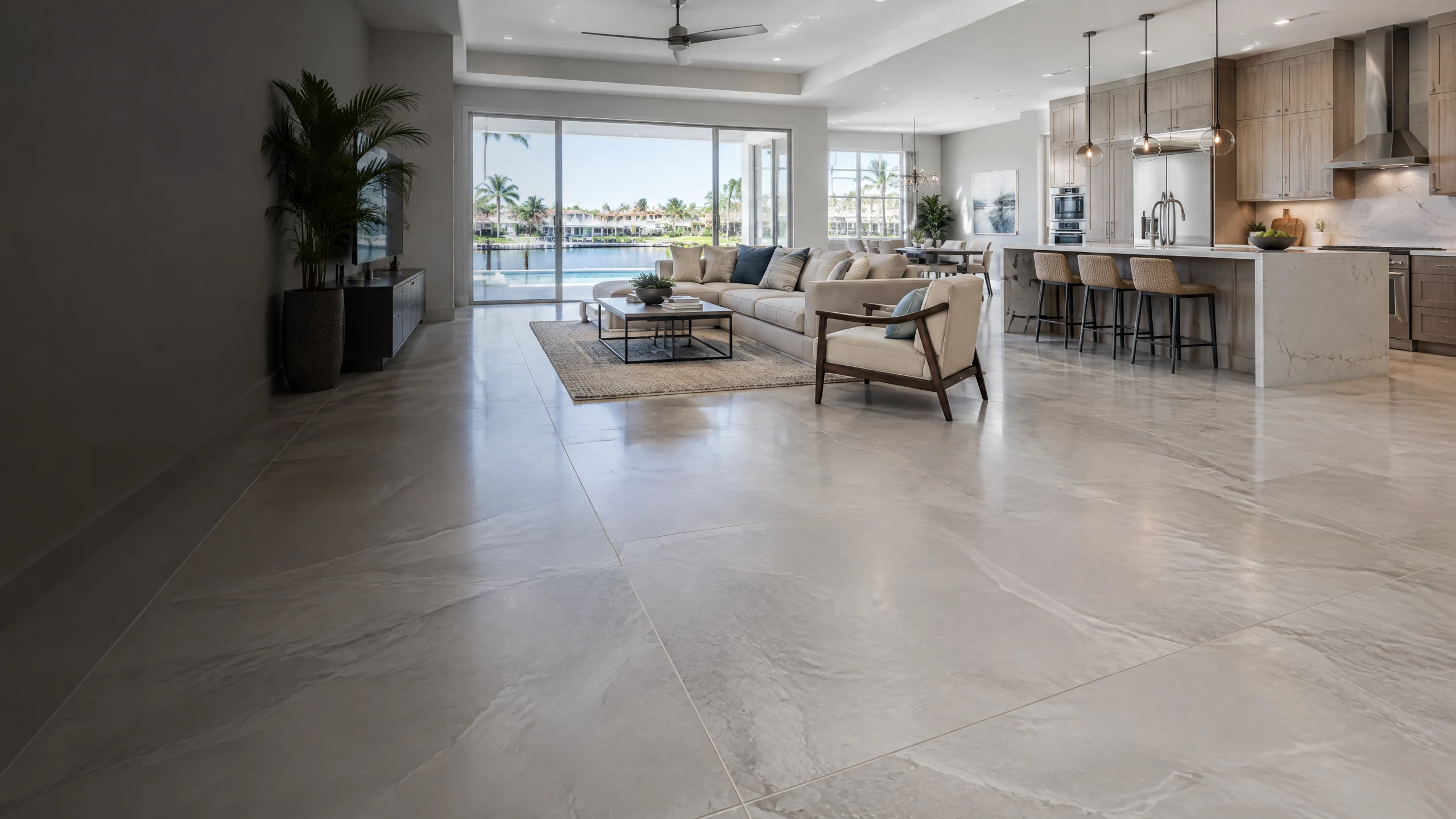
Matching inside and out. Many collections make an outdoor version of the interior tile, in thin tile or 2 cm. The colors match; the surface texture is different on purpose, for grip.
Stone instead? If you are weighing porcelain against travertine or marble, our comparison of travertine, marble and porcelain pavers lays out heat, upkeep and look.
Overage. We order 10–15% overage from one production lot so later repairs match, and we recommend keeping a few spare pieces.
We bring samples to the house so you see them in your own sun, and once you sign the proposal a simple rendering is included so you can picture the patio before materials are ordered.
Next step: send a photo of your interior floor and we will tell you which outdoor porcelain matches it.
South Florida conditions that decide the method
Our patios see daily summer rain, standing water at downspouts and salt air near the coast. A few rules follow:
- Water management first. Gutters that dump on the patio and sprinklers that soak it every night shorten any finish. We point those out before we tile.
- Heat expansion. A south-facing slab can swing more than 50 degrees in a day. That is why soft joints matter more outside than inside.
- Efflorescence. White deposits come from water moving through the slab. Proper slope and a breathable grout sealer keep it down.
- Rain. We do not set exterior tile on a wet slab or with a storm on top of us. Covered work is tarped.
- HOA rules. Many associations regulate visible patio finishes. We prepare the product sheet, color and layout for the owner; review HOA approval for renovations before ordering tile.
- Condo patios and terraces over units need a waterproofing membrane and board approval, which changes the scope and the price. See balcony waterproofing and tile.
Next step: tell us your city and whether you have an HOA when you send your project.
Pool surrounds and lanais
Pool surround. Use a 2 cm porcelain paver or a thick textured exterior porcelain, light in color, with coping detailed on its own line. If the deck has cracks or settlement, it gets repaired first; see pool deck resurfacing.
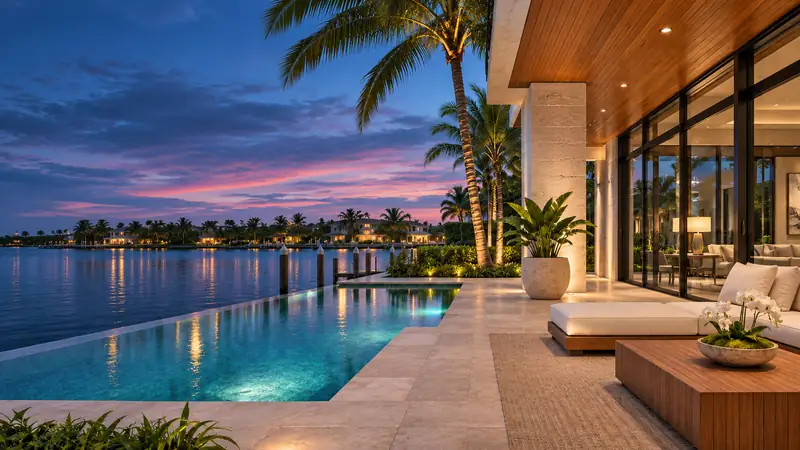
Screened lanai. This is where thin porcelain shines: protected from the worst sun and rain, with a slab that is usually in good shape. It is the most common way owners carry the interior floor outside.
Outdoor kitchens and seating areas. Plan the tile with the kitchen, gas and drains so the floor is not cut up later. Our article on patio and outdoor living renovation covers the whole space, and outdoor living shows what else we build there.
Patio tile cost over concrete
Pricing is based on the method (thin tile or 2 cm paver), the tile size, the condition of the slab, slope correction, membranes, removal of any old tile and the layout. 2 cm porcelain pavers over concrete starts at $38 per sq ft installed. Thin outdoor porcelain, large-format tile, removal of old tile and thinset, and any slab repair found after removal are priced in the itemized written proposal after your Free Project Review, each on its own line. We review every project personally and follow up with you directly.
Licensed and insured, certificate of insurance on request. 150+ projects completed. J. Perry & Sons pulls the permit when the work needs one and follows city and county requirements.
Patio tile installation by city
FAQ
Can porcelain tile go directly on a concrete patio?
Yes, if the slab is sound, clean, unsealed and sloped away from the house. Cracks get an isolation membrane, and soft joints go in at the house wall and over the slab's joints.
How much does porcelain patio tile cost installed?
2 cm porcelain pavers over concrete starts at $38 per sq ft installed. Thin outdoor porcelain is priced in the itemized written proposal, based on the tile size, the slab condition and the prep, with any old tile removal on its own line.
Is thin tile or a 2 cm porcelain paver better for an open patio?
On an uncovered patio or pool surround, the 2 cm paver usually holds up better and can correct small slope problems. Thin tile works well on covered lanais with a good slab.
Will porcelain patio tile get too hot?
Dark colors get hot in direct sun. Light and mid-tone textured porcelain stays more comfortable and is the better choice for open areas and around pools.
Do I need to remove the old patio tile first?
In most cases, yes. Tiling over tile adds height at the door and stacks a new floor on an old bond you cannot check. We remove the old tile and thinset, repair the slab and start clean.
How do I get an exact price?
Call (561) 556-7509 or send photos and rough dimensions through our project form. We review every project personally and follow up with you directly.