Peeling Trim a Few Blocks From the Ocean
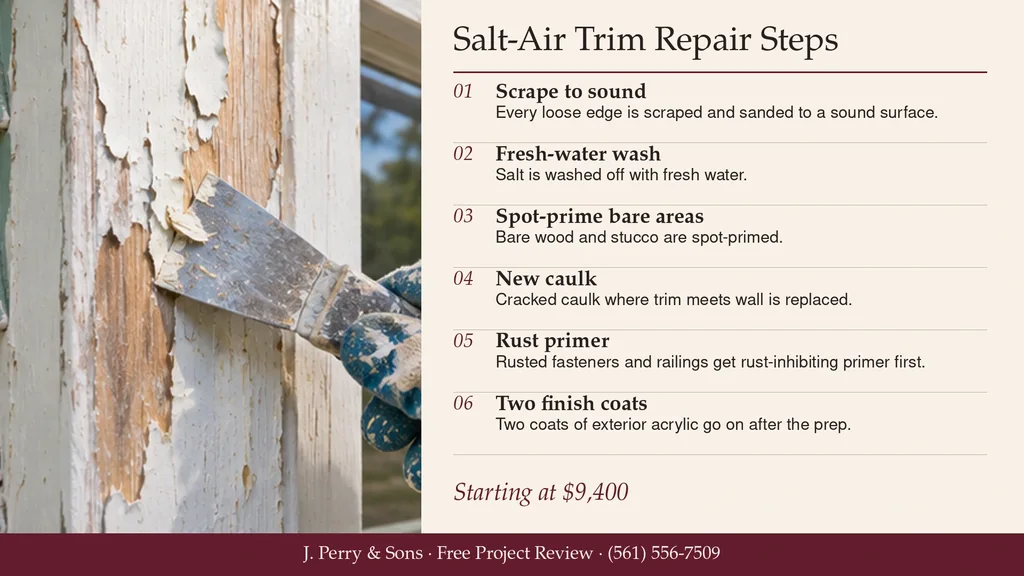
Is the paint on your Delray Beach home bubbling on the window trim and flaking off the fascia, even though it was painted not long ago? Near the ocean, salt settles on every surface and pulls moisture into any gap in the coating. Once water gets behind the paint, it pushes the film off from underneath, and no amount of touch-up keeps up with it.
The fix is to remove what has already failed instead of painting over it, the shortcut many house painters take. We scrape and sand every loose edge back to a sound surface, wash off the salt with fresh water, spot-prime bare wood and stucco, and replace the cracked caulk where trim meets wall. Rusted fasteners and railings get a rust-inhibiting primer first, because rust will bleed through a finish coat that is put straight over it.
After the prep, two finish coats of Sherwin-Williams exterior acrylic go on, usually Duration or Emerald for homes that see direct salt exposure. On request, we use Benjamin Moore instead.
Shutters, pergolas and the underside of porch ceilings get the same treatment. Porch ceilings near the beach often show mildew spots first, and a mildew-resistant finish there keeps the entry looking clean.
Changing Colors Inside a Delray Beach Historic District
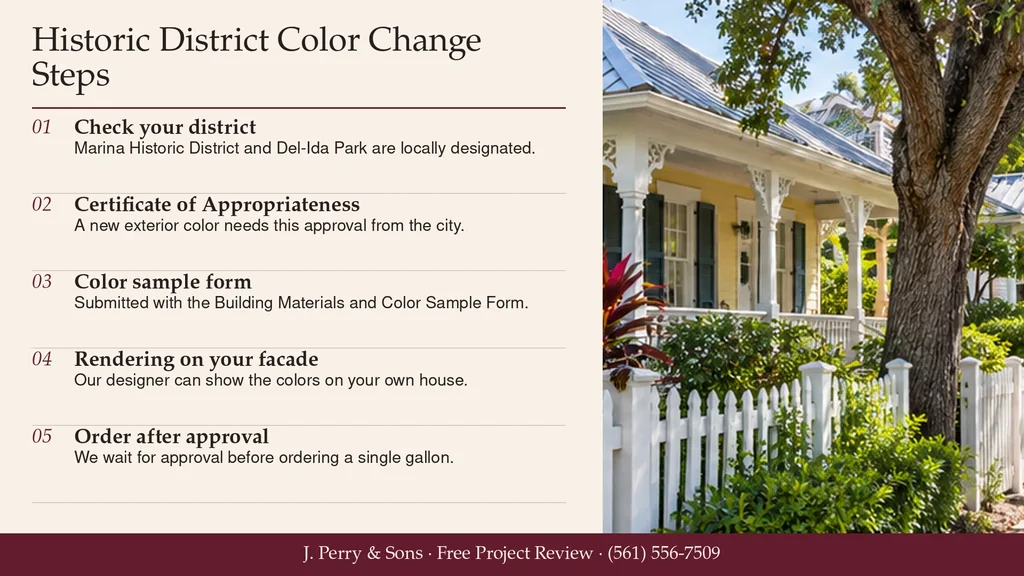
Delray Beach has several locally designated historic districts, including the Marina Historic District and Del-Ida Park. If your property is in one of them, the city requires a Certificate of Appropriateness before you change the exterior color, submitted with its Building Materials and Color Sample Form. Repainting in the same color is a simpler conversation, but a new palette goes through review.
Not every exterior painting contractor will help with that paperwork; we put the request together with you. Our team brings Sherwin-Williams color samples to the house, our designer can prepare a simple rendering so you can see the colors on your own facade, and we wait for the approval before ordering a single gallon. Old Florida cottages and Mission-style homes in these neighborhoods often have wood siding, wood windows and exposed rafter tails, so we plan the prep around wood, not just stucco painting. Seagate, Tropic Isle and Lake Ida homes outside the districts skip that review, though many still answer to an HOA.
Homes built before 1978 may have lead paint under the newer layers. When testing calls for it, we bring in a specialty contractor coordinated by J. Perry & Sons with EPA lead-safe (RRP) certification for that part of the work.
Oceanfront and Intracoastal Condo Buildings
Along A1A and the Intracoastal, a lot of Delray's waterfront housing is mid-rise condominium. Painting those buildings is a different job than a house. We work from boom lifts on the lower floors and use rope access on the taller elevations where a lift cannot reach, so the board does not have to pay for a full swing-stage setup on every wall.
For associations, we coordinate notices to residents, balcony access, parking and pool-deck protection with the property manager. Our crews have handled association and multifamily work in Delray Beach and next door in Boynton Beach, which means we already know what a board wants to see on paper.
Concrete spalling is common on older oceanfront balconies, where rusting rebar swells and cracks the concrete. That repair is structural and belongs to the association's engineer and a restoration scope; we paint after it is done and coordinate our schedule with that contractor so new coatings do not go over open repairs.
The Owner's Guide to Stucco, Stone Veneer and Exterior Walls
How exterior walls keep water out, what cracks and stains mean, and what to ask any contractor.
Delray Beach Painting Contractor Pricing: What Sets the Number
A single-story Delray Beach home is reviewed on site and quoted in writing for exterior painting. From there, the price is based on how much loose paint and rotted wood has to come off, the type of siding, the number of windows and shutters, second-story height, and whether the color change needs extra coats.
For condo buildings, pricing is based on the building height, the access method, the amount of concrete and stucco repair, and how many balconies and railings are in scope. We break those out so the board can compare our proposal line by line against other commercial painting companies.
Wood work is the line item that surprises people most in the older neighborhoods. Soft fascia boards, rotted window sills and split rafter tails have to be replaced before paint, and we only find the full extent once the loose coating is off. We photograph every piece of rotted wood we uncover and send it to you before replacing it, so nothing is added to the job without your say.
Interior Repaints for Downtown and Beach Homes
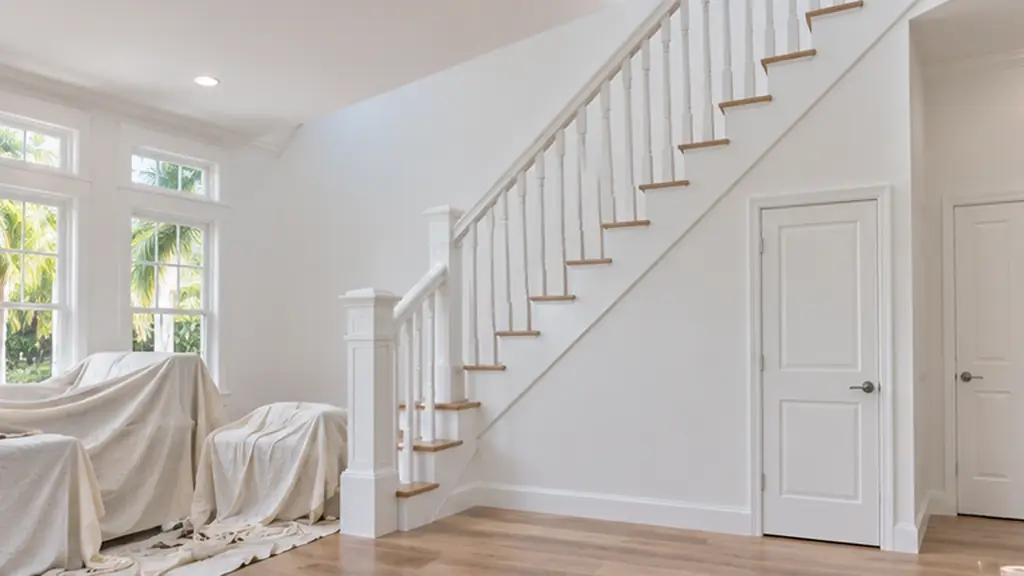
Our interior painting takes in walls, ceilings, trim, doors and cabinets. Beach homes often have humidity marks on bathroom ceilings and closet walls, which we clean and seal with a stain-blocking primer before the finish coat. In newer townhomes near Atlantic Avenue, the work is usually about sharp lines on open staircases and tall living-room walls.
Furniture is moved and covered, floors are protected, and the house is cleaned up at the end of every work session so you can keep living in it while we paint.
For trim and cabinets we use a hard-drying enamel that levels out brush marks, and for ceilings a flat finish that hides the small imperfections a beach-house ceiling picks up from humidity.
Away for the Summer? We Keep You Posted
If you split your time between Delray and somewhere up north, you do not need to be here for the job. We send photos and an update every day, flag anything we find behind the old paint, and you come back to it finished. Stucco or wood repair sometimes triggers a permit; in that case our office files it with Delray Beach and meets the inspector, so none of that lands on you.
The first step is a phone call to (561) 556-7509, or a few photos sent through our project form. We will set up a Free Project Review, check whether your home sits in a historic district, and give you a written scope.
Services We Offer in Delray Beach
Why Delray Beach Homeowners Choose J. Perry & Sons
Neighborhoods We Serve in Delray Beach
Call (561) 556-7509 or send us your project with photos, the city, approximate dimensions, and material selections.
Interior and exterior painting, with the prep done right underneath.
Free project review · (561) 556-7509
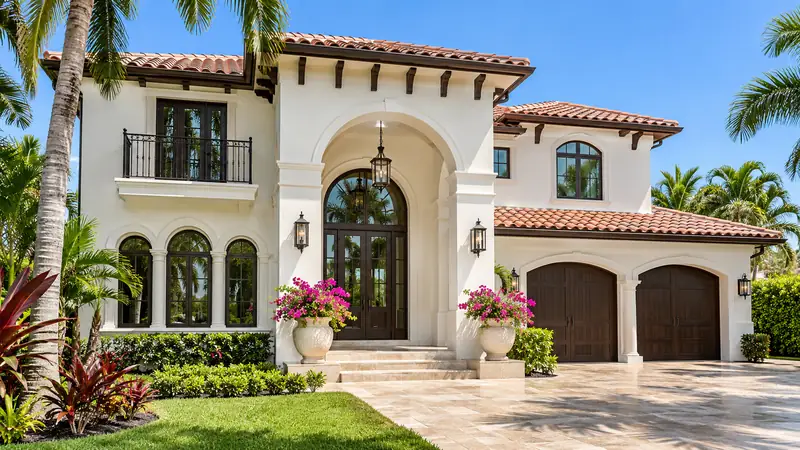
For condo, HOA and commercial buildings, see our commercial painting services.
Interior & Exterior Painting in Delray Beach — FAQ
Do I need city approval to change my house color in a Delray Beach historic district?
Why does exterior house painting fail so fast near the beach in Delray?
Can you paint a condo building on A1A without a swing stage?
What paint brand do you use on Delray Beach homes?
My Delray cottage was built in the 1940s. Is lead paint a concern?
Share your vision for your South Florida home.
Free project review · (561) 556-7509