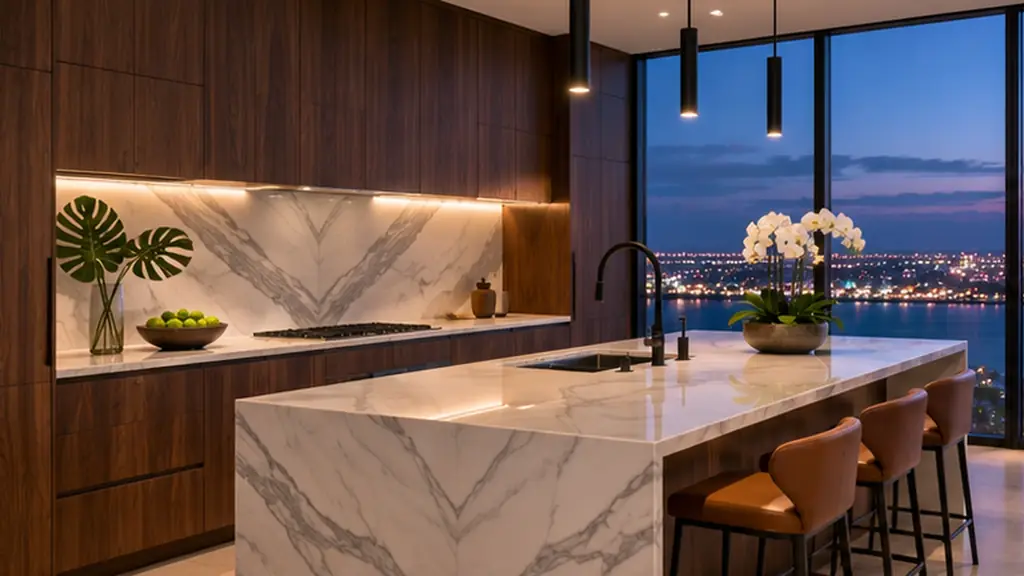
Is Your Miami Condo Kitchen Sleek in the Listing Photos and Tired in Real Life?
"The building is beautiful, the view is incredible, and the kitchen has chipped laminate, a dated backsplash and cabinet doors that don't close right." Many Miami condo kitchens were finished with the developer's standard package, and after enough salt air, humidity and use, it shows.
We rebuild those kitchens the way a high-rise demands: careful demolition that respects the building, sound underlayment under every hard floor, slab countertops that can be brought up in the elevator, and finishes that hold up in a coastal climate. In single-family neighborhoods like The Roads, Shenandoah or Coconut Grove, the challenge is different, and we plan for that too.
High-Rise Logistics in Brickell, Edgewater and Downtown
Renovating a kitchen forty floors up is a logistics job before it is a construction job. Building management will want certificates of insurance, a renovation application and a freight elevator schedule. Slab countertops have to fit the elevator cab, debris has to leave without touching the lobby, and the crew has to stay inside the building's permitted work hours. New kitchen cabinets come up boxed during the reserved elevator time, never through the lobby without protection.
Condo and multifamily projects in Miami and Kendall are part of our track record, so these details get planned before demolition starts. We measure the elevator before ordering slabs, protect corridors and elevator walls, and coordinate any plumbing shutoff with the building engineer so your neighbors are not left without water. That is the standard building managers expect from kitchen remodel contractors working in their towers.
- Renovation application and insurance certificates prepared for management
- Freight elevator reservations for demolition, cabinets and slab delivery
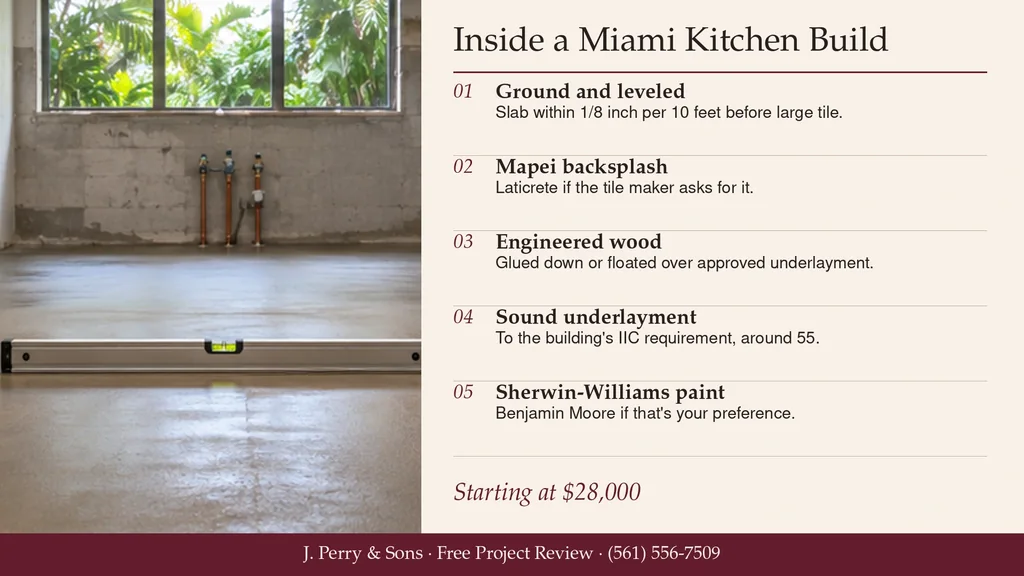
- Sound underlayment installed to the building's IIC requirement, around 55
- Shared riser and shutoff work coordinated with the building engineer

City of Miami Permits and the HVHZ
Kitchen permits inside the City of Miami are filed through the Building Department's iBuild portal, with plans reviewed electronically. Neighboring cities such as Coral Gables and Miami Beach run their own building departments, so the first step is confirming which jurisdiction your address falls under.
Miami-Dade is inside the High Velocity Hurricane Zone, the strictest wind code in Florida. Any kitchen window or sliding door we replace must carry HVHZ product approval and be installed exactly to it. Our installers work with ES Windows, CGI, WinDoor and PGT units. We take the permit out under our license, book the inspections and close it out, while licensed electricians and licensed plumbers carry the plumbing and electrical sub-permits, with the work coordinated by J. Perry & Sons.
The Owner's Guide to Kitchens and Countertops
How to plan a kitchen around the way you live, choose surfaces and compare proposals.
+ Free one-page checklist: Before You Remodel Your Kitchen
Single-Family Kitchens in The Roads, Shenandoah and Coconut Grove
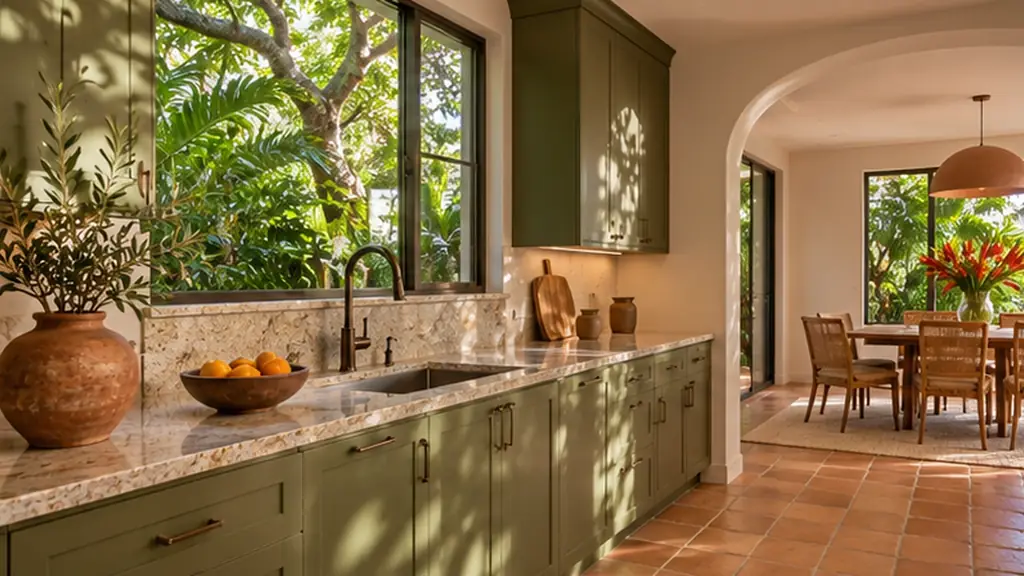
Not every Miami kitchen is in a tower. In neighborhoods like The Roads, Shenandoah and Coconut Grove, many houses are older single-family homes with character worth keeping and kitchens that were added onto or reworked more than once. Behind the cabinets we often find a patchwork of old repairs, and the floor may slope where an addition meets the original house.
For those homes, the plan starts with what the structure allows. We look at whether the kitchen can open to the dining room, how the plumbing runs under the slab, and whether the electrical panel can carry modern appliances. Under a mature tree canopy, natural light is precious, so we think carefully about window placement and lighting. When a window is replaced, the new impact unit must meet Miami-Dade HVHZ rules, and we coordinate that under the same permit as the rest of the kitchen. Grove and Roads homes with a yard often add an outdoor kitchen, which we plan with the inside so the finishes carry through.
Inside the Work: How We Build It
Our own crews handle tile, stone, flooring, drywall and paint. Before a single large porcelain tile is set, the slab is ground and leveled until it stays inside 1/8 inch per 10 feet. Backsplash tile is bonded with Mapei mortar, or Laticrete if the tile maker asks for it. Engineered wood is glued down or floated over the approved underlayment. Paint is Sherwin-Williams by default, Benjamin Moore if that is your preference. Quartz countertops are templated only after the cabinets are set and level.
Removing a wall or shifting a sink near a column in a concrete building requires drawings from your architect or engineer and often the association's structural review. We build to those drawings; we do not substitute for them.
Your Miami Kitchen Remodel Cost Is Based On
Kitchen renovations start at $28,000. In a Miami tower or a Grove house, the number above that is based on the kitchen's size, the cabinet line and finish, countertop material and how the slabs reach your unit, backsplash tile, flooring and underlayment, the amount of plumbing and electrical relocated, and any building requirements such as corridor protection and elevator scheduling.
- Layout: keeping the plumbing wall in place versus moving the sink or range
- Surfaces: quartz, porcelain slab or natural stone, and edge profile
- Condo factors: underlayment, after-hours restrictions and delivery access
- Condition: what we find under the old floor and behind the old cabinets
Abroad, Up North or Just Busy: We Keep You Informed
A lot of Miami owners are not in town while the work is happening. Some live part of the year in another country, others simply work long hours. management, so you can come back to it finished without having to manage the project yourself. Timing is confirmed in your written proposal.
To start, request a Free Project Review, whether you are in a Brickell tower or a house under the Grove's oaks. We will look at the kitchen, review your building's rules and give you a written scope with a clear price. If you are comparing kitchen remodelers from abroad, that written scope is what lets you compare them fairly.
Services We Offer in Miami
Why Miami Homeowners Choose J. Perry & Sons
Neighborhoods We Serve in Miami
Call (561) 556-7509 or send us your project with photos, the city, approximate dimensions, and material selections.
Considered layouts. Beautiful materials. A space that feels like you.
Free project review · (561) 556-7509

Kitchen Renovation in Miami — FAQ
How do I get approval from my Brickell condo board to renovate my kitchen?
Do I file my kitchen permit with the City of Miami or Miami-Dade County?
Can a large quartz or porcelain slab fit in my Miami condo elevator?
What sound rating does my Miami high-rise require under a kitchen floor?
Can I do a kitchen remodel in Miami while living overseas?
Share your vision for your South Florida home.
Free project review · (561) 556-7509