“I got three painting quotes for the same house and they are thousands of dollars apart. Is one of them wrong, and what should painting actually cost per square foot?”
Usually none of them is wrong. They are measuring different things, including different prep and using different coatings, and this guide shows you how to line them up.
Short answer: painting cost in South Florida is based on the surface, the area, the prep it needs and how hard it is to reach. Interior proposals identify the wall and ceiling surfaces being painted, rather than relying on floor area alone. Floor area, wall area and a lump-sum project price are different quote methods, so ask which measurement a painting contractor has used. The scope factors below explain what we review, and the final number for your project is confirmed in a written proposal after your Free Project Review.
Painting costs in South Florida vary significantly based on whether you're painting interior walls, exterior stucco, a 1,000 sq ft condo, or a 3-story commercial building. This guide explains the scope factors homeowners should review when comparing 2026 painting estimates.
The Owner's Guide to Stucco, Stone Veneer and Exterior Walls
How exterior walls keep water out, what cracks and stains mean, and what to ask any contractor.
+ Free one-page checklist: Before You Accept a Contractor’s Proposal
What painting costs per square foot: how the price is built
A painting price is the sum of four things, and a low quote usually cuts one of them.
1. Surface area. How many square feet are being painted, and of what: walls, ceilings, trim, doors, fascia, soffits.
2. Prep. Cleaning, patching, crack repair, sanding, masking and primer. On exteriors, prep often takes more labor than the coating.
3. The coating system. The primer and finish coats, the number of coats and the product line. A premium line costs more per gallon and covers and lasts better.
4. Access. Ladders, a lift, scaffolding or suspended access. A two-story house and a tower do not price like a single-story house.
When you hear “per square foot,” ask which square foot. A price per square foot of floor area, a price per square foot of wall and a price per house are three different ways of describing the same job, and they are not interchangeable.
| Method | What it measures | Where it is used |
|---|---|---|
| Per sq ft of floor area | The size of the home or commercial space | Some interior quotes; ask which measurement the proposal uses |
| Per sq ft of wall or ceiling surface | Actual surface being coated | Interior walls and ceilings; exteriors, tall walls and commercial elevations |
| Per house or per room | One lump sum | Smaller jobs; check what is included |
| Per unit | A price per apartment or building | HOAs and multifamily |
When you compare quotes, ask each painter which of these they used. Office and warehouse proposals should identify the surfaces included; commercial exterior scopes should list each elevation.
Interior vs exterior: what changes the price
Interior painting. Walls, ceilings, trim and doors. The price moves with ceiling height, how many rooms, how much trim and how many doors, how much patching the walls need and whether furniture has to be moved. Dark-to-light color changes need extra primer or an extra coat. A smooth-wall finish is a drywall step, not a paint step, and it is priced separately; see Level 5 drywall finish.
Exterior painting. Walls, trim, fascia, soffits, doors and garage doors. The price moves with the wall area, the number of stories, the condition of the stucco, how many windows and doors need detailed cutting-in and how much repair is needed before painting. Exterior jobs include cleaning, which interior jobs do not.
Why exteriors cost more per square foot of floor area. An exterior has to survive sun, wind-driven rain and humidity. That means more prep, thicker coatings and often equipment to reach the walls.
Tell us whether you need interior, exterior or both, and send photos of each.
Stucco and substrate prep: where the money goes on an exterior
Most South Florida homes are stucco over block, and stucco is where exterior painting quotes diverge most. Two contractors can look at the same wall, and one prices a coating over cracks while the other prices a repair first.
Hairline cracks. Common and usually cosmetic. They are opened slightly, filled with flexible filler and textured.
Wider or stair-step cracks. These point to movement or water. They are cut back and rebuilt after the cause is found.
Hollow stucco. Tap the wall: a drum-like sound means the stucco has let go of the block. Painting over it delays the failure and wastes the paint.
Failed sealant. Caulk around windows and doors that has cracked or pulled away lets water behind the paint.
Mildew and chalk. Both have to be cleaned off before paint, or it will not bond.
If a quote has no line for cleaning, repairs or primer, the painter is either including it in a lump sum you cannot see, or leaving it out. Ask. Our stucco repair page shows how repairs are done and priced, and when re-stucco is the better choice.
Send a close-up and a wide shot of any crack or stain so the proposal covers it.
Commercial and condo buildings
Commercial and condo painting is priced by the wall area of each elevation, the repairs, the coating system and the access method: lifts, scaffolding, swing stage or rope access on tall buildings. A building proposal should list every elevation and repair as a separate line.
If you own or manage a commercial property, see commercial painting. If you are on a condo board or manage a tall building, see high-rise and condo painting.
If you are comparing building bids, ask every bidder for itemized lines per elevation.
What is included in a painting proposal
A proposal you can trust lists these items, and a quote that leaves any out is hard to compare:
- Every area or room being painted, including ceilings, trim and doors
- Prep: cleaning, patching, crack repair and sealant replacement
- Primer on repairs and bare areas
- The paint line and the number of finish coats
- Colors and sheens
- Protection of floors, landscaping, fixtures and vehicles
- Cleanup
- What is excluded, such as large stucco rebuilds, wood replacement or wallpaper removal
Every proposal from J. Perry & Sons is itemized. We list what is painted, what is repaired, what coating goes on and what is not included, so you can set it beside any other quote line by line.
Ask for the same list from every contractor you are comparing.
Why two quotes differ
When two quotes are thousands of dollars apart, one of these is usually the reason.
- Different prep. One includes crack repair and primer. One does not.
- Different coats. One coat of a contractor-grade product versus two coats of a quality line.
- Different measurements. Floor area versus wall area versus a lump sum.
- Different scope. Trim, doors, fascia and garage doors in or out.
- Different contractors. Licensed and insured, or unlicensed or uninsured. Insurance costs money, and a low quote often leaves it out.
- Different repairs. A painter who cannot repair stucco will not price it.
Licensed and insured. Certificate of insurance available on request.
When two quotes disagree, ask both to list prep, coats and exclusions.
Where to save and where not to
Where saving is fine.
- Painting inside and outside in one project, so setup is shared.
- Keeping a similar color, which avoids extra primer and coats.
- Clearing walls, shelves and the yard yourself so crews are not moving your things.
- Choosing a standard sheen and a simple color scheme.
Where saving costs you more later.
- Skipping crack repair or sealant replacement. Water gets behind the paint and it fails.
- Choosing one coat or a contractor-grade product on an exterior. Sun and rain will show it quickly.
- Hiring unlicensed or uninsured crews. If someone is hurt or damages the house, you carry the risk.
- Painting over mildew or chalk.
- Painting before an HOA approves the color.
We are not the lowest-price painter and we do not try to be. Homeowners hire us because the prep is done right and the paint is applied over a sound wall.
Tell us your priorities, and we will mark what is worth doing now and what can wait.
Starting prices by project: why every painting job is reviewed first
Owners often ask us for a number per room or per house size, and we understand why. The trouble is that two homes with the same floor area can need very different amounts of work. A painting price is built from the surfaces we actually paint, the prep those surfaces need, the coatings the job calls for and the access it takes to reach them. Floor area tells us very little about any of those.
Here is what we look at on every project:
- Surface area, not floor area. Walls, ceilings, trim, doors and built-ins are measured on their own. A home with 12-foot ceilings and wall panels has far more paintable surface than the same footprint with standard 8-foot rooms.
- The condition of what's there. Patching, caulking, sanding, stain blocking and primer over repairs all happen before the first finish coat.
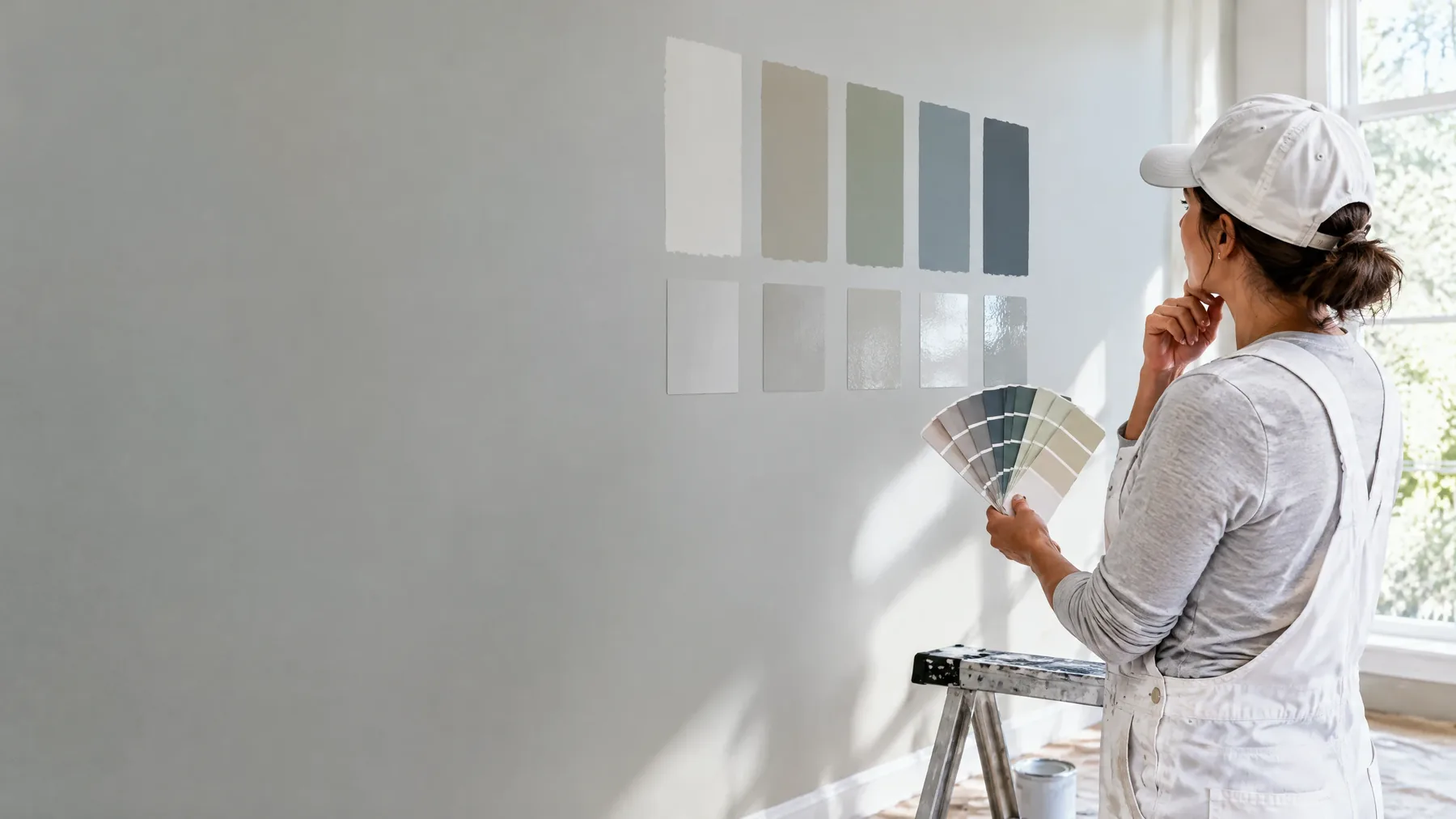
- Color changes. Going from a deep color to a light one, or the other way, adds coats.
- Detail work. Crown molding, casings, coffered ceilings, railings and cabinetry take far more hand work than open walls.
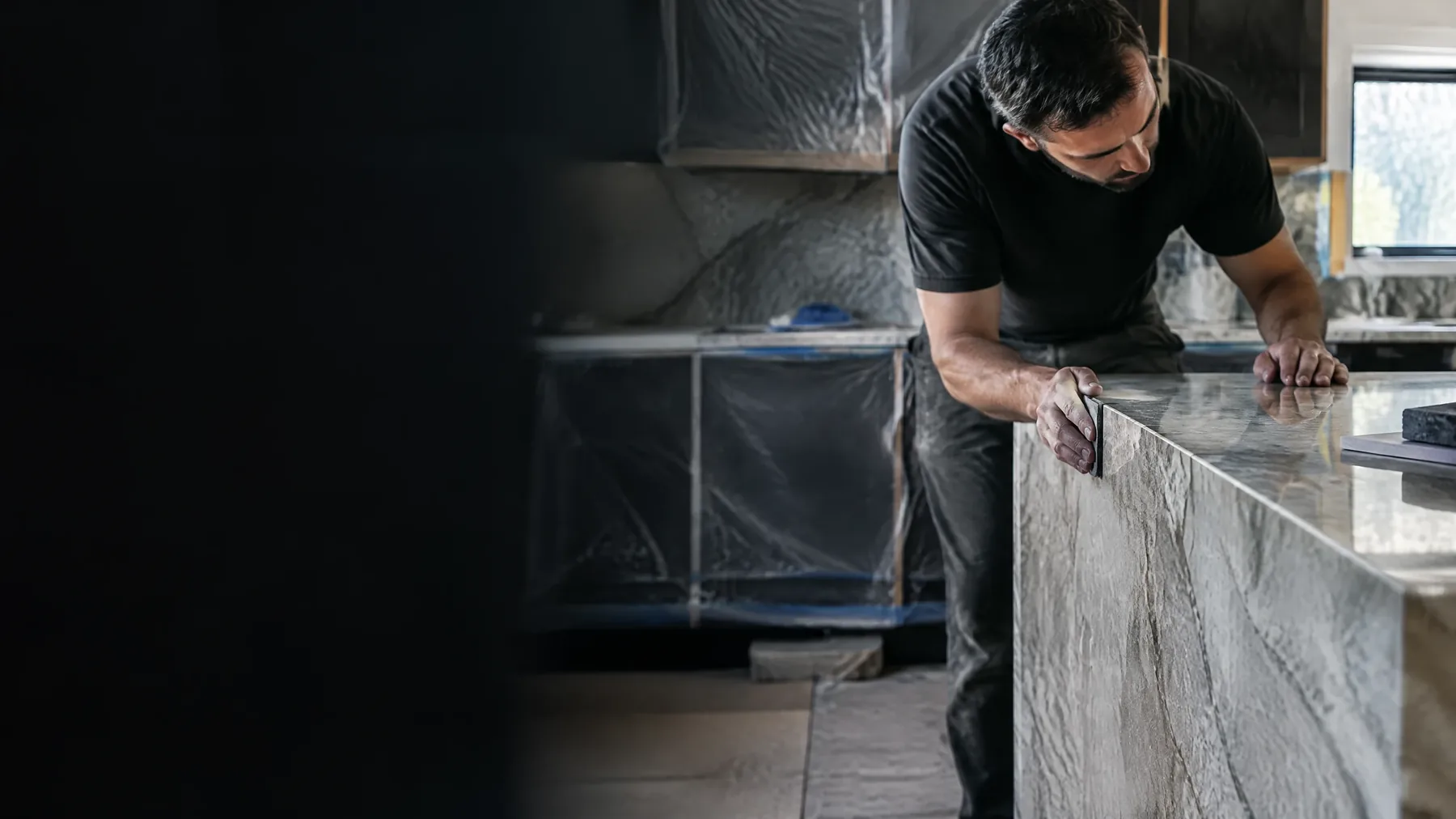
- Protection. Furniture, finished floors, stone counters and occupied rooms all have to be covered and kept clean.
Paint choice matters too. We specify premium lines such as Sherwin-Williams Emerald or Benjamin Moore Aura on most of our projects. Lower-grade paints cost less upfront, but in South Florida sun, humidity and salt air they fade, chalk and lose their seal sooner, so the next repaint comes earlier and the surface underneath takes more of the weather.
Send us photos or plans of the rooms or building you want painted, and we'll tell you what we see before we visit.
Interior painting cost by square footage: what moves the number
Square footage is where most owners start, so here is how it plays out in a real home.
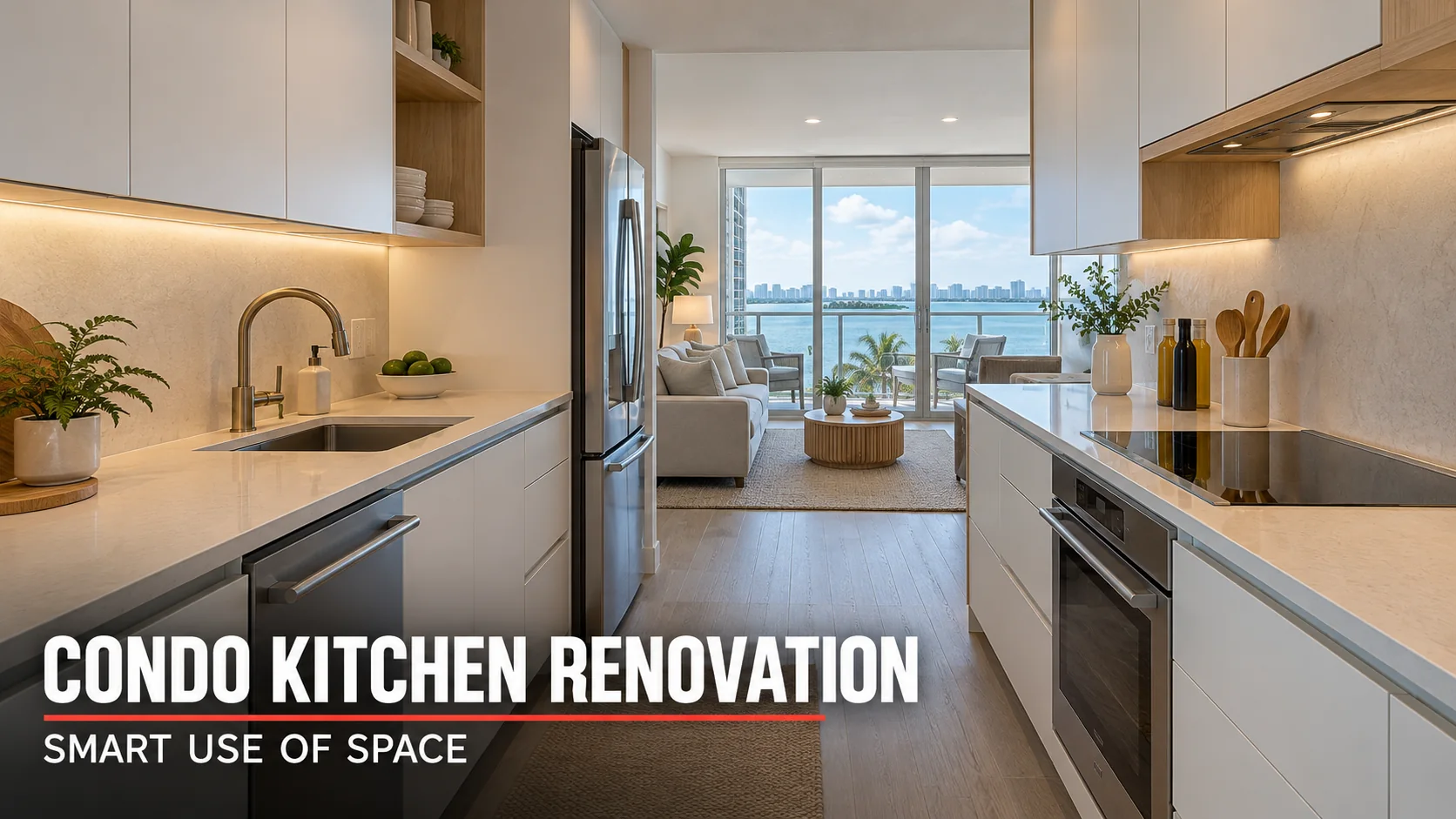
Condos and apartments. Ceilings are usually lower and rooms more compact, but the building adds work around the painting: protecting common hallways, elevator reservations, work hours set by the association and finished floors that must stay spotless. Smooth ceilings show every patch, so ceiling prep can be a large share of a condo job.
Family homes. In a typical single-family home, the number of rooms, doors and closets drives the labor more than the total area. Every door has two faces, edges and casings. Every closet has shelving to work around. Two homes of the same size can be far apart once those are counted.
Large and luxury homes. Here the drivers change. Double-height foyers and great rooms need scaffolding or lifts. Staircases need staging over the treads. Wall finishes such as Level 5 drywall or decorative plaster call for careful sanding and checks under raking light. Accent walls, several sheens in one room and specialty finishes add coats and cut-in time.
Single rooms. A single bedroom or office still needs setup, protection, prep and cleanup, so a small job carries more fixed work per square foot. Grouping rooms into one project gives you better value.
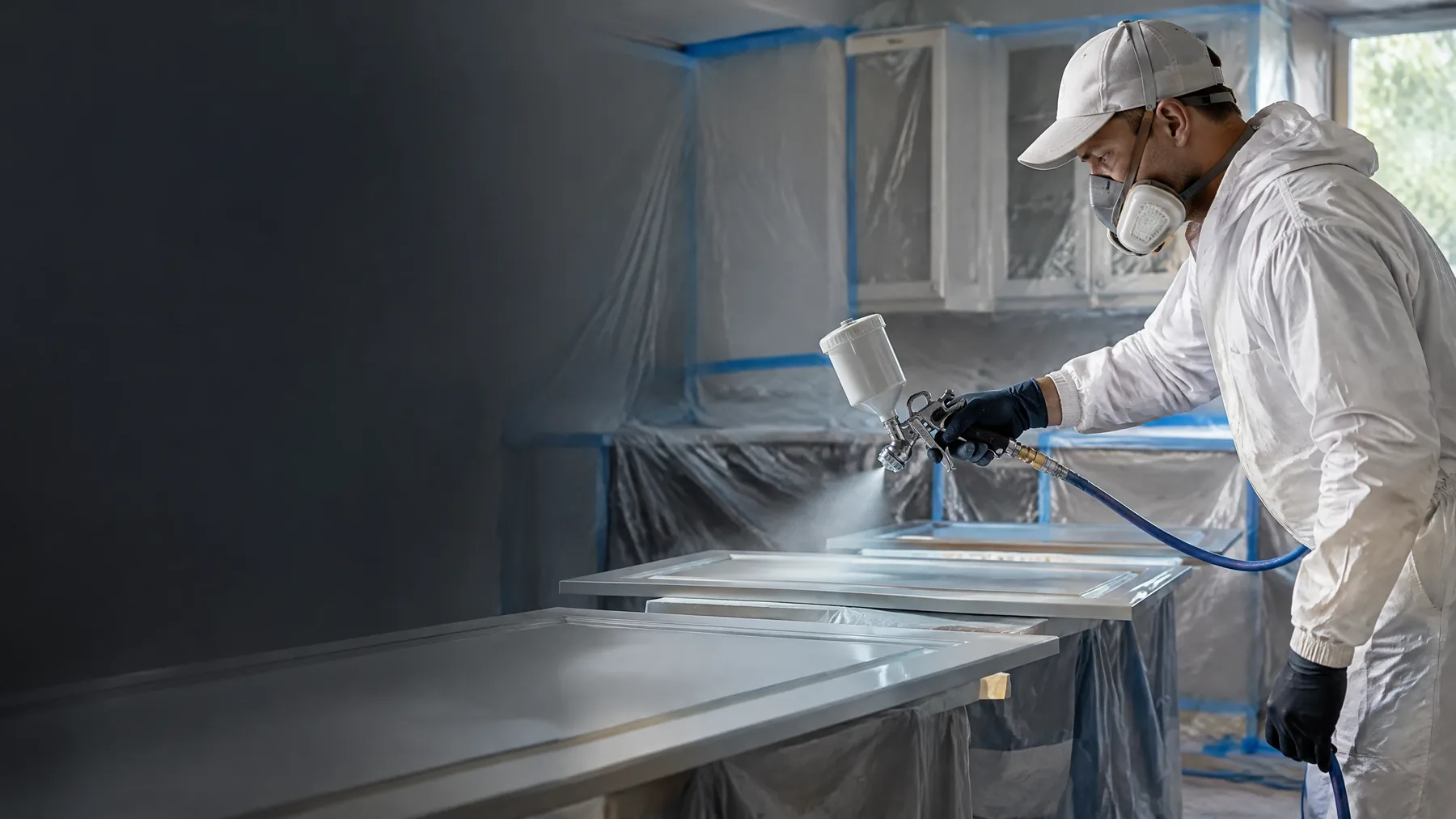
Kitchen cabinets. Cabinet painting is finish work, not wall painting. Doors and drawers come off, everything is cleaned and degreased, sanded, primed with a bonding primer and sprayed with a cabinet-grade enamel. The count of doors, drawers and panels, and whether the boxes are wood or laminate, sets the scope.
If you are comparing proposals, ask each painter to list walls, ceilings, trim, doors and cabinets separately. That is how we write ours, so you can see exactly what you are paying for.
Exterior painting cost by square footage: what moves the number
On an exterior, the size of the home is only the starting point. Most South Florida homes are stucco, and stucco is where an exterior paint job holds up or fails.
- Wall area and height. We measure the elevations, not the floor plan. A two-story home has more wall for every square foot of living space, and second-story walls need taller ladders, lifts or staging.
- Stucco cracks and repairs. Hairline cracks are opened and filled with an elastomeric patch. Larger cracks, delaminated or hollow-sounding stucco are repaired before any paint. Painting over damaged stucco traps water behind the coating, and the paint is the first thing to fail.
- Cleaning and mildew. Every exterior starts with pressure cleaning. North walls and shaded areas often need a mildew treatment before primer.
- Coatings. Masonry primer, then an exterior acrylic or elastomeric finish. Elastomeric bridges small cracks and sheds wind-driven rain, and it goes on in heavier coats.
- Trim and metal. Soffits, fascia, entry doors, garage doors, railings and gates each have their own prep and product.
- The site. Landscaping tight to the walls, pool decks and pavers to protect, screen enclosures and HOA color approval.
On larger homes and estates, access is often the biggest variable. Walls above a pool, tall entry towers and parapets at roof level need lifts or staging set up safely. We confirm all of it on the walk-through and put it in writing, line by line.
Commercial painting cost by building type: what sets the scope
Commercial and multifamily buildings are priced by the building, not by a per-foot formula. Height, occupancy and the coating specification drive the number. Below is what changes the scope on the building types we paint most. For the full service, see our commercial painting page.
Office Building Painting
Office interiors are usually painted while the business keeps running. That means night or weekend shifts, protecting desks and equipment, low-odor coatings and phasing the work floor by floor so tenants keep working. Open-plan offices with high ceilings, exposed ductwork or several brand colors take more setup and cut-in time than closed suites. On the exterior, glass storefronts, metal panels and sealant joints are part of the prep.
3-Story Commercial Building Painting
At three stories, access becomes a major part of the scope. Walls are reached with boom lifts, scaffolding or swing stages, and the choice is based on the site: parking, landscaping, sidewalks and how close the building sits to the property line. Stucco and concrete repairs, new sealant at windows and expansion joints, and an elastomeric system are usually specified together, so the building is protected from water, not just recolored.
Warehouse Painting — 5,000 to 10,000 Sq Ft
In a warehouse, the ceiling is often the biggest surface. Open joists, deck and ductwork are sprayed from lifts, and racking and stock have to be protected or moved. Tilt-wall and block walls take a masonry primer and a durable finish. Floor striping, safety colors, bollards and overhead doors are separate lines. A 5,000 sq ft space and a 10,000 sq ft space can be close in scope when the ceiling height and clear access are similar.
Church or House of Worship Painting
Sanctuaries usually have tall ceilings, exposed beams, decorative trim and finishes that need careful color matching. Work is scheduled around services and events, and lifts or scaffolding are set up and taken down without harming pews, flooring or instruments. Exterior work often includes steeples, columns and stucco repair.
Apartment Building or HOA Exterior Painting
For multifamily and HOA buildings, the board is comparing bids, so a clear scope matters most. The number is based on the building's height and number of elevations, balcony count, railings and doors, the stucco and concrete repairs listed in the reserve study or milestone inspection, and how residents keep access to entries, parking and balconies during the work. Taller buildings are painted from swing stages or by rope access, with the safety plan approved before work begins. Our high-rise condo painting page explains how we work with boards and property managers.
We put each elevation, repair and access item on its own line, so the board can compare bids on the same scope. Send us the building details for a Free Project Review.
What Paint Should You Use in South Florida?
South Florida's heat, humidity, salt air, and UV intensity are brutal on paint. Here's what we specify on every project:
- Interior: Sherwin-Williams Emerald or Benjamin Moore Aura — mildew-resistant, washable, humidity-stable
- Exterior stucco: Sherwin-Williams Resilience or Loxon XP — elastomeric, crack-bridging, mildew-resistant
- Coastal homes (within 1 mile of ocean): Marine-grade or salt-air resistant formulations
- Commercial interiors: Sherwin-Williams Emerald Commercial or ProMar 200 — scrubbable, low-VOC
- Pool decks and concrete: Sherwin-Williams H&C Concrete Stain or epoxy coating
South Florida Tip: Never use flat paint on exterior stucco in Florida. It absorbs moisture and grows mildew within 1–2 years. Always use satin or semi-gloss with mildew inhibitors.
How a painting price goes from photos to proposal
You can start with photos. Here is how a price is built for you.
- You send photos. Every side of the house or each room, plus close-ups of damage.
- We follow up personally. We call or message you, ask about colors, HOA rules, access and what you want done.
- We walk the project. We measure, tap the walls, mark repairs and check access.
- You get an itemized proposal. Areas, prep, repairs, coatings, colors and exclusions, each as its own line.
- You compare. Line by line, against anything else you have.
The Free Project Review is how we get to a real number for your project, instead of a guess from a phone call.
Painting is often part of something bigger
Painting often reveals other work: cracked stucco, soft fascia, failed window sealant, stained concrete. As a licensed general contractor, we can fix what is under the paint, pull the permit if one is needed and keep it all under one proposal. The project stays with J. Perry & Sons. That is the difference between paying for paint twice and paying once.
Florida General Contractor License CGC1540699. South Florida renovation contractor.
Homes planning a larger renovation also benefit from sequencing: paint comes after repairs and installations, not before. We plan that order with you.
Get a real number for your project
Send us photos of the rooms or every side of your house. We follow up personally, walk the project and give you an itemized written proposal. Call (561) 556-7509 or send us your project. For everything we paint, see our painting services.
Painting — Service Areas
Frequently asked questions
How much does it cost to paint a house exterior in Florida?
It is based on the wall area, the number of stories, the stucco condition, the repairs, the coating and the access. Your Free Project Review gives you a written, itemized number for your house. Exterior painting requires weather-resistant, mildew-resistant paint and proper surface prep; elastomeric coatings are specified for waterproofing and crack bridging.
What is the interior painting cost per square foot?
Our residential interior scope is based on wall and ceiling surface, not floor area. The proposal lists walls, ceilings, coats and paint specifications separately. Ceiling height, trim, patching, color changes and furniture moving move the final number. Ask whether ceilings, trim and doors are included rather than assuming that a floor-area quote covers them. We specify Sherwin-Williams Emerald or Benjamin Moore Aura.
Why do two quotes differ?
Different prep, number of coats, paint lines, measurements, scope and insurance. Ask each painter to list what is included and excluded, and compare line by line. Licensed and insured. Certificate of insurance available on request.
Is repainting stucco different from painting drywall?
Yes. Stucco is cleaned, checked for cracks and hollow areas, repaired and primed before coating, and it takes a coating chosen for sun and rain. Drywall is patched, sanded and primed. Stucco prep is the bigger share of an exterior price. Stucco homes require elastomeric or acrylic latex paint for flexibility and waterproofing.
Do you paint condo and commercial buildings?
Yes. Building painting is priced by elevation with repairs and access listed separately. See commercial painting and high-rise and condo painting. Office and warehouse proposals list surfaces, prep and access separately.
What is not included in a painting price?
Large stucco rebuilds, rotten wood replacement, wallpaper removal and Level 5 skim coating are usually priced as separate lines, so you see exactly what each costs. Epoxy floor coatings for warehouses are also quoted as a separate line in your proposal.
How is office building painting priced?
Commercial painting is priced by the building: height, access (lifts, swing stages or rope access), stucco and sealant repairs, the coating specification and whether the building stays occupied. We list each elevation and repair separately, so owners and boards can compare bids on the same scope.
How is a 3-story commercial building exterior priced?
Commercial painting is priced by the building: height, access (lifts, swing stages or rope access), stucco and sealant repairs, the coating specification and whether the building stays occupied. We list each elevation and repair separately, so owners and boards can compare bids on the same scope.
How is warehouse painting priced?
Commercial painting is priced by the building: height, access (lifts, swing stages or rope access), stucco and sealant repairs, the coating specification and whether the building stays occupied. We list each elevation and repair separately, so owners and boards can compare bids on the same scope.
How is church or house of worship painting priced?
Church painting projects often involve high ceilings (requiring lifts), detailed trim work, and scheduling around services. We work with facilities managers to schedule painting around services and events.
How is apartment building or HOA exterior painting priced?
Multi-family and HOA exterior painting is one of our most common commercial projects. We offer HOA and property management pricing for repeat clients.
What paint should you use in South Florida?
South Florida's heat, humidity, salt air, and UV intensity are brutal on paint. Here's what we specify on every project:
- Interior: Sherwin-Williams Emerald or Benjamin Moore Aura — mildew-resistant, washable, humidity-stable
- Exterior stucco: Sherwin-Williams Resilience or Loxon XP — elastomeric, crack-bridging, mildew-resistant
- Coastal homes (within 1 mile of ocean): Marine-grade or salt-air resistant formulations
- Commercial interiors: Sherwin-Williams Emerald Commercial or ProMar 200 — scrubbable, low-VOC
- Pool decks and concrete: Sherwin-Williams H&C Concrete Stain or epoxy coating
South Florida Tip: Never use flat paint on exterior stucco in Florida. It absorbs moisture and grows mildew within 1–2 years. Always use satin or semi-gloss with mildew inhibitors.