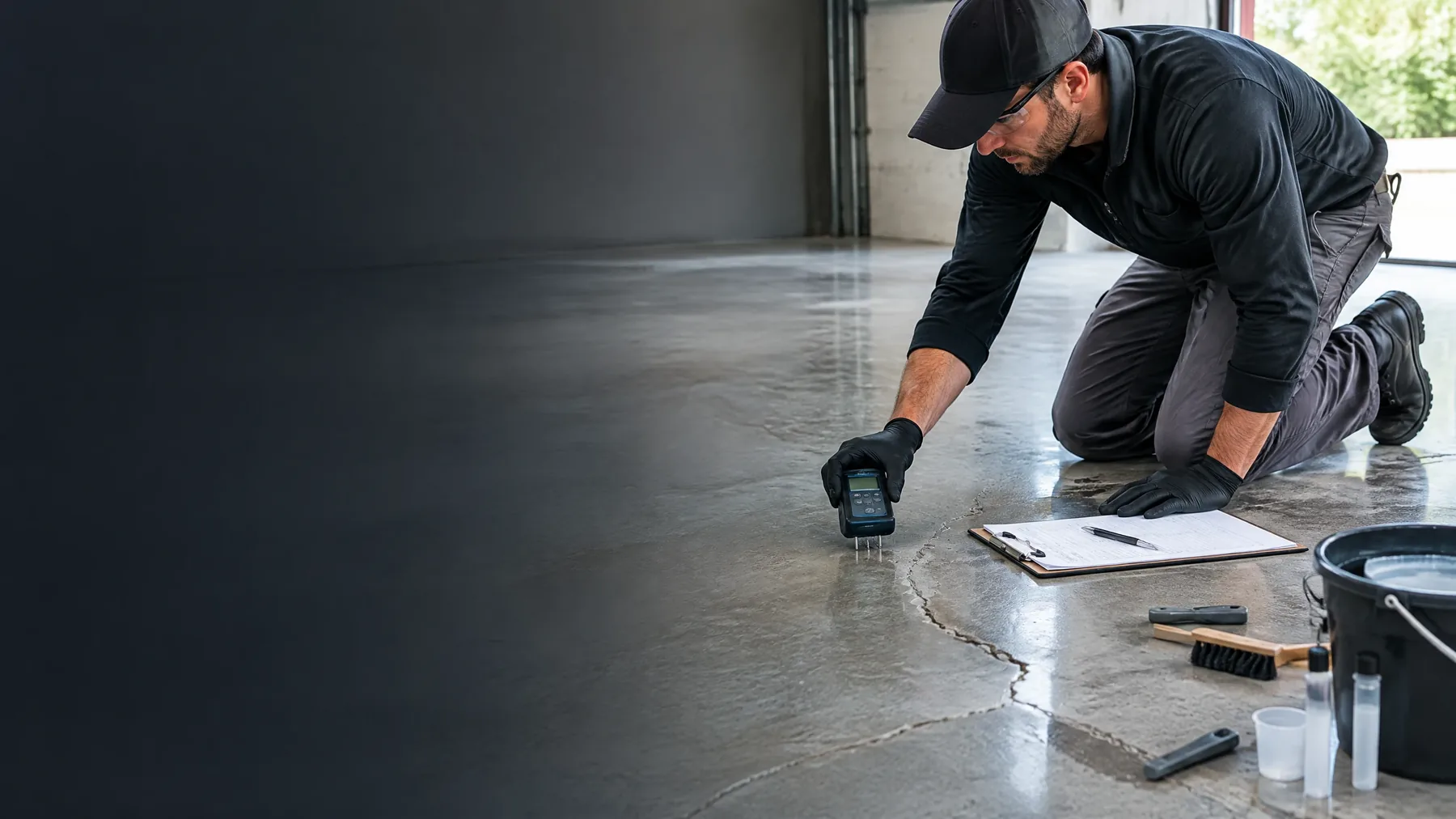
Garage floor coatings can change the appearance and cleanability of a concrete slab, but the right system is based on concrete condition, moisture, prior coatings, cracks, traffic, and the product's preparation requirements. This 2026 guide outlines the questions to answer before defining an epoxy or polyaspartic scope.
How Much Does Garage Floor Epoxy Cost in South Florida?
Garage floor epoxy pricing in South Florida is based on the size of your garage, the coating system you choose, and the condition of your concrete. Here's a realistic 2026 pricing breakdown:
- After the project review, your written proposal lists the following scope and pricing: Single bay / 1-car garage (200–280 sq ft).
- After the project review, your written proposal lists the following scope and pricing: 2-car garage (400–500 sq ft).
- After the project review, your written proposal lists the following scope and pricing: 3-car garage (600–750 sq ft).
- After the project review, your written proposal lists the following scope and pricing: 4-car / oversized garage (800–1,200 sq ft).
- After the project review, your written proposal lists the following scope and pricing: RV garage / workshop (1,200–2,000 sq ft): based on the system.
- Commercial and multi-vehicle garage floors (2,000+ sq ft): pricing is given in the itemized written proposal. Call (561) 556-7509.
Garage and Patio Floor Coatings: Epoxy, Polyaspartic and Polyurethane
How epoxy, polyaspartic and polyurethane compare for garages and patios.
How to Compare Garage Floor Coating Companies
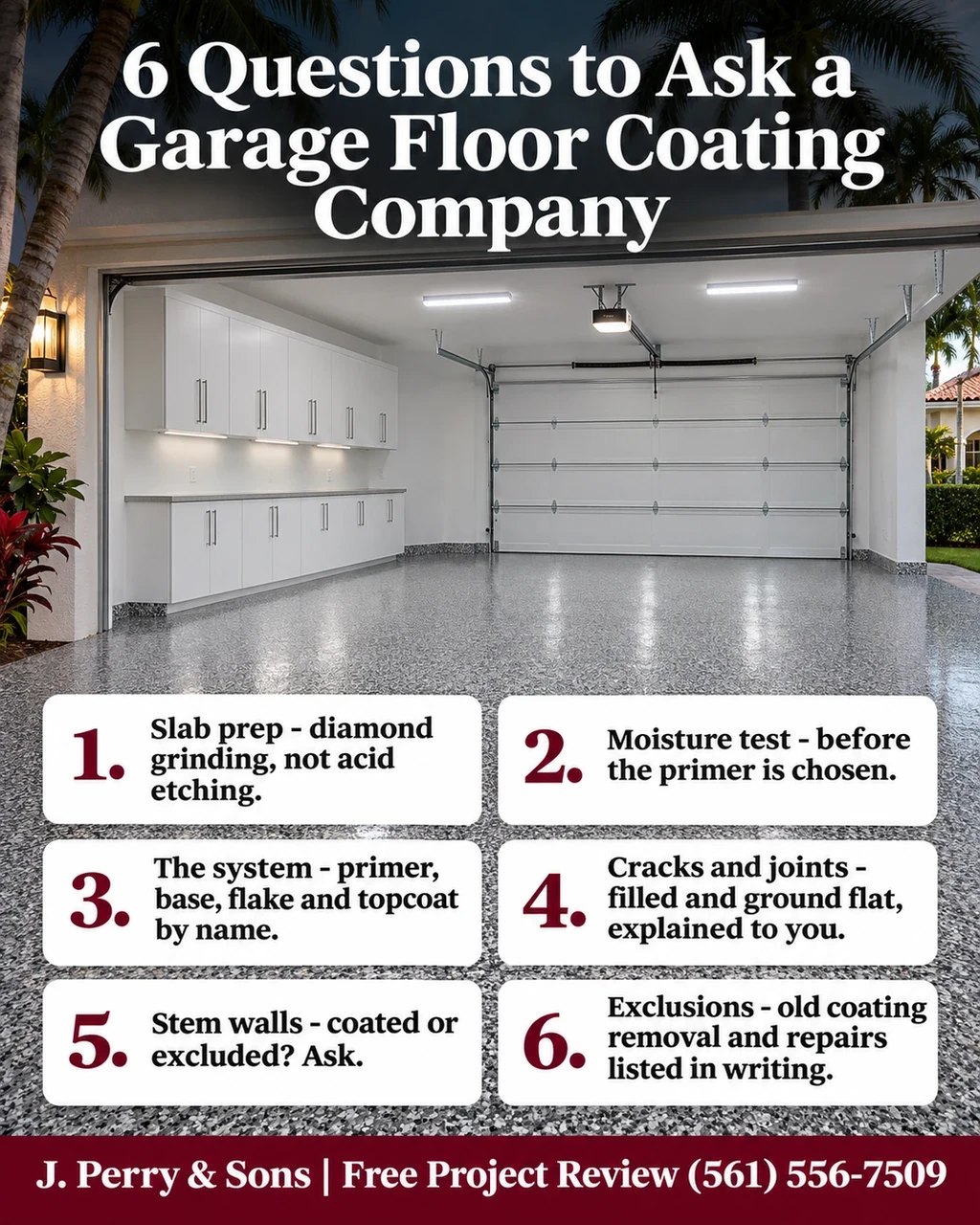
When you search for epoxy garage floor installers near you, the prices you get back can look far apart. Most of the difference is in what each company does before and under the color. Ask every company these questions, and get the answers in writing.
How will you prepare the slab? The right answer is diamond grinding or shot blasting. Acid etching or "clean and roll" leaves sealers and the weak top layer in place, and that is the most common reason a garage floor peels.
Will you test for moisture? South Florida slabs often carry moisture from the ground. A company that coats without testing is guessing which primer you need.
What is the system, coat by coat? Ask for the primer, the base coat, the flake or color, and the topcoat by name and type. "Epoxy" alone tells you nothing. A 100% solids epoxy or polyurea base with a polyaspartic topcoat is a very different floor from a thin water-based product.
How are cracks and control joints handled? Cracks should be filled and ground flat. Control joints can be filled or honored, and the choice should be explained to you.
Are stem walls and cove base included? The short concrete wall along the garage sides shows wear and stains. Coating it finishes the job; leaving it bare is a common exclusion.
Who supplies the materials? We supply all coating materials from the preferred brands we work with, so the system is matched from primer to topcoat.
What is excluded? Moving stored items, removing an old coating, and repairs to damaged concrete should be listed, not discovered later.
Our own approach and the products we prefer are explained in the best epoxy for a garage floor in South Florida.
Next step: send us the written scope from any other company you are considering, and we will tell you what is and is not included.
Epoxy vs. Polyaspartic: Which Is Better for South Florida?
The two most popular garage floor coating systems in South Florida are 100% solids epoxy and polyaspartic. Both are dramatically better than DIY big-box store epoxy kits. Here's how they compare:
- Epoxy: Lower cost, long track record, excellent chemical resistance, requires 2–3 day cure time, slightly more sensitive to humidity during application
- Polyaspartic: Faster cure (same-day return to service), more UV-stable (won't yellow in South Florida sun), slightly higher cost, excellent for garages with direct sunlight
- Metallic epoxy: Premium decorative option with swirling metallic pigments — creates a unique, one-of-a-kind floor. Cost is 30–50% more than standard epoxy
- DIY epoxy kits from big-box stores: water-based, low-solids products that tend to peel early in South Florida humidity. Not recommended.
The J. Perry & Sons Garage Floor Installation Process
Timing is confirmed in your written proposal. Here's exactly what we do on every job:
- Diamond grinding or shot blasting the concrete to open the pores and create a mechanical bond profile. Timing is confirmed in your written proposal. This is the most important step — 80% of coating failures are caused by inadequate surface prep.
- Spall Repair: Fill all cracks, divots; spalled areas with epoxy filler or polyurea crack filler. Timing is confirmed in your written proposal. Control joints are addressed at this stage.
- Apply moisture-blocking penetrating primer to prevent vapor transmission from the slab. Timing is confirmed in your written proposal. Critical in South Florida's humid climate.
- Apply the epoxy or polyaspartic base coat. Timing is confirmed in your written proposal. For decorative systems, broadcast vinyl flake chips or metallic pigment into the wet base coat.
- Apply the clear top coat for durability, UV stability; the final sheen level (matte, satin, or high-gloss). Timing is confirmed in your written proposal.
- Final Inspection and Cure: Light foot traffic in 24 hours; vehicle traffic in 72 hours for epoxy, 24 hours for polyaspartic.
Before the Coating: Slab Problems We Fix First
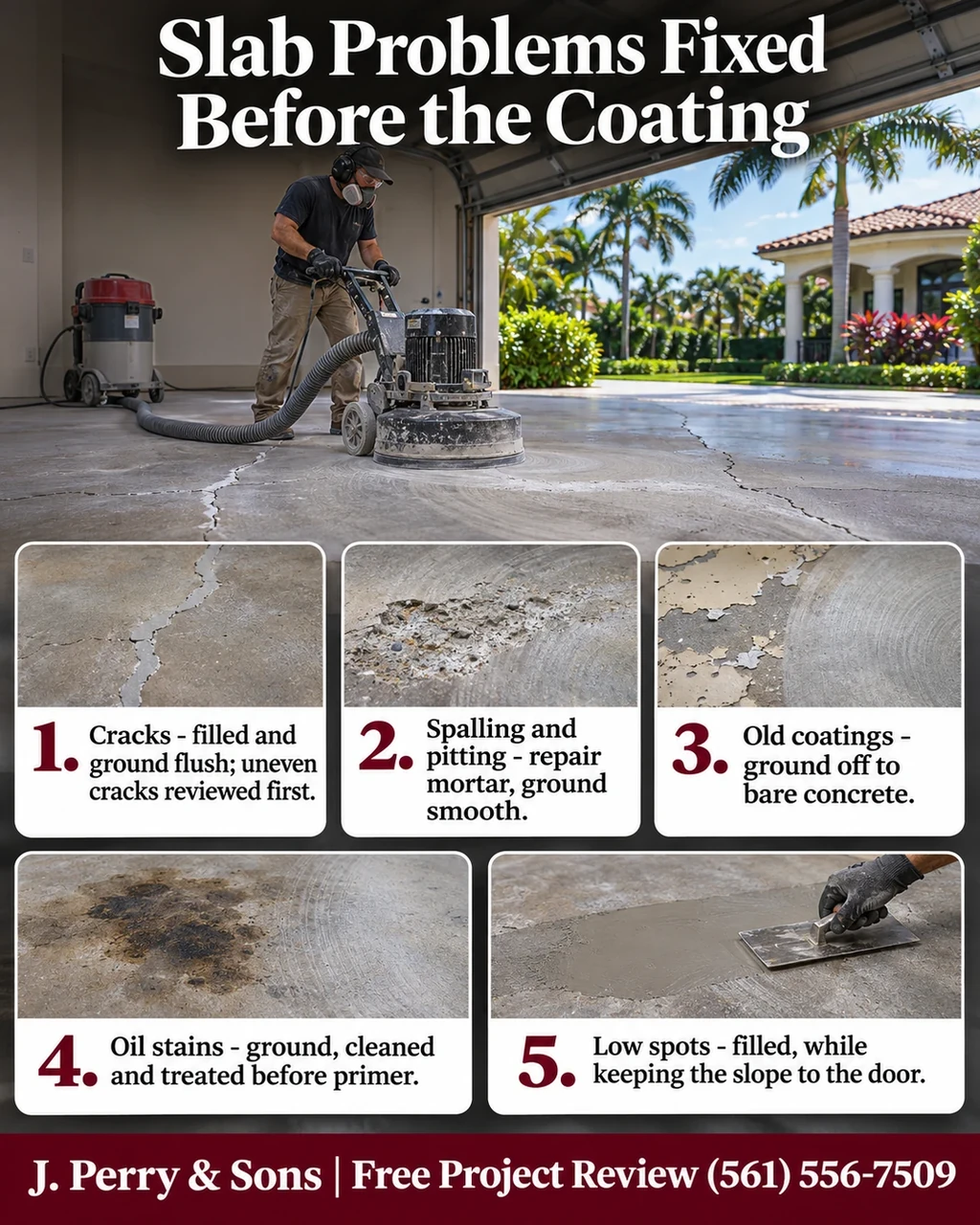
A coating follows the slab. If the concrete has a problem, the coating will show it. These are the conditions we find most often in South Florida garages, and how each one is handled.
Cracks. Hairline shrinkage cracks are normal and are filled and ground flat. Wider cracks, or cracks where one side sits higher than the other, can point to settlement. Those are reviewed before coating, and some need concrete repair first.
Spalling and pitting. Chipped surfaces, pop-outs and pitting from water or salt are filled with a repair mortar and ground flush so they do not telegraph through the flake.
Old paint, sealer or a failed coating. These are ground off completely. A new coating on top of an old one is only as strong as the old one's bond.
Oil and tire stains. Deep oil contamination can stop a coating from bonding. Stained areas are ground and cleaned, and heavy contamination is treated before priming.
Low spots and slope. Garage slabs slope toward the door so water drains out. We keep that slope. Small low spots are filled with an epoxy mortar; we do not level a garage flat.
Damaged concrete. When sections of the slab are broken, crumbling or sunken, a coating is not the fix. The concrete is repaired or replaced first. See concrete resurfacing and repair and our residential concrete work.
All of these are found during the site review and written into the proposal as separate lines, so there are no surprises once the grinder is running.
Next step: take a photo of the worst crack or stain on your garage floor with a coin next to it for scale, and send it with your project review request.
Garage Floor Epoxy by Garage Type
2-Car and 3-Car Attached Garage
The standard 2-car attached garage (400–500 sq ft) is our most common residential epoxy project. These garages are typically used for vehicle storage, laundry, and general storage. After the project review, your written proposal lists the following scope and pricing: We recommend a full-broadcast vinyl flake system for these spaces — it hides tire marks, is easy to clean, and looks great for 15–20 years with minimal maintenance. Timing is confirmed in your written proposal.
RV Garage and Oversized Workshop
RV garages and oversized workshops (1,200–2,000+ sq ft) require a heavy-duty coating system rated for the weight and turning radius of large vehicles. We use a 100% solids epoxy with a 20-mil build for these applications. Quartz aggregate broadcast systems are popular for workshops because of their superior anti-slip properties and durability under heavy equipment. After the project review, your written proposal lists the following scope and pricing: These projects, based on size and system.
Parking Garage and Commercial Garage
Commercial and multi-vehicle garages need traffic-rated polyurethane or polyaspartic systems with proper drainage slope and control joint treatment. We coat garage and service floors for HOAs, office buildings, auto dealerships and multifamily properties throughout South Florida. Parking garage structural restoration and deck waterproofing are coordinated by J. Perry & Sons, with the project staying under J. Perry & Sons. Call (561) 556-7509 for a Free Project Review.
Finishing the Garage Around the New Floor
A new floor makes everything else in the garage look older. Owners who plan the whole garage at once get a finished room instead of a nice floor next to stained walls. These are the most common additions.
Stem walls and cove base. Coating the stem walls, or adding a cove that runs the coating a few inches up the wall, gives a clean edge and makes washing the floor easier.
Storage. Wall cabinets, overhead racks and slat walls get stored items off the floor, which protects the coating and keeps the room clean. See garage storage cabinets.
The garage door. In Miami-Dade and Broward, the High-Velocity Hurricane Zone, garage doors are a major part of the house's storm protection. If the door is due for replacement, it is easier to do it around the floor work than after. See impact garage door cost.
Walls and ceiling. Patched, painted or skim-coated walls and a smooth ceiling finish the room. Walls go first, so paint and dust do not land on the new floor.
Lighting and outlets. Brighter LED lighting shows off the floor and helps when working on cars. Electrical work is done by licensed electricians, coordinated and permitted by J. Perry & Sons, with the project staying under J. Perry & Sons.
Air conditioning or dehumidification. A conditioned garage protects the floor, the cars and stored items from humidity. HVAC work is done by licensed HVAC technicians, coordinated and permitted by J. Perry & Sons.
An alternative floor. If the garage is a showroom or the owner wants no coating to maintain, porcelain garage floor tile is another option we install.
Next step: tell us what else in the garage you want to change, and we will put it in one written proposal in the right order.
Garage Floor Epoxy Colors and Finishes
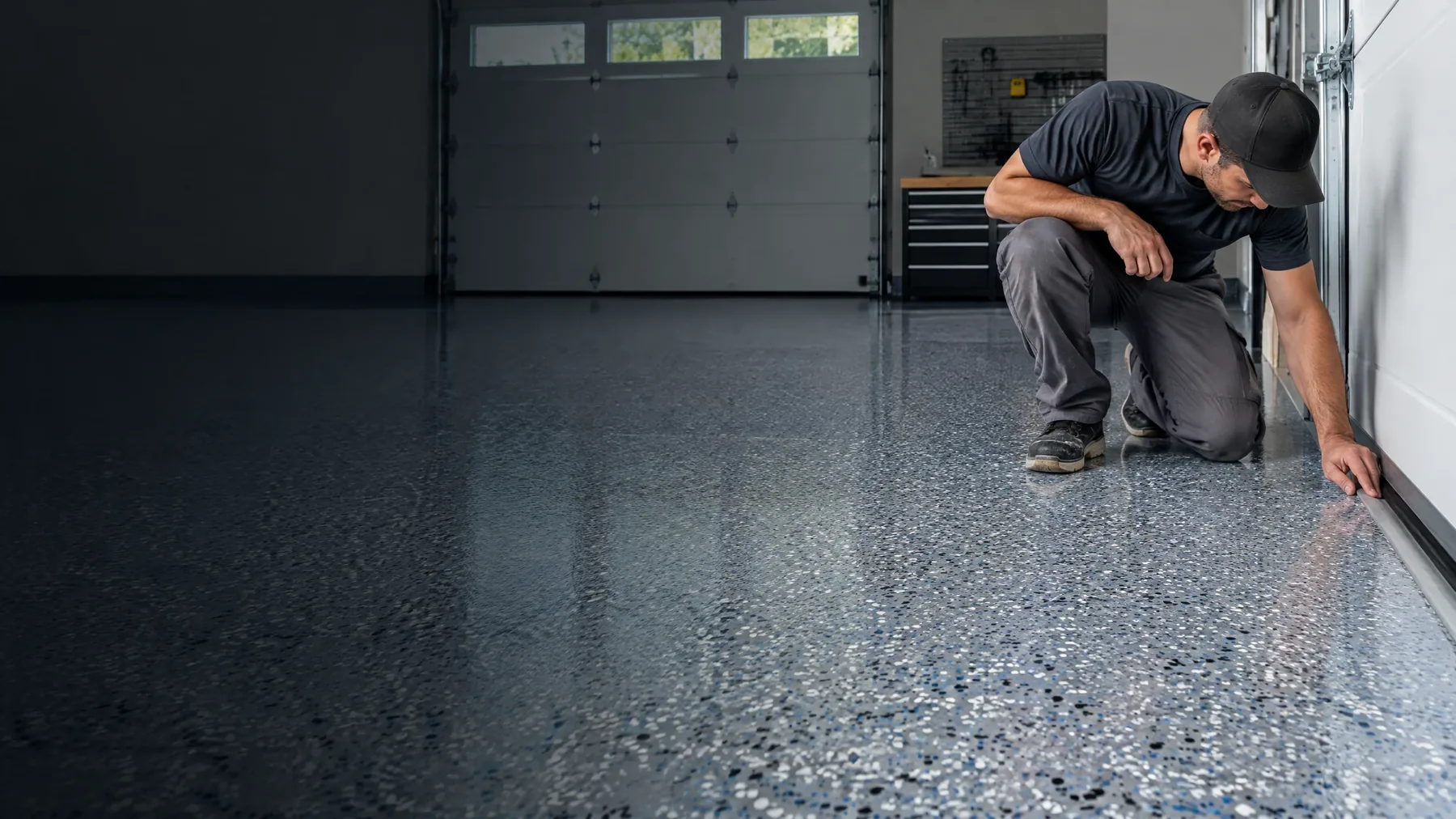
- Full-broadcast vinyl flake: Most popular — available in dozens of color blends, hides dirt and tire marks, non-slip texture
- Solid color epoxy: Clean, modern look — popular in luxury garages and showrooms. Gray, tan, and charcoal are top choices.
- Metallic epoxy: Premium decorative finish with swirling metallic pigments — creates a unique, one-of-a-kind floor
- Quartz aggregate: Maximum durability and anti-slip — ideal for workshops, RV garages, and commercial applications
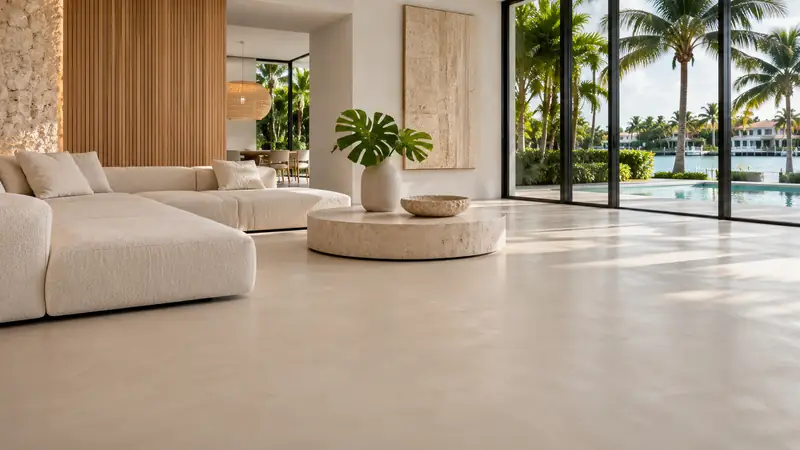
- Polished concrete look: Smooth, high-gloss finish with a clear polyaspartic top coat — modern, minimal aesthetic
Caring for a Coated Garage Floor in South Florida
A good coating is low maintenance, but our climate brings a few specific problems. These habits keep the floor looking new.
Sand and grit. Beach sand and road grit act like sandpaper under tires and shoes. Sweep or dust mop often, and put a mat at the house door.
Hot tires. A full-thickness system with a polyaspartic topcoat resists hot tire marks. If marks appear, they usually clean off with a neutral cleaner and a soft scrub brush.
Pool and lawn chemicals. Chlorine, acid and fertilizer spills should be wiped up quickly, not left to sit on the coating.
Water and puddles. Water from cars after a storm should drain toward the door. Squeegee standing water so it does not leave mineral spots.
Cleaners. Use a pH-neutral cleaner. Strong acids, citrus solvents and harsh degreasers can dull the topcoat.
Refreshing the shine. After years of use, a light abrasion and a new topcoat can restore the gloss without redoing the full system. Our guide to floor buffing and concrete maintenance explains when a recoat is enough.
Next step: if your current coating is dull, stained or peeling, send us photos and we will tell you if it needs a recoat or a full redo.
FAQ
Do I need to empty my garage before the floor is coated?
Yes. The floor has to be completely clear for grinding and coating, and it stays clear until the coating is cured for cars. If you have nowhere to move items, tell us during the project review and we will plan it in the written proposal.
Can you coat a garage floor that already has epoxy on it?
If the old coating is well bonded, it can sometimes be ground and recoated. If it is peeling, blistered or lifting at the edges, it is removed down to bare concrete first. We decide after testing the floor.
Will flake epoxy be slippery when wet?
A full-broadcast flake floor has texture and is less slippery than a smooth floor. Where you want more grip, an anti-slip additive is added to the topcoat.
Does garage epoxy need a permit?
A floor coating on its own usually does not. When the project includes concrete repair, a new garage door, electrical or other permitted work, J. Perry & Sons pulls the permits and follows every city and county requirement.
Can you match my garage floor to my driveway or pavers?
Yes. Flake blends come in many colors and can be chosen to work with your pavers, driveway and house colors. We bring samples to your home so you can see them in daylight next to the driveway.
Epoxy, polyaspartic and microcement for garages, patios and businesses.
Free project review · (561) 556-7509