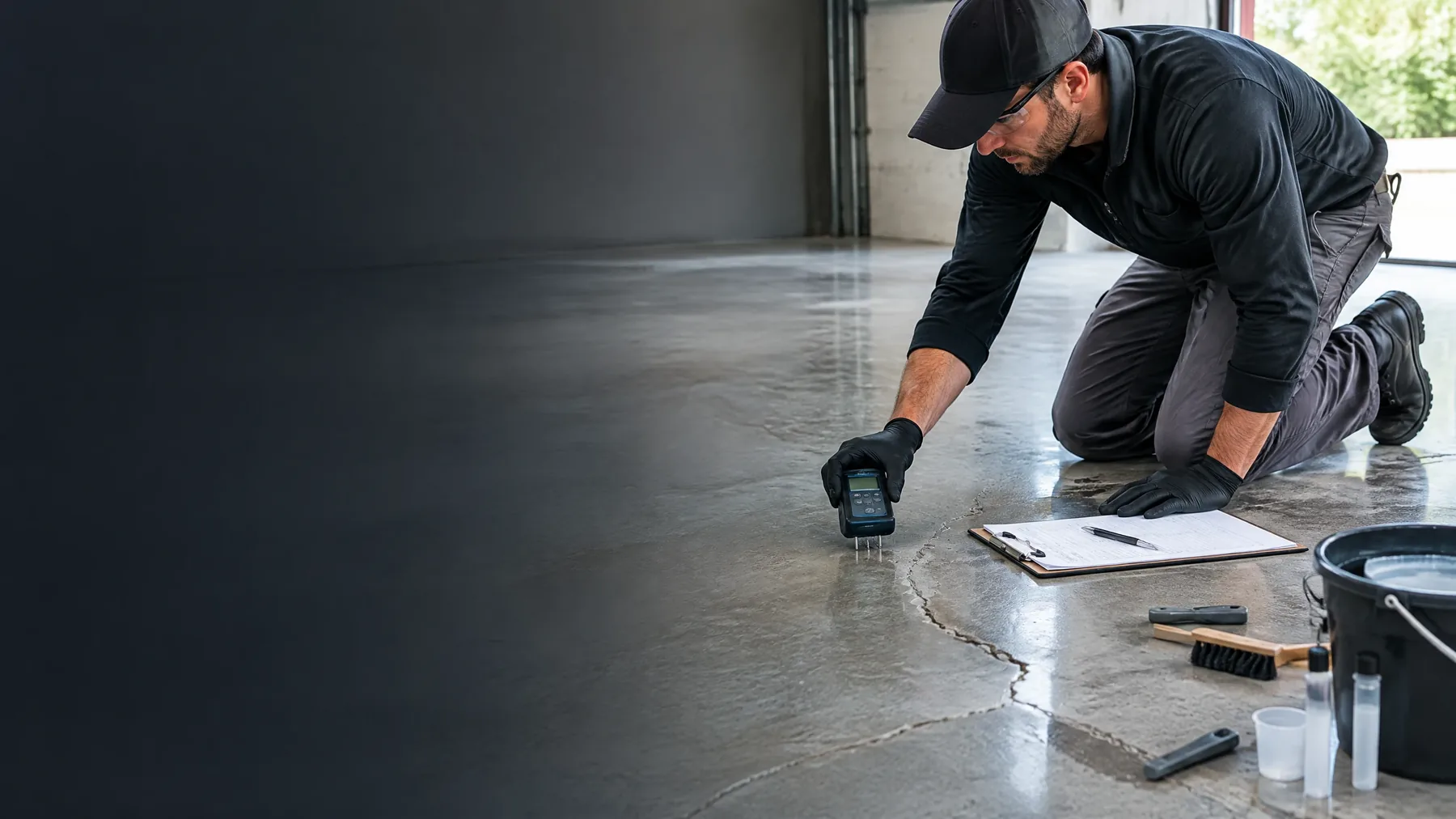
If you're researching garage floor coatings in South Florida, you've probably seen both epoxy and polyaspartic mentioned. Both are professional-grade systems that are vastly superior to the DIY kits at Home Depot or Lowe's. But they have real differences that matter in South Florida's climate. Here's the honest comparison from contractors who install both systems every week.
The Key Differences: Polyaspartic vs. Epoxy
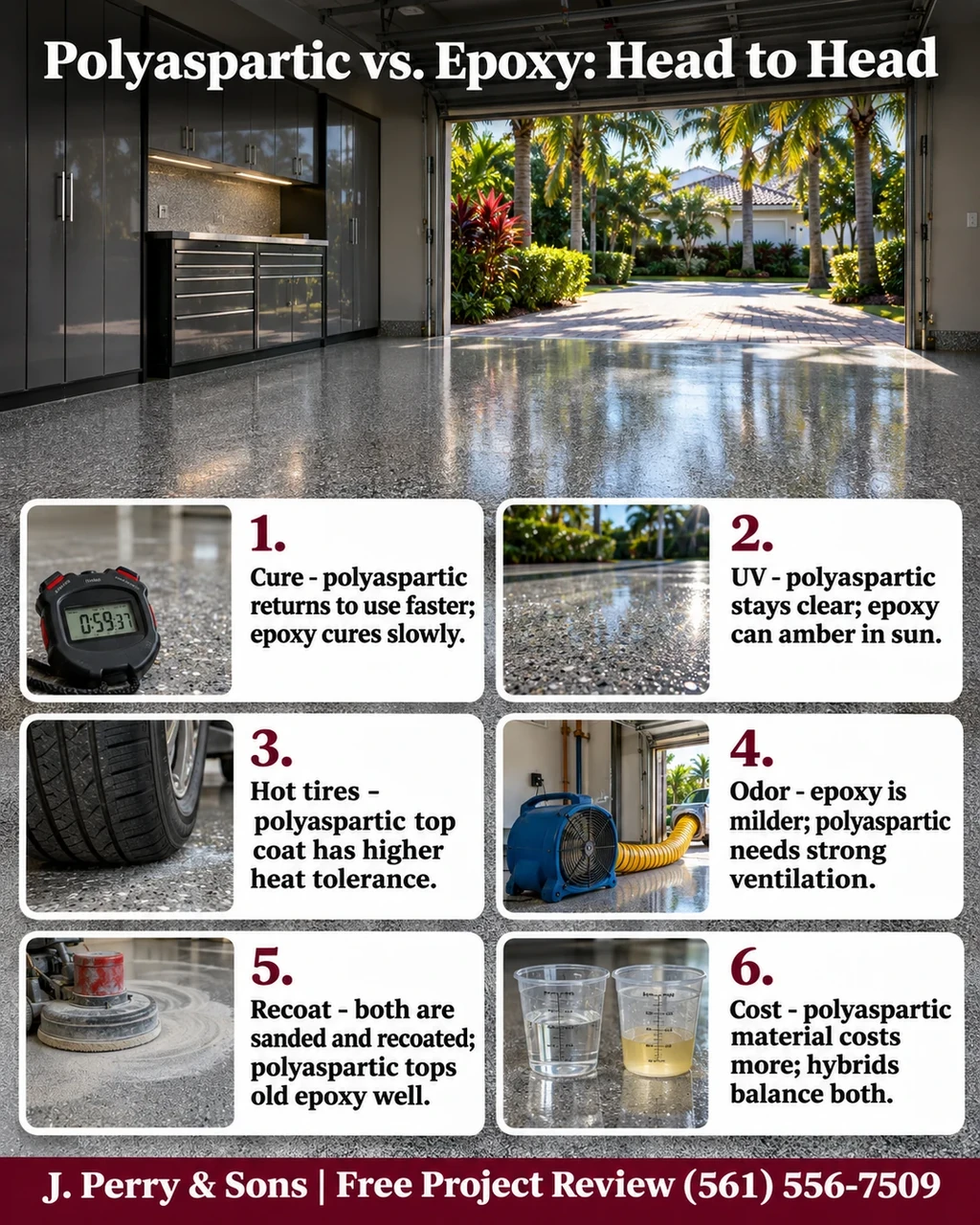
- Cure time: Polyaspartic cures much faster, so the garage returns to service sooner. Epoxy cures slowly and needs longer before vehicle traffic.
- UV stability: Polyaspartic is fully UV-stable — it won't yellow or amber in South Florida's intense sun. Standard epoxy can yellow over time in direct sunlight.
- Temperature sensitivity: Polyaspartic can be applied in higher temperatures (up to 120°F surface temp). Epoxy has a narrower application window — important in South Florida summers.
- Cost: Polyaspartic material costs more than epoxy for the same floor. The exact figures are set out in the written proposal.
- Durability: Both systems are extremely durable when properly installed. Polyaspartic has a slight edge in abrasion resistance; epoxy has a slight edge in chemical resistance.
- Thickness: 100% solids epoxy builds more film thickness per coat — better for heavily damaged or porous concrete.
Garage and Patio Floor Coatings: Epoxy, Polyaspartic and Polyurethane
How epoxy, polyaspartic and polyurethane compare for garages and patios.
Polyaspartic vs. Epoxy: Cure, Hot Tires and Heat
The two questions we hear most in a South Florida garage are how fast the floor can be used and whether hot tires will damage it. This is where polyaspartic and epoxy differ the most.
Cure. Epoxy cures slowly. That long working time is what lets an installer spread it evenly and build thickness, but the floor stays soft longer and has to be kept clear of foot traffic and cars until it is fully hard. Polyaspartic cures much faster, so the garage is back in use sooner. The return-to-service point for your floor, for walking and for cars, is set out in the written proposal.
Hot-tire pickup. After a drive in summer, tires can reach high temperatures. When a hot tire sits on a coating, the rubber softens and grips the surface, and when it cools and pulls away it can lift the coating with it. Hot-tire pickup is mostly a bond problem: a coating that was not ground and primed well lets go first. A properly installed polyaspartic top coat has a higher heat tolerance and a harder surface than most epoxy top coats, which is one reason it is the common choice for the top layer.
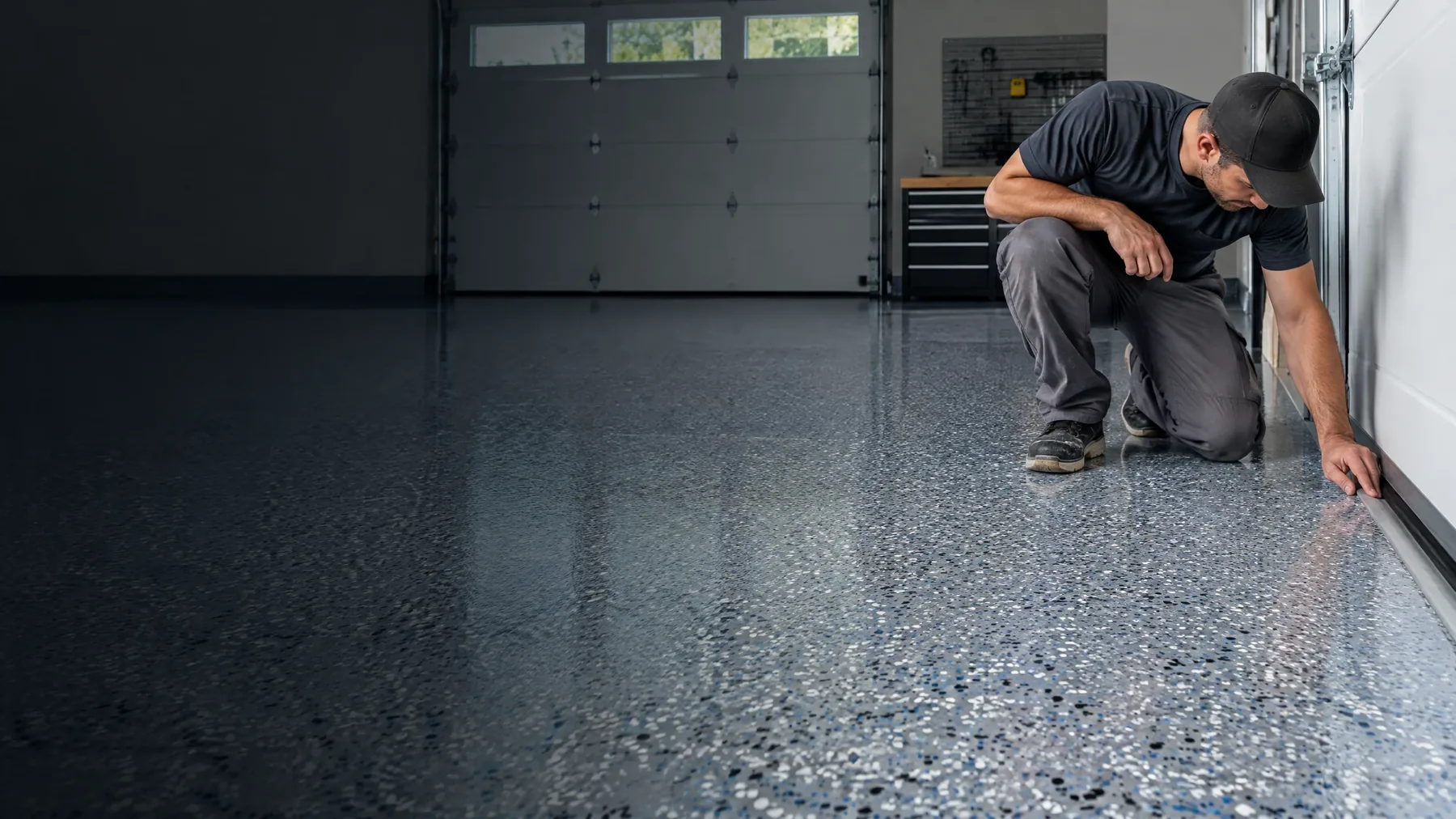
Surface heat at the door. The strip of floor just inside a west- or south-facing garage door can get very hot in the afternoon sun. Polyaspartic handles that heat and the UV better at the door line.
Application heat. Polyaspartic tolerates higher application temperatures, but it also sets faster in heat, so the crew mixes smaller batches and works in sections. Epoxy needs a narrower temperature window, which in summer means starting early and controlling the space.
The takeaway. For a garage where a car comes in hot every day, the top coat should be polyaspartic.
See how we install both systems on our residential epoxy flooring page.
Next step: tell us how often a car parks in your garage and which way the door faces, and we will tell you which top coat we would use.
Which System Is Right for Your Garage?
Choose Polyaspartic If:
- You need the garage back in service as fast as possible
- Your garage gets direct sunlight and you want to avoid yellowing
- You're in a hot South Florida summer and need a system that applies in high temperatures
- Budget is flexible and you want the fastest, most UV-stable option
Choose Epoxy If:
- You want maximum film build on a porous or damaged slab
- You want the lowest-cost professional system
- Your garage is enclosed or shaded (no UV concern)
- You want maximum chemical resistance (oil, solvents, battery acid)
Polyaspartic vs. Epoxy Cost and the Hybrid System
When owners compare polyaspartic vs. epoxy cost, they often compare two all-or-nothing systems. In practice, many high-end garages are better served by a hybrid that uses each material where it is strongest.
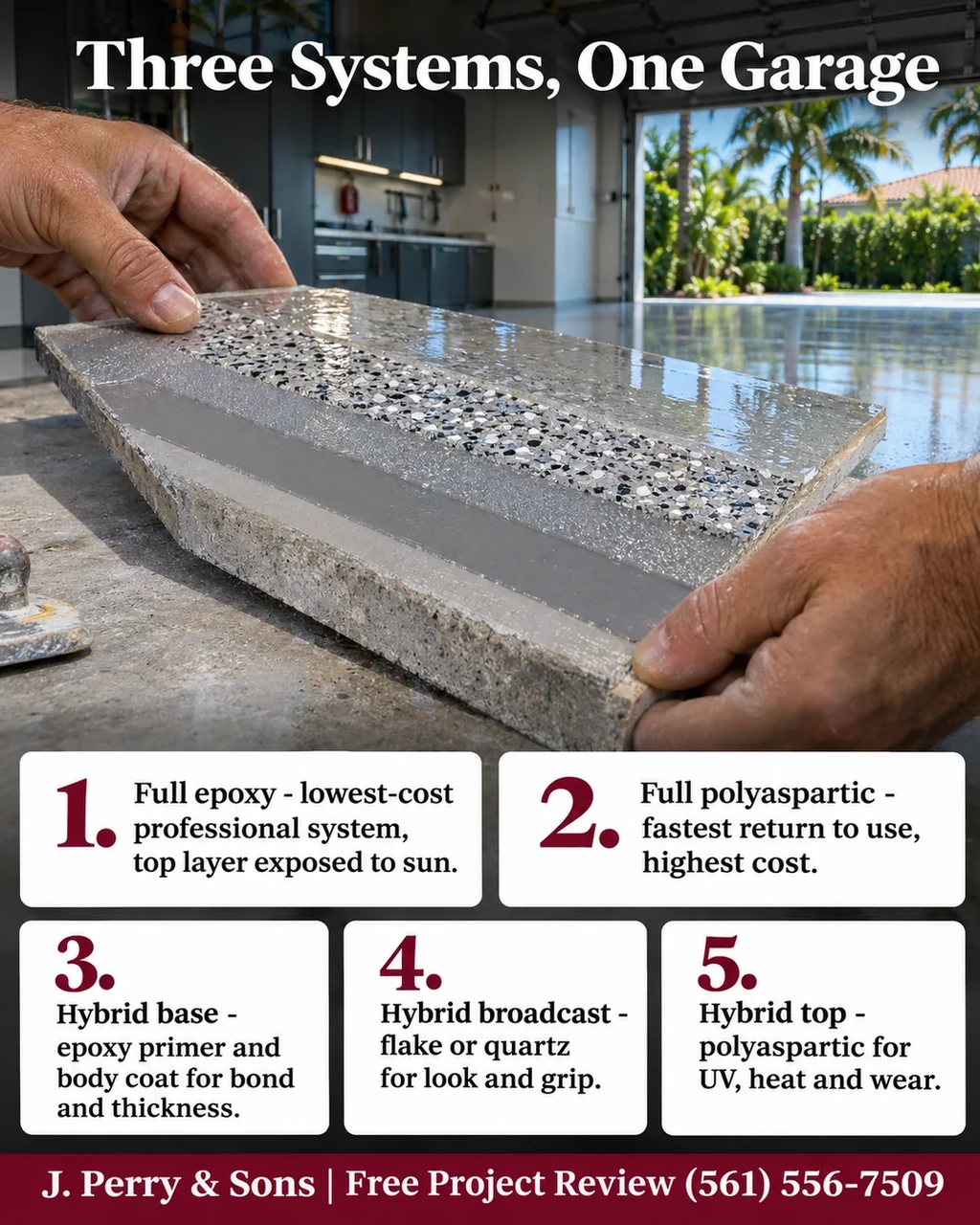
Full epoxy. Epoxy primer, epoxy body coat and epoxy top coat. It is the lowest-cost professional system and gives excellent thickness and chemical resistance, but the top layer is exposed to UV and hot tires.
Full polyaspartic. Polyaspartic from primer to top coat. It is the fastest to return to use and the most UV-stable, and it is the highest-cost system. It also builds less thickness per coat, so it is not the right base on a rough or porous slab.
Hybrid. An epoxy primer and body coat for bond, thickness and chemical resistance, with flake or quartz broadcast, then a polyaspartic top coat for UV stability, heat tolerance and wear. This is a common choice we often recommend for luxury garages in South Florida, because it puts the epoxy where the concrete needs it and the polyaspartic where the sun and tires hit.
What sets the price. The price of any of these systems is based on the floor area, the condition of the slab, the amount of crack and joint repair, the moisture readings, the number of coats, the finish and the cove base. Polyaspartic material costs more than epoxy, so the more of the system that is polyaspartic, the higher the price. The exact figures are set out in your written proposal after the site review.
Our epoxy flooring page shows the systems we offer, and our garage floor epoxy guide covers the full process.
Next step: ask us to price the hybrid and a full system side by side in your proposal, so you can compare.
What About DIY Garage Floor Epoxy Kits?
The big-box store epoxy kits (Rust-Oleum, Quikrete, etc.) are water-based and only 30–50% solids. They look great at first, then start peeling — especially in South Florida's humidity and heat. We get calls every week from homeowners who applied a DIY kit and are now dealing with peeling, bubbling, and delamination. The surface prep on these kits is also inadequate — most only call for acid etching, which doesn't create the mechanical bond profile needed for long-term adhesion. Professional diamond grinding is the only way to properly prepare concrete for a coating that lasts.
Recoating and Repair: How Each Coating Ages
A garage floor coating takes cars, tools and South Florida weather every day. How it can be repaired and refreshed later is part of the polyaspartic vs. epoxy decision.
Scratches and wear. Both systems wear first at the tire paths and the door line. A polyaspartic top coat resists abrasion better and stays clear, so wear shows later. An epoxy top coat can dull and, in sun, amber at the door line.
Recoating epoxy. An epoxy floor is refreshed by scuff-sanding the surface and applying a new top coat. If too much time passes between coats during the original install, the next coat will not bond chemically and has to be sanded first. Installers keep to the manufacturer's recoat window on every layer.
Recoating polyaspartic. A polyaspartic top coat is also refreshed by abrading the surface and applying a new top coat. It bonds well to a properly sanded polyaspartic or epoxy surface, which is why a tired epoxy floor can often be upgraded with a polyaspartic top coat instead of a full removal.
Spot repairs. A gouge from a dropped tool can be filled and recoated. Matching the color is easier on flake floors, because the flake hides small differences. On a solid color or metallic floor, a repair is more visible.
Chemicals. Epoxy has a slight edge on resistance to solvents and battery acid. Spills should be wiped up quickly on either system.
When the problem is bond. If a coating is peeling in sheets, recoating will not help. It has to be ground off and rebuilt. Our concrete resurfacing and repair guide explains what happens when the slab itself needs work.
Next step: send us a photo of your current garage floor, and we will tell you whether it can be recoated or needs to be rebuilt.
Odor and Living in the House During the Install
If your garage is attached to the house, the smell of the coating matters, especially with children, pets or someone sensitive to odors at home.
100% solids epoxy. Professional epoxy has very low solvent content and a mild odor. It is usually the easier system to live with during installation.
Polyaspartic. Polyaspartic coatings have a stronger odor while they are being applied and while they cure. The smell fades once the floor has cured, but during the work the garage needs good ventilation.
What we do in an attached garage. The door between the garage and the house is closed and sealed with tape and plastic. The garage door is opened for air flow when the weather allows, and fans move air out of the garage, not into the house. Our crew wears the respirators the manufacturer requires. We also turn off any HVAC return that pulls air from the garage area.
Planning around the family. Many owners plan the coating for a period when they are away or can keep the house closed off from the garage. We plan the work order with you so the smell and the noise of grinding fall at the right time.
Grinding dust. Both systems start with diamond grinding, and we grind with vacuum-attached equipment to keep the dust down. That part is the same no matter which coating you choose.
Next step: let us know who is living in the house during the work, and we will plan ventilation and the work order around them.
FAQ
Is a polyaspartic garage floor worth it in South Florida?
For most luxury garages, yes, at least as the top coat. Polyaspartic is UV-stable, has higher heat tolerance and resists abrasion, which matters where the sun hits the door line and cars park hot every day. A hybrid with an epoxy base and a polyaspartic top coat gives most of the benefit.
Does polyaspartic stop hot-tire pickup?
A polyaspartic top coat handles heat better than most epoxy top coats, but hot-tire pickup is mainly a bond problem. Diamond grinding and the right primer are what keep the coating on the floor.
Does a polyaspartic coating smell?
Yes, more than 100% solids epoxy during application and cure. In attached garages we seal the door to the house, ventilate the garage and plan the work order around the people living there.
Can you put polyaspartic over my existing epoxy floor?
If the epoxy is well bonded, it can be sanded and given a new polyaspartic top coat. If it is peeling or lifting, it has to be ground off and the floor rebuilt.
Which is better for chemical spills, epoxy or polyaspartic?
Epoxy has a slight edge in chemical resistance, especially against solvents and battery acid. In a hybrid system, the epoxy body coat gives that resistance and the polyaspartic top coat protects it from UV and wear.
Epoxy, polyaspartic and microcement for garages, patios and businesses.
Free project review · (561) 556-7509