Even the best floors need periodic maintenance to stay looking their best. In South Florida's high-traffic, high-humidity environment, regular floor buffing and maintenance is the difference between floors that keep their finish for years and floors that look tired early. Here's what property owners and facility managers need to know.
Floor Buffing: What It Is and When You Need It
Floor buffing uses a high-speed rotary machine with abrasive pads to remove surface scratches, scuff marks, and light staining from polished concrete, epoxy, and sealed tile floors. It's a maintenance procedure, not a full restoration — it restores the sheen and removes surface-level wear without removing the coating or polish layer. Most commercial floors in South Florida benefit from buffing every 6–12 months.
Buffing, Burnishing, Honing and Recoating: Know What You Are Ordering
Floor care words get used loosely, and the wrong word on a work order gets you the wrong service. This is what each term means, and who usually does it.
Buffing. A rotary machine with a pad removes light scuffs and restores sheen on an intact finish. It does not remove the coating, the polish or the stone surface. This is routine care, usually done by your janitorial or floor care vendor.
Burnishing. A high-speed machine brings up gloss on polished concrete or on a finished resilient floor such as VCT. It is also routine care.
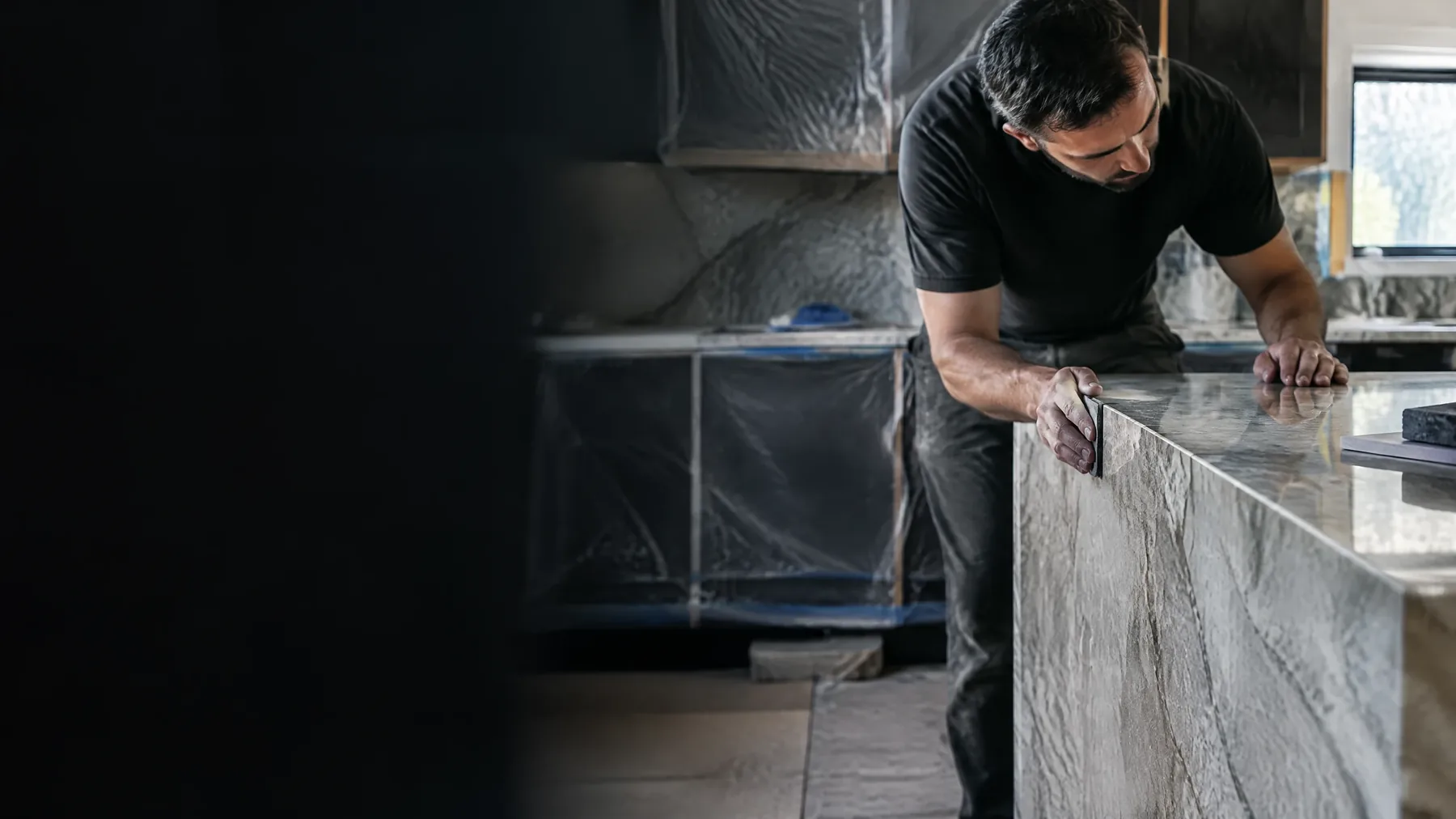
Honing and polishing (stone and terrazzo). Diamond abrasives remove a thin layer of the stone to take out scratches and etching, then polish it back up in steps. This is restoration, not cleaning. We do terrazzo floor restoration and marble restoration; see marble polishing and honing explained.
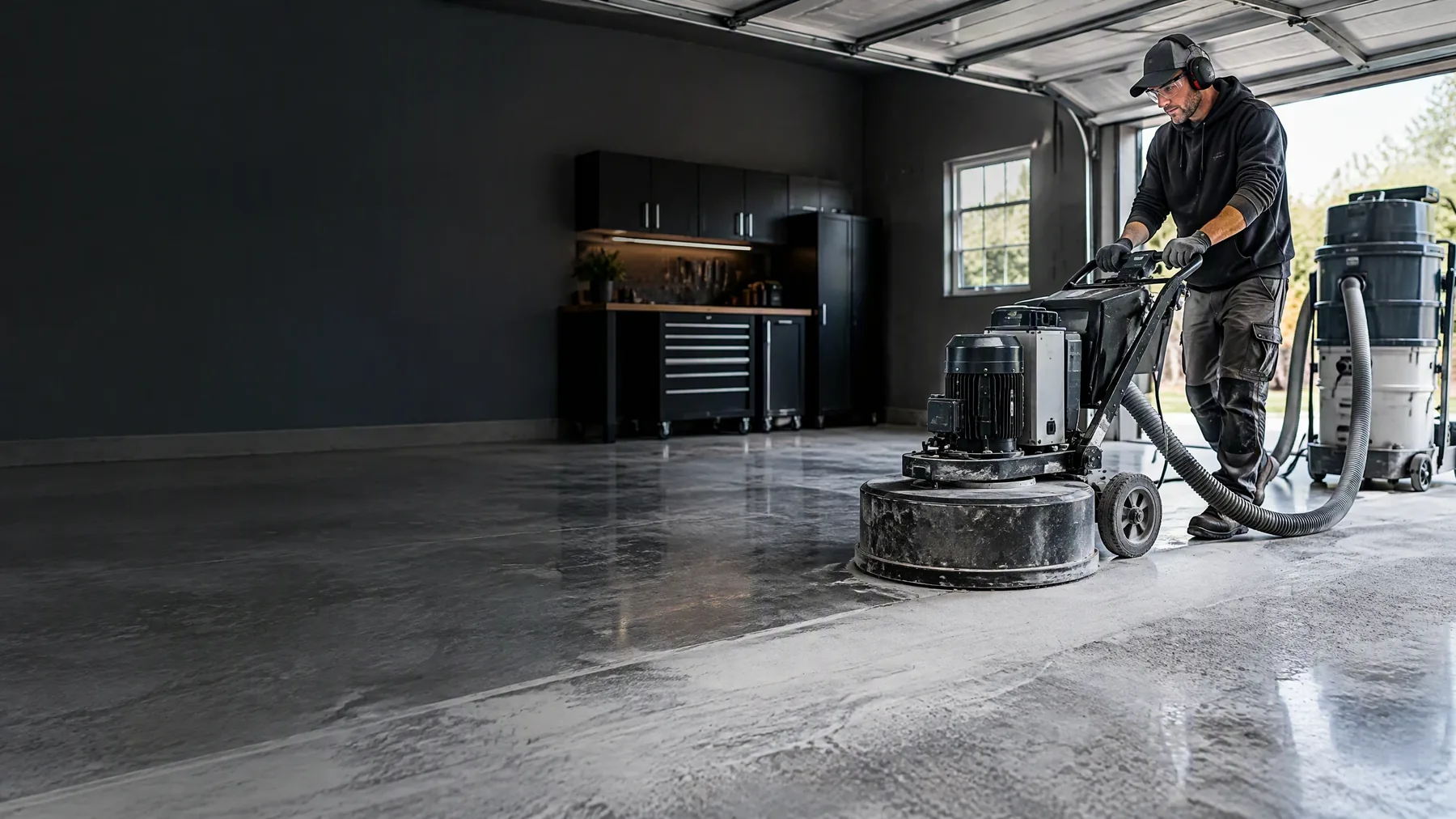
Regrinding polished concrete. When polished concrete has deep scratches or stains, it is reground with diamonds, densified again and polished. See polished concrete flooring.
Screen and recoat (epoxy and urethane). The worn topcoat is lightly abraded and a fresh topcoat is applied. The color coats underneath stay. This is the cheapest way to bring an epoxy floor back, and it only works while the coating is still bonded.
Resurfacing. The failed coating or damaged surface is ground off, the concrete is repaired, and a new system is installed. This is a project, not maintenance.
J. Perry & Sons handles the restoration side: recoats, resurfacing, regrinding, stone and terrazzo work, and new coatings.
Next step: tell us the floor type and what it looks like today, and we will tell you which of these it needs.
When to Buff vs. When to Resurface
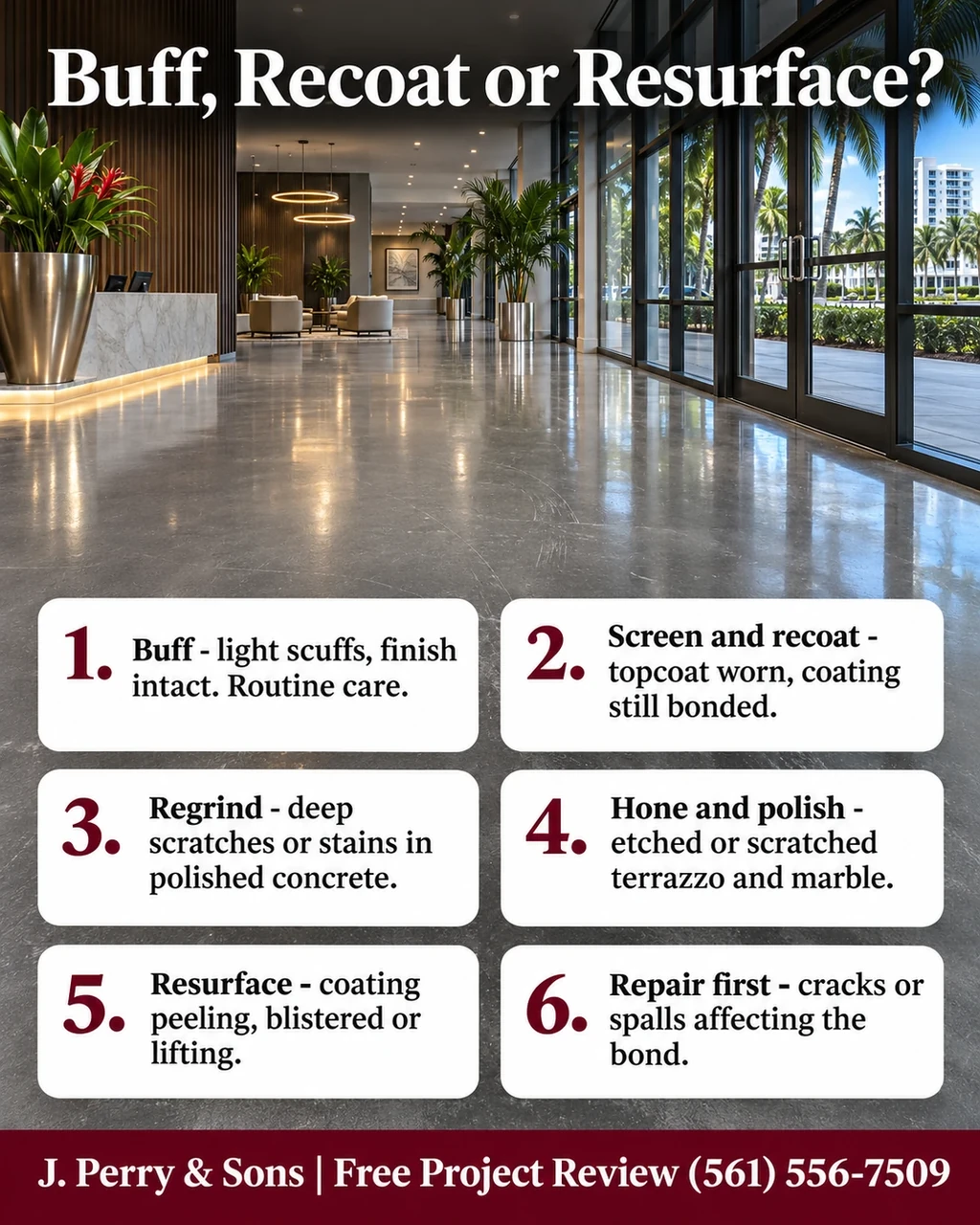
- Buff when: Surface has light scratches, scuff marks, or has lost its sheen but the coating is intact
- Resurface when: Coating is peeling, delaminating, or has deep scratches that buffing won't remove
- Regrind and repolish when: Polished concrete has deep scratches or has been contaminated with oil or chemicals
- Full replacement when: Substrate damage (cracks, spalling) is affecting the coating's adhesion
How We Assess a Worn Commercial Floor
Before we price anything, we walk the floor with you. A worn floor can look the same whether it needs a recoat or a full resurfacing, and the difference in cost is large. This is what we check.
What the floor is. Epoxy, urethane, polished concrete, terrazzo, stone, tile or VCT. Many older buildings have one finish on top of another, and we need to know every layer.
Traffic lanes. Entrances, aisles, elevator lobbies and cart routes wear first. Mapping them shows whether the whole floor needs work or only the lanes.
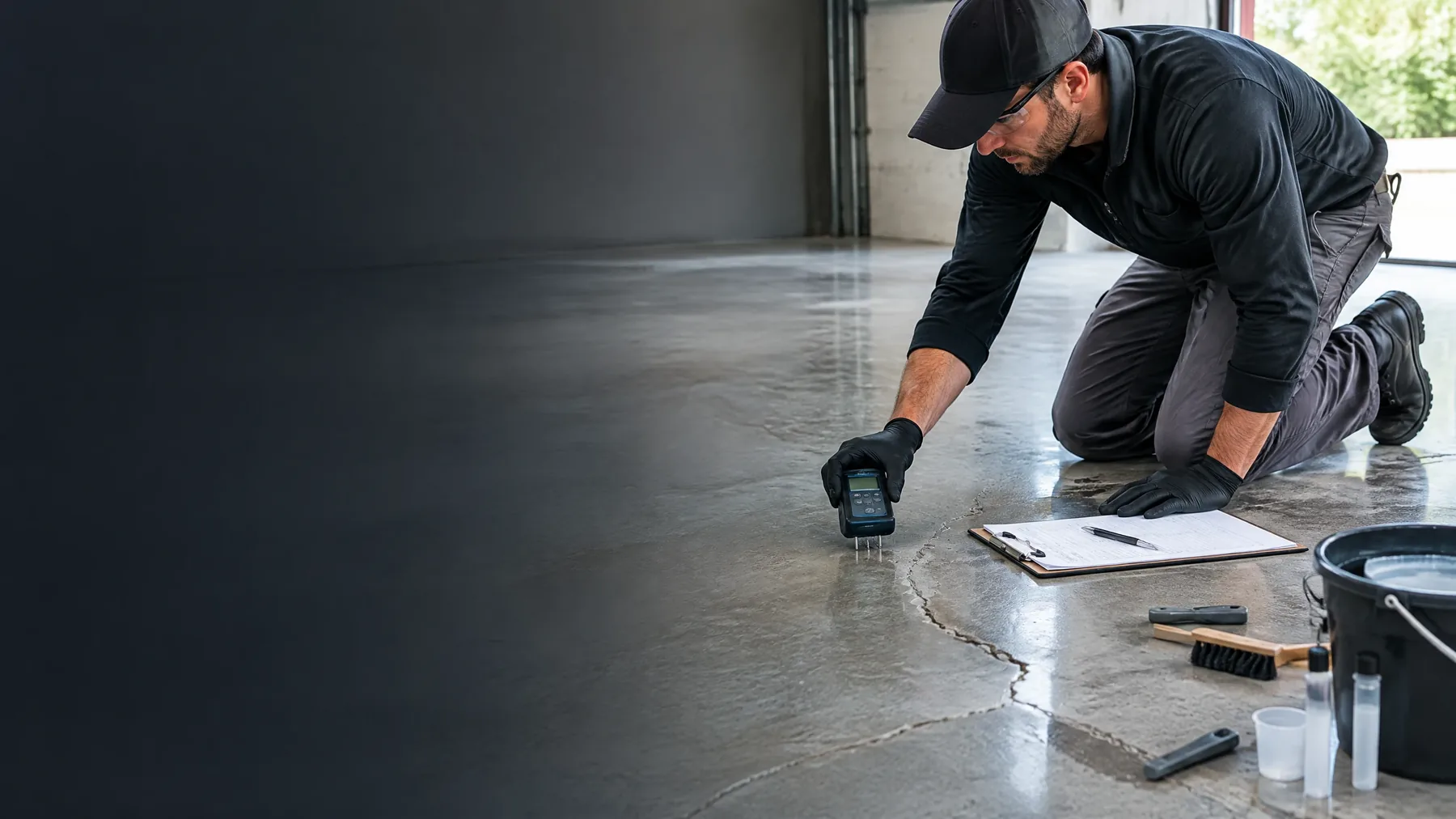
Bond. We check whether the coating is still bonded or lifting at edges, joints and impact points. A coating that is lifting cannot be recoated; it has to come off.
Moisture. South Florida slabs on grade often move moisture up from the ground. Blisters and white haze under a coating usually point to moisture, and a moisture test tells us whether a moisture-mitigating primer is needed in the new system.
Cracks and joints. Cracks, spalls and broken joint edges are noted. Some need concrete repair before any coating goes back down. See concrete resurfacing and repair.
Chemical exposure. Kitchens, auto service bays, labs and pool equipment rooms each attack floors differently. The new system is chosen for what will spill on it.
A test area. On larger floors, we may do a small test area so you can see the result before the full scope is priced.
After the walk, you get an itemized written proposal with each area, each system and each repair as its own line. Our commercial epoxy flooring page lists the systems we install.
Next step: send us a floor plan or photos of the worst areas, and we will plan the walk around them.
Floor Maintenance Schedule for South Florida Properties
- Daily: Dust mop or auto-scrub to remove grit and debris that scratches floors
- Weekly: Wet mop with pH-neutral cleaner — never use acidic or alkaline cleaners on polished concrete or epoxy
- Monthly: Inspect for new cracks, chips, or coating failures — address early before they spread
- Every 6–12 months: Professional buffing to restore sheen and remove surface wear
- Every 3–5 years: Resealing or recoating, based on traffic and wear level
Floor Care by Property Type
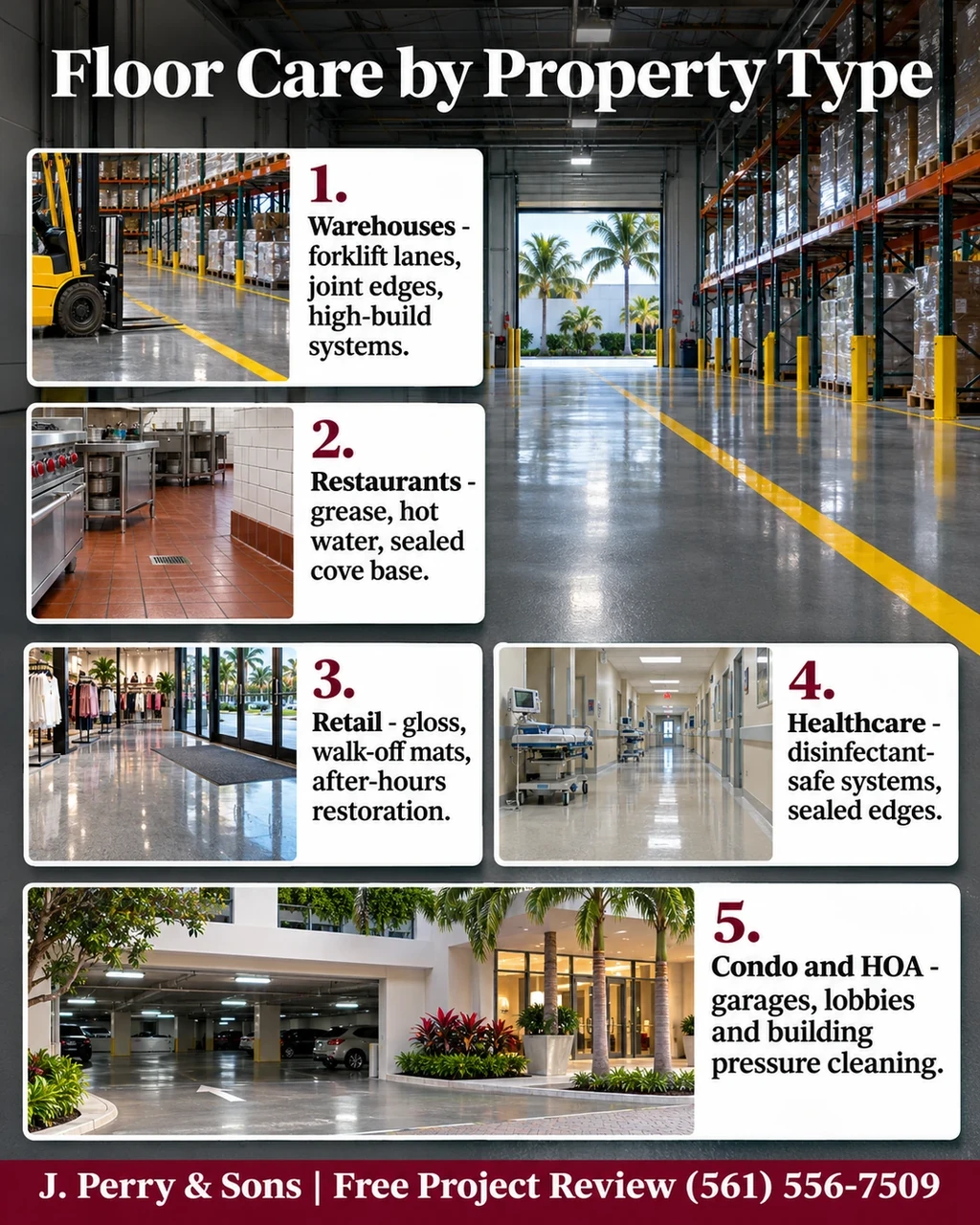
Every building wears its floors differently. The maintenance schedule above is a baseline; this is what changes by property type.
Warehouses and light industrial. Forklifts, pallet jacks and dropped loads chip coatings and break joint edges. Keep the floor swept so grit does not grind under wheels, repair joint edges early, and choose a thicker, high-build system or a quartz broadcast in heavy lanes. See commercial epoxy flooring for warehouses.
Restaurants and commercial kitchens. Grease, hot water and daily washdowns break down thin coatings fast. Floors need a system rated for thermal shock and a sealed cove at the walls. Quarry tile is the other common answer; see the restaurant kitchen quarry tile guide.
Retail and showrooms. Gloss sells, and scratches show. Walk-off mats at entries and regular dust mopping protect the finish. Restoration work is done after hours so the store stays open; see retail store tile installation after hours.
Healthcare and senior living. Floors are cleaned with strong disinfectants many times a day. Choose cleaners the floor system can handle, and keep the cove base sealed so water does not get under the floor.
Condo and HOA buildings. Lobbies, corridors, garages and pool decks each need their own plan. Garage and loading areas collect oil and grime; periodic pressure cleaning for buildings keeps coatings and concrete from staining in.
Next step: tell us the property type and the areas that wear fastest, and we will suggest a care plan and the right system for the next recoat.
Keeping the Building Open While Floors Are Restored
Most commercial floors cannot close for long. Restoration is planned so the building keeps working.
Night shift. We work night shift on commercial jobs, so grinding, coating and cure happen after the business closes.
Phasing by zone. Large floors are split into zones with a clear walking route kept open, so tenants, customers or residents can still get through.
Dust control. Grinding is done with dust collection connected to the grinders, and work areas are closed off with barriers.
Odor and ventilation. Some coatings have a strong smell during application. Low-odor systems are available for occupied buildings, healthcare and food service, and air movement is planned with the building.
Cure before traffic. Each zone stays closed until the coating reaches the cure the product requires for foot traffic and then for carts or vehicles.
Safety. Wet floor signs, barriers and slip-resistant topcoats in wet areas are part of the plan.
Our commercial flooring team handles the full scope, from coatings to tile, VCT and commercial carpet tile.
Next step: tell us your operating hours and which areas must stay open, and we will phase the work around them.
FAQ
Does J. Perry & Sons do routine floor buffing?
Routine buffing, burnishing and cleaning are usually done by your janitorial or floor care vendor. We handle the restoration side: recoating worn epoxy, resurfacing failed floors, regrinding polished concrete, and restoring terrazzo and marble.
How do I know if my epoxy floor can be recoated instead of replaced?
If the coating is still bonded and the wear is in the topcoat, a screen and recoat usually works. If the coating is peeling, blistering or lifting at the edges, it has to be removed and the floor resurfaced. We confirm it during the floor walk.
Why is my epoxy floor blistering?
Blisters on a slab on grade are most often caused by moisture vapor pushing up through the concrete under a coating that was installed without a moisture-mitigating primer. The fix is removing the coating, testing the slab and installing a system with the right primer.
Can you restore floors without closing the building?
Yes. We work night shift on commercial jobs and phase the floor by zones, keeping walking routes open and closing each zone only until its coating cures.
What cleaner should we use on polished concrete and epoxy?
A pH-neutral cleaner. Acidic and strong alkaline cleaners dull polished concrete and break down epoxy topcoats. In healthcare, check that the disinfectant is compatible with the floor system.