"We pulled up the old tile and there's bare concrete underneath. Friends say we should just polish it. Is that a real floor, and will it look like the photos?"
Short answer: polished concrete is a real, finished floor, and in the right house it is one of the best floors for South Florida: seamless, no grout, cool underfoot and very low upkeep. But it is not a coating. The slab itself is ground with diamonds, densified, honed and polished, so the result is only as good as the concrete you have. A slab with patches, old adhesive, tack-strip holes and cracks will polish into a floor that shows all of them. Before you commit, we look at the slab, test it, and tell you honestly whether it will polish into the floor you want, or whether epoxy, microcement, porcelain or stone is the better choice. Pricing is based on the slab condition, the repairs, the sheen level and any color or decorative work, and it is given in the itemized written proposal after your Free Project Review.
This article is part of our concrete restoration and flooring work. If you want a coated floor instead, see epoxy flooring.
The Owner's Guide to Epoxy and Concrete Floors
How to choose the right coated or polished floor and what makes it last.
Why polished concrete works in South Florida homes
- Cool underfoot. Concrete holds the slab's temperature, so it stays cool on bare feet in a South Florida summer.
- No grout lines. No grout to stain, crack or grow mildew in our humidity.
- One continuous surface. No transitions between rooms, which suits contemporary and transitional design and open floor plans.
- Durability. A properly densified and polished slab handles daily traffic, pets and furniture for many years with simple care.
- Fewer places for allergens. No fibers and no grout joints to trap dust.
- Value on large areas. On large open floors and commercial spaces, polishing an existing slab can cost less than installing large-format tile, because the floor is already there.
Next step: if you are not sure what is under your current floor, lift a corner in a closet and send a photo. That is where the decision starts.
Will your slab polish well? What we check
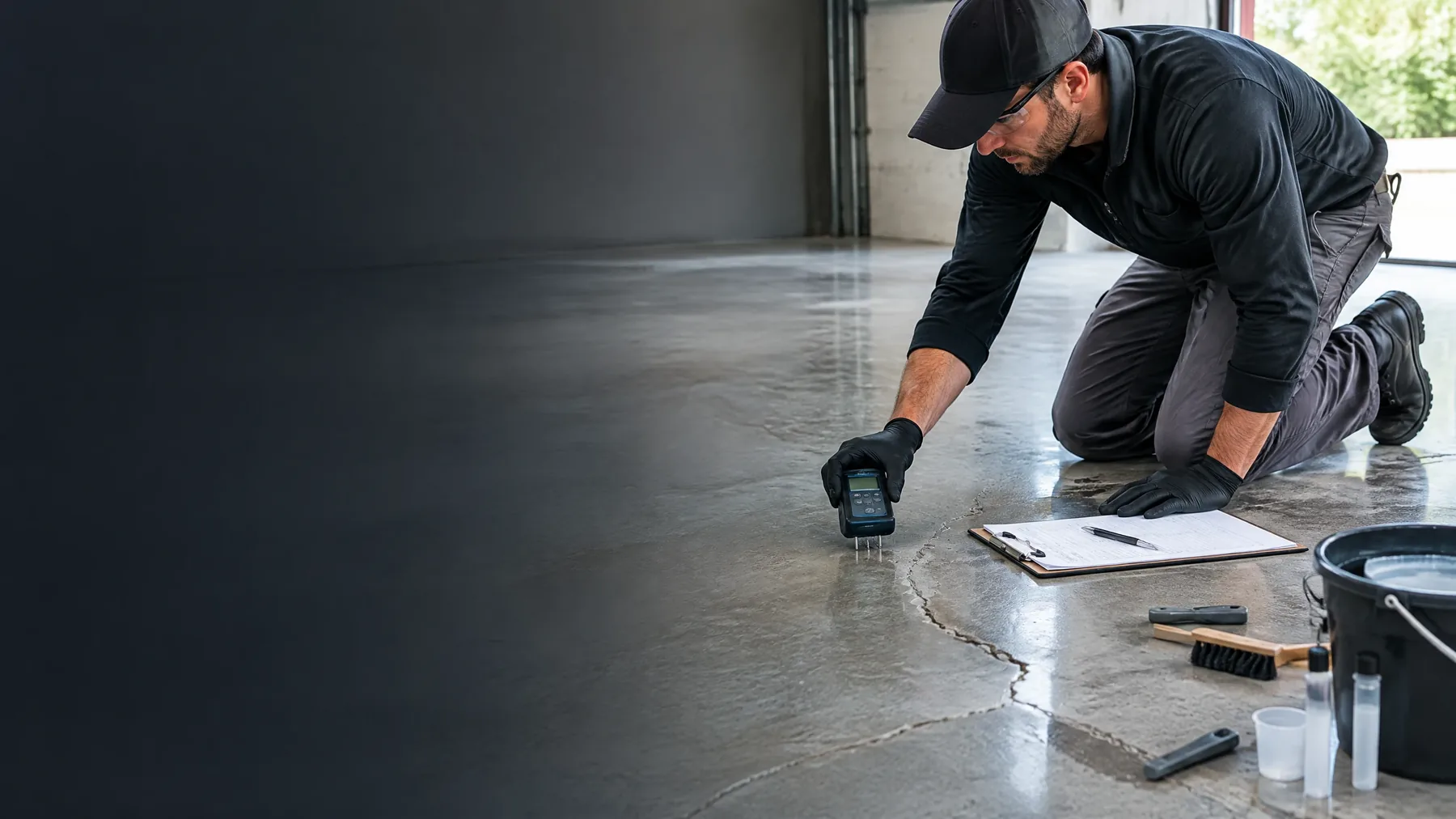
This is the part most online guides skip. A house slab was poured to be covered, not to be seen. When it comes out from under tile or carpet, we look at:
- Patches and repairs. Plumbing trenches, old wall lines and filled holes show as different colors after polishing. They can be blended, not erased.
- Mastic, carpet glue and thinset are ground off.
- Tack strip holes. Every room that had carpet has a line of nail holes around the walls. They are filled, and the fill shows as small dots.
- Cracks. Shrinkage cracks are normal in any slab. They can be filled with a color-matched filler, but they stay visible as lines. Many owners like that honest look; some do not.
- Flatness. Polishing follows the slab. Dips and ridges catch light, especially at high sheen.
- Moisture. Concrete breathes. Polished concrete tolerates moisture better than a coating, but heavy moisture can still cause efflorescence and affect sealers.
- Hardness. A soft slab takes a deep grind; a hard one polishes more slowly. Both can be polished, and the plan changes.
If the slab is too patched or uneven for the look you want, we tell you before you pay for grinding. Options then include a polished overlay, a coating, or a new finish floor over a leveled slab; see floor leveling and our guide to self-leveling underlayment.
Next step: send photos of the bare slab in daylight, including the worst patch, and we will tell you what it will look like polished.
How a polished concrete floor is made
- Remove and clean. Old flooring, adhesive, thinset and paint come off.
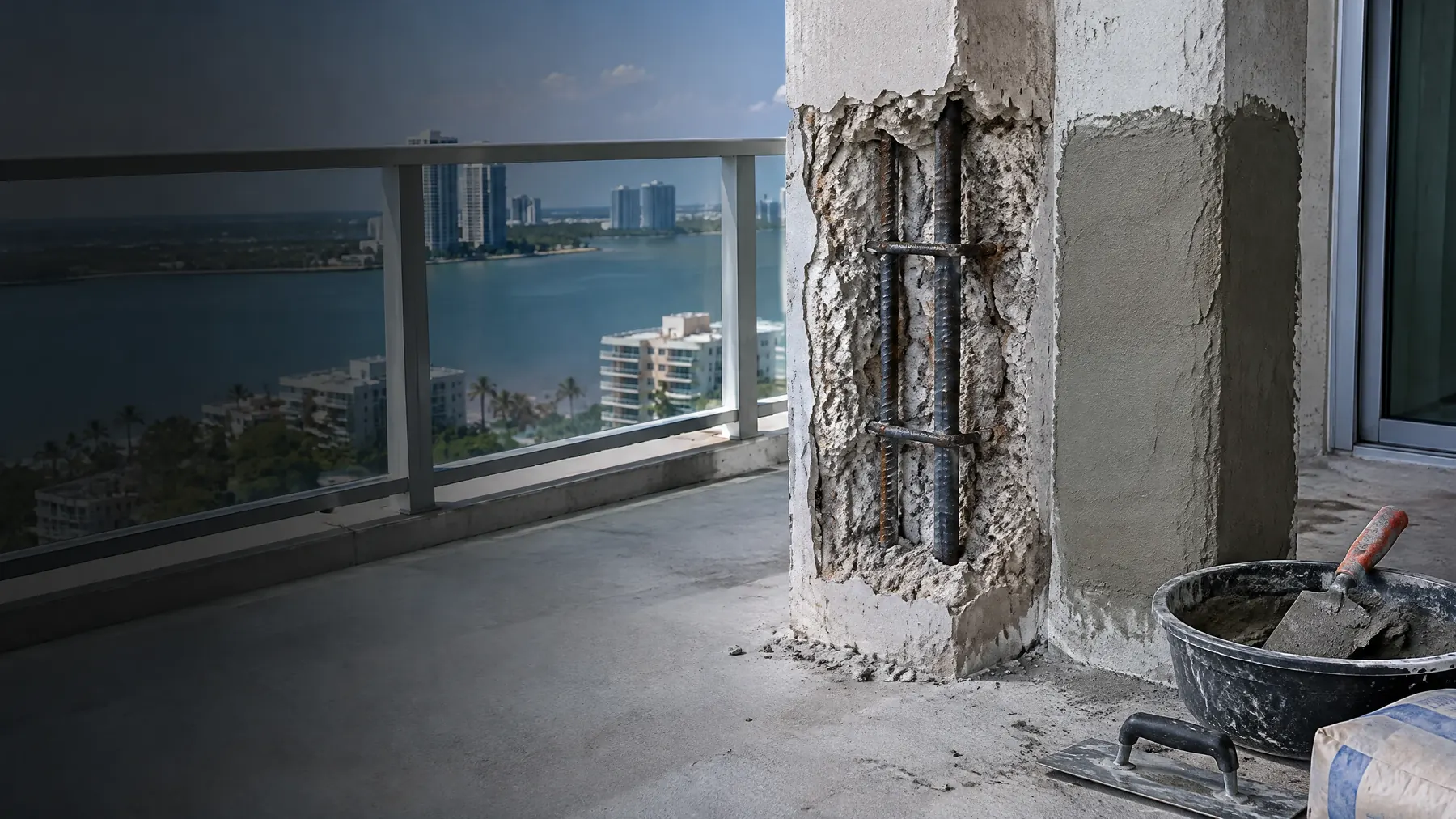
- Repair. Cracks, holes and damaged areas are filled. Spalled or delaminated areas are cut back and rebuilt first; see our guide to concrete resurfacing and repair.
- Grind. Metal-bond diamonds under a heavy planetary grinder flatten the surface and open it. How deep we grind decides how much aggregate (the stone in the concrete) shows: a light grind keeps a cream finish, a deeper grind exposes salt-and-pepper or larger aggregate.
- Densify. A penetrating densifier hardens the surface so it can take a polish and resist wear.
- Hone and polish. Resin-bond diamonds in finer and finer grits, each pass removing the scratches from the one before, up to the sheen you choose.
- Color, if chosen. Dyes or stains go in during the process for a tinted floor.
- Guard. A penetrating stain guard is applied and burnished in.
Grinding produces dust or slurry, and we contain it: dust extraction on the grinders, plastic at doorways, and the work area closed off. Furniture goes back once the guard has cured.
Sheen levels and aggregate exposure
Sheen is how much the floor reflects:
- Matte (around 400 grit). Flat, industrial look. Popular for workshops and modern commercial spaces.
- Satin (around 800 grit). A slight sheen that hides scratches well. The most popular level for homes and retail.
- Semi-gloss (around 1,500 grit). Noticeable shine and reflection. Popular in showrooms and upscale retail.
- High-gloss (around 3,000 grit). Mirror-like reflection. Dramatic, and it shows wear and dirt more, so it takes more care to keep perfect.
Aggregate exposure is how much of the stone you see: cream (surface paste only), salt-and-pepper (fine aggregate), or full exposure (larger stones). The choice is made before grinding starts, because you cannot put the cream back once it is ground away.
Next step: send a photo of a polished floor you like and we will tell you which sheen and exposure it is.
Polished concrete vs. tile, epoxy and microcement
Polished concrete vs. tile. Tile wins when you want a specific pattern, color or natural stone look, or when the slab is too patched to show. Polished concrete wins when you want a seamless floor with no grout lines and the lowest long-term maintenance. Our tile installation cost guide covers tile pricing for comparison, and tile installation shows the porcelain and stone floors we set.
Polished concrete vs. epoxy. Epoxy is a coating on top of the slab. It can hide patches and give color, flake or metallic effects, and it is the usual choice for garages. It is also more slippery when wet unless texture is added, and it can lift if moisture comes up through the slab. See residential epoxy, garage floor epoxy and polyaspartic vs. epoxy.
Polished concrete vs. microcement. Microcement is a thin cement-based finish troweled over the floor. It gives a seamless concrete look over a slab that would not polish well. We install microcement on floors.
Next step: tell us which of these you are choosing between and we will bring samples of each.
Room by room: where polished concrete fits a house
Living areas and open plans. The best fit. One continuous floor through the kitchen, dining and living room, with no thresholds and no grout.
Kitchens. Good, with a guard that resists oil and citrus, and quick cleanup of spills. Plan the cabinets and island before grinding so the floor runs under them or stops cleanly.
Bathrooms. Possible, but a polished floor is smooth when wet. A honed matte sheen, a bath mat and textured tile in the shower are the safer combination.
Bedrooms. Fine, and cool in summer. Area rugs soften the sound.
Garages and outdoor areas. Not the right place. Garages are better with a coated floor, and patios with textured porcelain or stone.
Next step: tell us which rooms you want in polished concrete, and we will tell you which ones we would finish differently.
Commercial spaces
On a large retail, office, showroom or warehouse floor, polished concrete is often the most cost-effective finished floor because the slab is already there and the upkeep is simple. Our commercial scope, including night shift on occupied spaces, is on commercial flooring and commercial epoxy. This article stays focused on homes.
Caring for a polished concrete floor
- Dust mop daily where sand comes in; grit is what dulls the shine.
- Clean with a pH-neutral cleaner. Acidic and harsh cleaners etch the surface.
- Wipe spills, especially citrus, wine and oil.
- Use mats at doors and felt pads under furniture.
- Re-burnish or re-polish the high-traffic paths when they dull, instead of regrinding the whole floor. See our guide to floor buffing and concrete maintenance.
Polished concrete cost in South Florida
Polished concrete pricing is based on the existing condition of your slab, how much adhesive and repair work it needs, the sheen level, the aggregate exposure, any dyes or decorative cuts, and the size and layout of the rooms. Because the same house can have a clean slab in one room and a patched one in the next, pricing is given in the itemized written proposal after your Free Project Review, with removal, repairs, grinding and polishing, color and guard on separate lines. We review every project personally and follow up with you directly. Where a new slab is needed, it is poured by licensed trades, coordinated by J. Perry & Sons.
Licensed and insured, certificate of insurance on request. 150+ projects completed.
Polished concrete and coated floors by city
Epoxy flooring in Miami · Epoxy flooring in Boca Raton · Epoxy flooring in Fort Lauderdale · Epoxy flooring in West Palm Beach · Epoxy flooring in Coral Gables · Epoxy flooring in Weston · Epoxy flooring in Hollywood · Epoxy flooring in Pompano Beach · Epoxy flooring in Delray Beach · Epoxy flooring in Boynton Beach · Epoxy flooring in Wellington · Epoxy flooring in Parkland
More from the journal: 2026 kitchen design trends in South Florida · Best slab materials for South Florida homes
FAQ
Can any concrete slab be polished?
Most sound slabs can be polished, but not every slab will polish into the look you have in mind. Patches, tack-strip holes and cracks stay visible. We check the slab first and tell you what it will look like before any grinding.
Is polished concrete slippery?
A polished floor is not as slippery as many people expect when it is dry and clean. Like any smooth floor, it is more slippery when wet. A satin sheen and good mats at the doors help, and outdoor or wet areas are better served by textured porcelain or stone.
Does polished concrete crack?
The floor follows the slab. Existing cracks can be filled but remain visible, and new shrinkage cracks can appear over time. They are part of the character of a concrete floor.
How much does polished concrete cost?
The price is based on the slab condition, repairs, sheen level and any color work. It is given in the itemized written proposal after your Free Project Review.
Polished concrete or epoxy for my house?
Polished concrete for living areas where the slab is in good shape and you want a seamless, natural look. Epoxy for garages and for slabs too patched to show, where a coating covers the flaws.