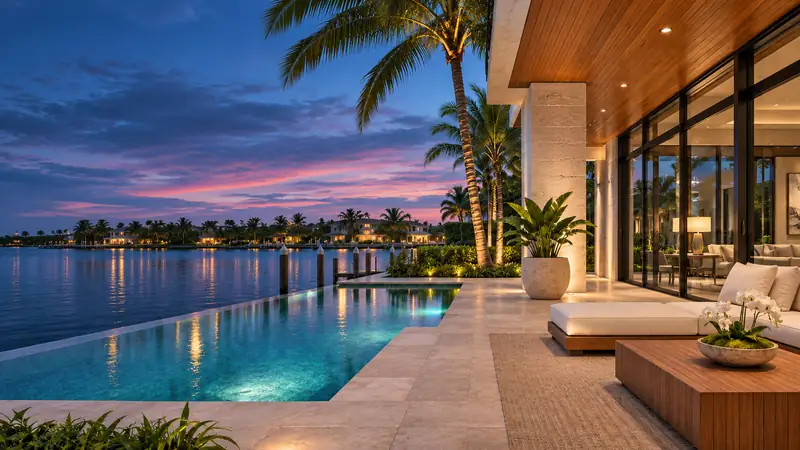
"We live on the water and the backyard is all concrete: a gray seawall cap, a plain dock, a block wall by the pool. I want it to look like a resort, in real stone. But I've seen stone on docks crack and pop off after one season, and I don't want to pay for that twice."
That worry is fair. Outside, and especially at the water's edge, stone has to survive standing water, salt spray, bare feet, sun and the occasional storm surge. It holds up for decades when it is the right stone on a sound structure with the right setting materials. It fails fast when any of those three is missing.
Short answer: natural stone works on garden and privacy walls, seat walls, seawall caps, dock surfaces, terraces and outdoor stairs in South Florida. Walls get thin stone veneer set over prepared block; floors get stone pavers on a compacted base or thin stone bonded to sound concrete. Near salt water you choose dense stone or porcelain, use salt-resistant setting materials and seal porous stone. Stone veneer on walls starts at $47 per sq ft installed. Docks, piles and seawalls themselves are built and repaired through licensed marine contractors; we manage that work and install the stone on a sound structure.
This guide covers which stone goes where, how stone goes on walls versus floors, what changes near salt water and what it costs. For the trade itself, see our stone veneer work.
Next step: take photos of the wall, the seawall cap and the dock, including any cracks or rust stains. Those photos tell us whether the structure is ready for stone.
Which stone goes where
| Location | Good choices | Notes |
|---|---|---|
| Garden and privacy walls | Coral stone, limestone, ledgestone panels cut from natural stone | Veneer over a block wall; sloped caps |
| Seat walls and fire pit walls | Limestone, travertine, coral stone | Smooth cap at seat height (18 to 20 inches) |
| Seawall caps | Coral stone, limestone, travertine, porcelain | Over an existing sound cap; salt-resistant setting materials |
| Dock surfaces | Coral stone, travertine, porcelain pavers | On a sound concrete deck; slip resistance |
| Terraces and patios | Travertine, limestone, porcelain | On a base or bonded to concrete |
| Outdoor stairs | Limestone, travertine, porcelain treads | Bullnose edges, non-slip finish |
| Retaining wall faces | Ledgestone, fieldstone, coral stone | Veneer over a properly built wall |
We install real natural stone only: outside, natural stone does not fade in the sun and its color runs through the piece, so a chip at a cap edge does not show a different core.
Next step: circle the spots on your photos where you want stone. We plan them as one design.
Prices (2026)
| Scope | Starting at |
|---|---|
| Stone veneer on walls, columns, seat walls | Starting at $47 per sq ft installed |
J. Perry & Sons starting prices. Caps, stair treads, edge pieces and repairs to the substrate are priced as their own lines. Final pricing is based on the site, the substrate and the stone, and is confirmed after we see the property. We review every project personally and follow up with you directly.
For pool areas, see pool deck pavers, travertine pavers and pool coping.
Next step: send rough dimensions of each area with your photos, and we will tell you which line each one falls under.
Stone on walls
Garden walls, privacy walls and seat walls are usually concrete block. The veneer system:
- inspect and clean the block; remove paint or coatings, or install a weather barrier, metal lath and a scratch coat
- base course held above grade, with a weep or termination at the bottom so water drains out
- stone back-buttered in full and set from the corners
- joints grouted or dry-stacked
- sloped caps with overhang and a drip edge
- breathable sealer on natural stone, matched to the stone type
For seat walls, the cap is the part people touch, so we use a smooth limestone, travertine or coral stone cap at a comfortable height.
For retaining walls, the wall itself is built to hold soil and water, with drainage behind it, before any stone goes on. See retaining walls.
Next step: tell us if the wall is painted, stuccoed or bare block. That decides the prep.
Stone on outdoor floors
Outdoor stone floors go in two ways:
- On a compacted base: 3 cm travertine or stone pavers on limerock and sand, like a paver installation. Good for patios and terraces on ground.
- Bonded to concrete: 2 cm stone or porcelain set in exterior-rated mortar over a sound slab, with a crack-isolation or waterproofing membrane where needed. Good for docks, terraces over structure and stairs.
Thin stone (2 cm) is never set on loose sand; it cracks under a point load.
Next step: tell us whether the area is soil, an existing slab or a structure (dock, balcony, roof). It decides the method.
Docks and seawall caps
Docks and seawalls are marine structures. Piles, boat lifts, seawalls and structural repairs are done by licensed marine contractors, coordinated and permitted by J. Perry & Sons, with the project staying under J. Perry & Sons. Our crews build the dock decking. We install stone finishes on top of a sound structure:
- check first: cracks, spalling or rusted steel in the cap or deck are repaired before stone
- weight: confirm the structure can carry the stone
- setting materials: exterior, salt-resistant mortars and grouts
- slope: the surface drains away from the house toward the water
- edges: bullnose or eased edges along the water for safety
- slip resistance: textured, tumbled or brushed finishes
- sealer: breathable penetrating sealer, refreshed more often near salt water
For dock and marine deck framing, see our decks work, including composite decking. For concrete repairs before stone, see concrete restoration.
Next step: if you have a marine contractor's or engineer's report on the seawall, send it with your photos.
What changes near salt water
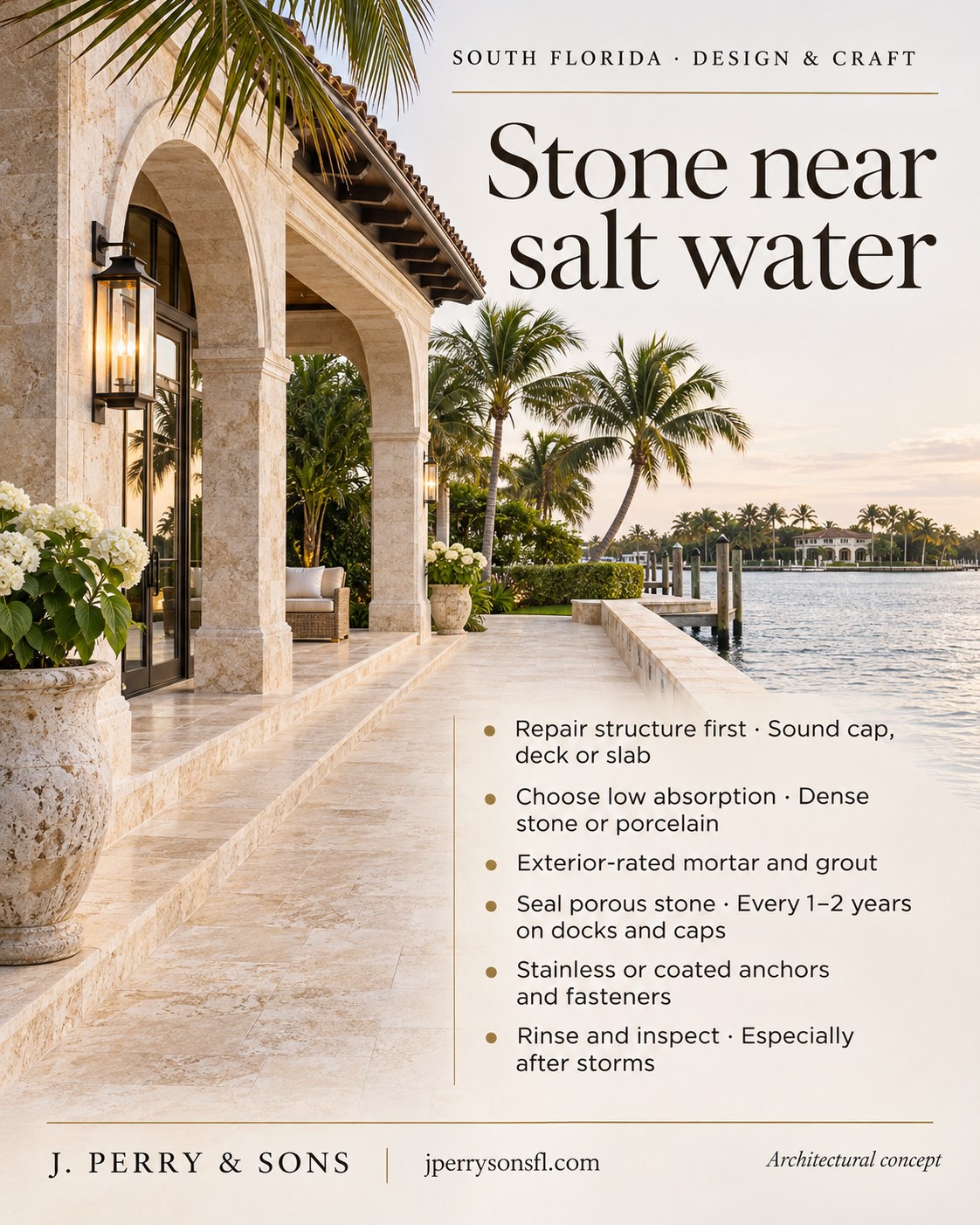
- seal porous stone (coral stone, limestone, travertine) with a breathable penetrating sealer
- reseal more often on docks and seawall caps than on walls away from the spray
- rinse salt off regularly
- use stainless or coated anchors and hardware
- keep movement joints open and sealed with flexible sealant
- choose porcelain where maintenance should be minimal
- inspect after storms for loose pieces and undermined edges
Next step: tell us how much spray reaches the area on a windy day. That narrows the stone list.
Coral stone and limestone: South Florida favorites
Coral stone (keystone) - native look that fits waterfront, Mediterranean and Old Florida homes - porous, textured surface that stays relatively cool under bare feet - needs sealing and occasional cleaning to prevent mold and staining
Limestone - clean, light and elegant; suits modern and classic homes - softer than granite; choose dense exterior-grade limestone - needs sealing near salt water
Both are popular for walls, caps, docks and pool areas, and pair well with travertine floors. More on coral stone: coral stone veneer.
Outdoor stairs
- solid treads with bullnose or eased edges
- slip-resistant finish
- risers in matching stone or stucco
- proper slope on treads so water drains
- lighting in the risers or walls for safety at night
Fire pits and seat walls
Seat walls around a fire pit are one of the most popular outdoor stone projects:
- block wall about 18 to 20 inches high, with a footing
- stone veneer on the face, with a smooth, wide cap for sitting
- fire pit liner and gas or wood setup per the manufacturer
- licensed gas contractor for gas lines, by licensed gas technicians, coordinated and permitted by J. Perry & Sons
- travertine or pavers on the floor around it
Privacy and garden walls
Block walls along property lines, around pool equipment or as garden backdrops can be finished in stone:
- full stone on the side facing the house, stucco on the neighbor's side (see stucco)
- caps sloped to drain
- lighting set into the wall or cap
- planting beds kept away from the stone or separated with a drainage gap
Check setbacks, height limits and HOA rules before building a new wall.
Permits
Garden walls, retaining walls and work on seawalls or docks may need permits, and waterfront work can involve additional agencies. Structural and marine repairs are done by licensed specialists. J. Perry & Sons pulls the permits, follows every city and county requirement and coordinates with the marine or structural contractor when needed. HOA documents are prepared for your application.
How long it lasts, and the most common failures
With the right stone, setting materials and sealing, outdoor stone on walls and floors lasts decades. The most common failures:
- stone set on a cracked or spalling cap or deck
- no movement joints
- unsealed porous stone near salt water
- thin stone on sand
- caps that hold water
Every one of these is avoided in the planning, not fixed afterward.
How we schedule outdoor stone work
We don't publish standard durations, because every wall, dock or terrace is based on things we can only measure on site. The schedule for your project is in your written proposal, confirmed after the project review. These are the things that decide it:
- The substrate. A sound wall, seawall cap or slab can take stone. Cracks, spalling or a failing cap are repaired first, to an engineer's specifications where the structure calls for it.
- The surface and the stone. Wall veneer, cap stone, dock surfaces and terraces with stairs each need different cuts, setting materials and sealing.
- Waterfront access. Work along a seawall or dock is based on safe access and on the tide.
- Permits and approvals. Marine and seawall work often needs permits, and HOAs may review exterior changes.
- Material delivery. Stone is ordered in one lot and checked when it arrives.
- Weather. Mortars and sealers need dry weather and their full cure time, so the dry season is the best time.
A typical waterfront project
A common project on a canal-front property:
- Inspect the seawall cap and dock deck; repairs through the licensed marine contractor where needed.
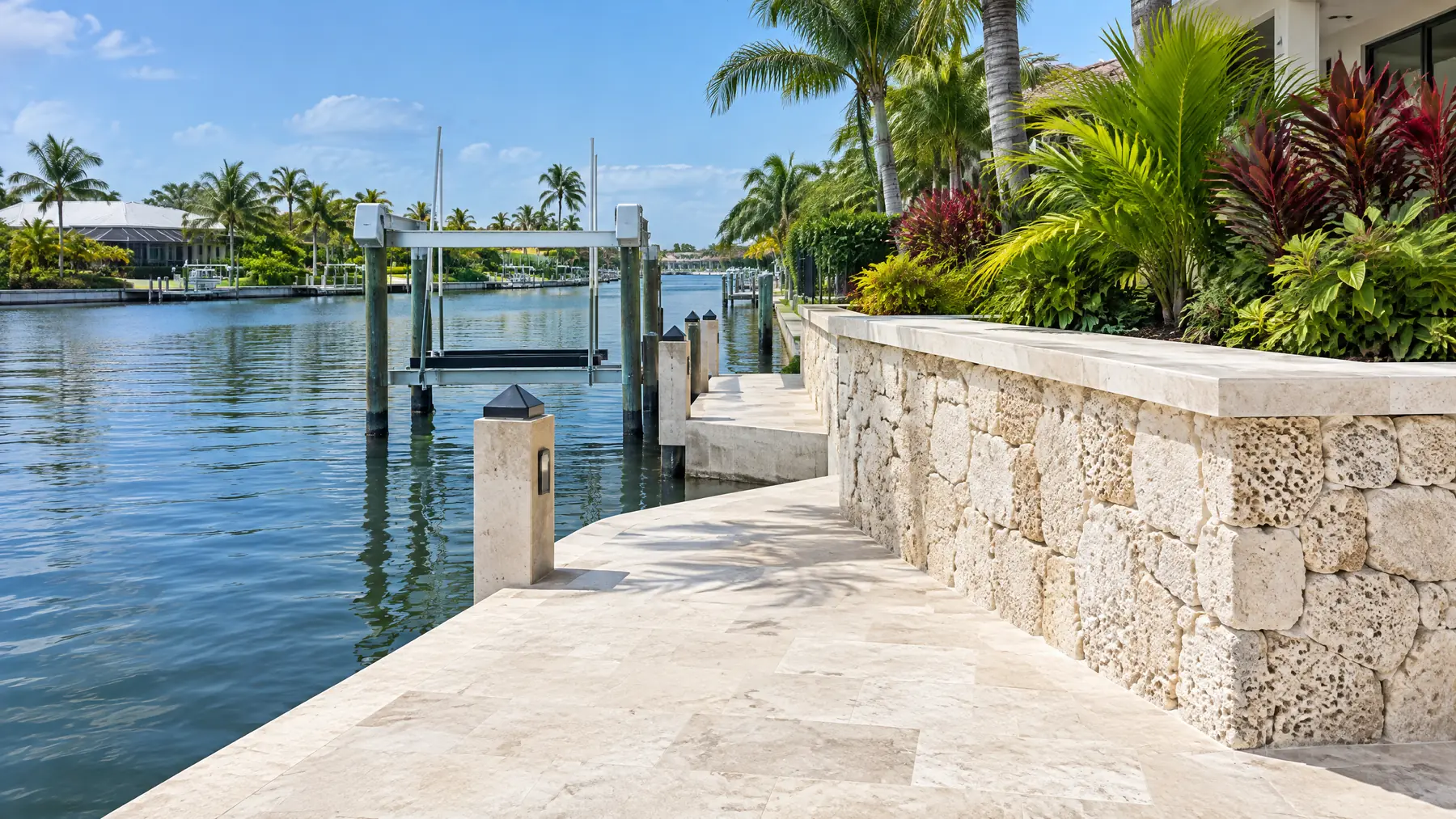
- Coral stone on the seawall cap with a bullnose edge along the water.
- Travertine on the dock surface, bonded to the concrete deck.
- Coral stone veneer on the garden wall between the dock and the pool.
- Breathable sealer on all stone; a maintenance schedule provided.
Matching the rest of the property
Waterfront properties look best when the stone ties together: the same coral stone or limestone on the seawall cap, the garden walls and the pool coping, with travertine or porcelain floors in coordinated colors. We plan the materials across the whole backyard so each project fits the next one. For the full backyard, see outdoor living and outdoor kitchens; for the house walls, see exterior house stone veneer and exterior renovation.
Commercial and HOA waterfront work
We also install stone finishes on community docks, marina walkways and clubhouse terraces, following the specification and the association's schedule, with marine and structural work by licensed specialists. Night shift is available on commercial jobs. Send us photos and we'll tell you whether the structure is ready for stone.
Living with the project
Dock and seawall work happens at the water's edge, so boats may need to move during installation; we confirm boat and dock access before starting. We protect the pool, landscaping and the house, keep a clear path, and clean every shift. Sealing is a short visit after the stone and mortar cure.
Away for the season? Hand us your project and come back to it finished. You get photo updates, and we call you before every decision. Keys, deliveries, inspections and cleanup are handled.
Hurricane season
After a storm, check stone caps and dock surfaces for loose pieces and undermined edges, especially where water overtopped the seawall. Early repairs are simple; waiting lets water get under the stone.
Questions to ask before choosing outdoor stone
- How much salt spray reaches this area?
- Will people walk barefoot on it, and does it need to stay cool?
- Is the surface wet often: near a pool, a dock or sprinklers?
- How much maintenance will you do: regular sealing or almost none?
- Should it match stone already on the house or the pool area?
Answering these first narrows the choice to the stones that will actually hold up and look right in that spot.
Questions to ask before hiring
- How will you prepare my wall: direct bond, or barrier, lath and scratch coat?
- How will the stone handle salt water and standing water?
- How will the caps and sills shed water?
- Which mortar and sealer will you use?
- Who repairs the seawall or dock structure, and who manages them?
- Who pulls the permit and handles the HOA?
Quick planning summary
- Repair the structure first: cap, deck, wall or slab.
- Choose dense stone or porcelain for salt exposure.
- Bond thin stone to concrete; never set it on sand.
- Seal porous stone and keep a maintenance schedule.
- Slope surfaces away from the house and keep joints open.
How we work
- Project Review. We look at the property with you and talk about the walls, the waterfront and the look you want.
- Proposal. A clear scope and a starting price, everything written down.
- Selection. Choose the stone, the color and the pattern with us, with samples brought to your property. You can add our designer for a full design plan; once you sign the proposal, a simple rendering gives you an idea of the look, and detailed design time is billed separately.
- Installation. Wall preparation, stone installation, caps and trims, sealing and a final walkthrough.
Why South Florida owners choose J. Perry & Sons
- A licensed and insured Florida general contractor (CGC1540699) with 150+ completed projects. Certificate of insurance on request.
- Built over the right wall system, with flashing and a weather barrier.
- Our own stone masons.
- Marine structure work managed through licensed marine contractors.
- HOA documents prepared for your application.
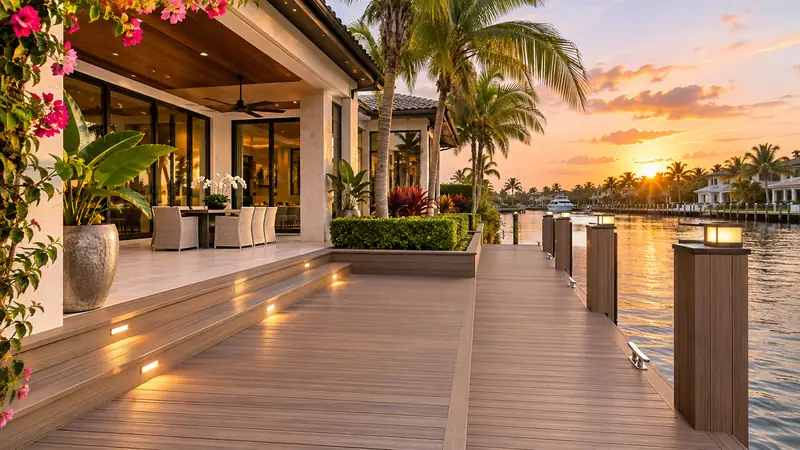
Related services: docks and marine decks

Composite and wood decks and docks made for sun and salt.
Free project review · (561) 556-7509
FAQ
Can I put stone on my dock or seawall cap?
Yes, on a sound structure. Any cracks, spalling or rusted steel are repaired first through a licensed marine contractor, then the stone is set with salt-resistant materials, sloped to drain and finished with a bullnose edge along the water.
What stone is best near salt water?
Dense coral stone, limestone and travertine with a breathable sealer, or porcelain for minimal maintenance. We install natural stone only.
How much does stone veneer on a garden wall cost?
Stone veneer starts at $47 per sq ft installed, with caps priced as their own line. The final price is based on the wall condition, the stone and the access.
How often should outdoor stone be sealed near the water?
More often on docks and seawall caps in direct salt spray than on walls and patios away from it. The sealer manufacturer and the stone type set the interval, and we give you a maintenance schedule when the job is done.
Can thin stone go on sand?
No. 2 cm stone and porcelain are bonded to concrete. On sand, use 3 cm travertine or stone pavers on a compacted base.
Do you build the dock or seawall?
The structure (piles, deck framing, seawall and cap repairs) is done through licensed marine contractors, and we manage that work as part of the project. We install the stone finish on the sound structure.